













Bosnia and Herzegovina is holding a crucial general election on Sunday, with the outcome potentially shaping the country's prospects of joining the European Union and
determining the balance of international influence between the United States and Russia in the Western Balkans.
Millions of voters are choosing representatives for the country's three-member presidency and national parliament, while also deciding the composition of legislative bodies in its two constituent entities.
The election is taking place amid growing public dissatisfaction with economic stagnation, stalled EU integration and persistent political tensions that have paralysed decision-making at the national level.
Voting was temporarily disrupted at several polling stations because of technical problems with the electronic voting system, according to Central Election Commission chairman Jovan Kalaba. Authorities introduced redesigned ballots, biometric voter identification and electronic scanning technology in an effort to strengthen electoral transparency and prevent fraud.
By 3 p.m. local time, turnout had reached 28.8%, representing an 8.12-percentage-point decline compared with the corresponding stage of the 2022 elections, the electoral commission reported.
EU membership remains a central issue
Bosnia's European integration ambitions remain one of the most significant challenges facing the next government. The country received EU candidate status in December 2022, followed by approval to begin accession negotiations in 2024.
However, formal negotiations have yet to get underway because political leaders have failed to implement essential reforms, including strengthening judicial independence and introducing effective anti-corruption legislation.
The country's complicated political structure, established under the US-brokered Dayton Peace Agreement that ended the 1992-1995 war, continues to obstruct progress. Bosnia is divided into the Serb-majority Republika Srpska and the Bosniak-Croat Federation, with a relatively weak central government connecting the two entities.
Ethnically based political parties have repeatedly blocked national decisions, deepening institutional divisions and slowing reforms required for EU membership.
Louis Crishock, the American diplomat serving as acting High Representative for Bosnia, called on citizens to participate in the democratic process. Under the Dayton framework, the High Representative has authority to oversee the implementation of the peace agreement.
"Your vote is your chance to shape the next four years," Crishock wrote on X, encouraging voters to cast their ballots freely and confidently.
Ethnic divisions dominate the political contest
The election features a competition between established nationalist parties representing Bosnia's main ethnic communities and opposition coalitions promoting a more multi-ethnic political approach.
The main contenders include the Bosniak Democratic Action Party (SDA), the Serb Alliance of Independent Social Democrats (SNSD) and the Croatian Democratic Union of Bosnia and Herzegovina (HDZ BiH). They are facing opposition groups led by the Social Democratic Party (SDP).
According to the Poliwave election-tracking platform, the SDA was leading nationally with 21.4% support, followed by the SDP with 16.7%.
In Republika Srpska, the SNSD, led by Milorad Dodik, was ahead with 34.2%. Dodik has consistently advocated closer relations with Serbia and Russia while maintaining a confrontational position towards Bosnia's central authorities.
SNSD presidential candidate Zeljka Cvijanovic, seeking another term on the country's tripartite presidency, presented the election as an opportunity to ensure stability and effective governance in Republika Srpska.
Despite widespread calls for political reconciliation, many citizens remain frustrated with the country's entrenched ethnic divisions and the inability of political leaders to deliver meaningful improvements.
With a population of approximately 3.4 million, Bosnia continues to face the long-term consequences of its devastating war. Sunday's vote could therefore prove decisive not only for domestic political stability but also for the country's European future and its geopolitical orientation.
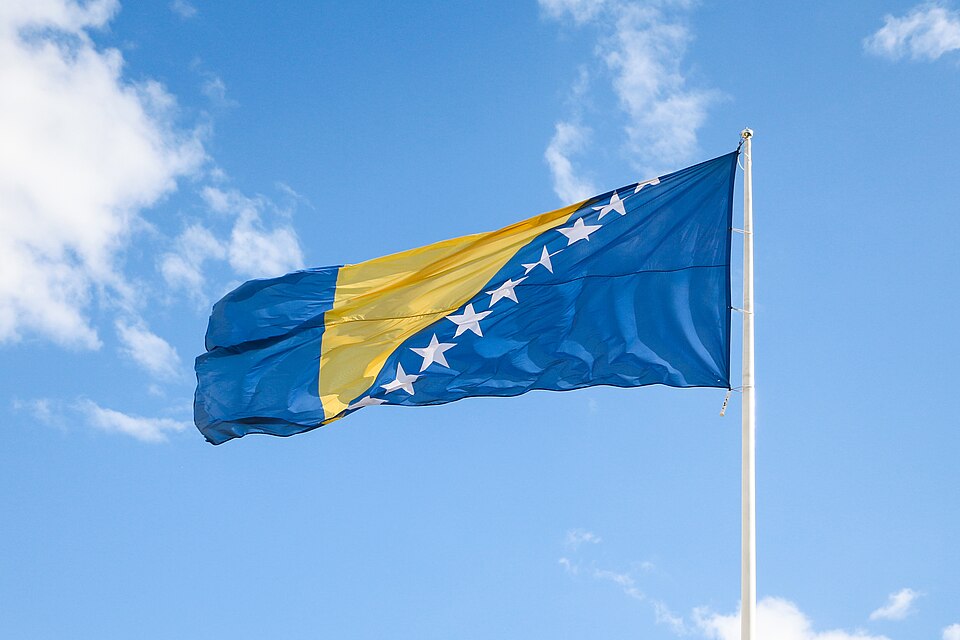
The Central Election Commission is expected to publish preliminary results after polling stations close at 7 p.m. local time. Photo by Bernard Gagnon, Wikimedia commons.