
Latest News
Young Europeans lead the way in regular physical activity, Eurostat finds
 Young Europeans lead the way in regular physical activity, Eurostat finds
Foreign-owned firms account for 16% of EU employment despite representing just 1% of businesses
 Foreign-owned firms account for 16% of EU employment despite representing just 1% of businesses
Ukraine receives €1.24 billion boost for drones, missiles and defence production
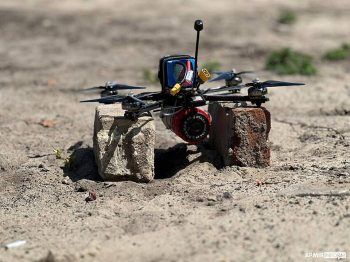 Ukraine receives €1.24 billion boost for drones, missiles and defence production
Brussels proposes major overhaul of standards system to accelerate innovation and strengthen competitiveness
 Brussels proposes major overhaul of standards system to accelerate innovation and strengthen competitiveness
EU high-tech trade swings further into surplus as exports reach €566.5 billion
 EU high-tech trade swings further into surplus as exports reach €566.5 billion
Working-age population accounted for 58% of EU total in 2025, with sharp regional differences
Working-age population accounted for 58% of EU total in 2025, with sharp regional differences
EU Commission clears Finland’s €229 million recovery fund payment after key reform milestones
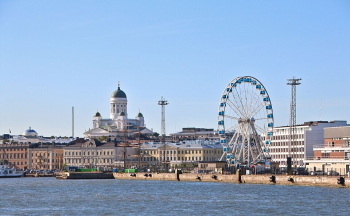 EU Commission clears Finland’s €229 million recovery fund payment after key reform milestones
Europe’s teaching workforce ages as older teachers dominate several EU countries
 Europe’s teaching workforce ages as older teachers dominate several EU countries
Bosnia’s election puts EU ambitions and political stability at a crossroads
 Bosnia’s election puts EU ambitions and political stability at a crossroads
Commission disburses €2.9 billion under Ukraine Facility to support financial stability and reforms
 Commission disburses €2.9 billion under Ukraine Facility to support financial stability and reforms
Must Read
-
 Zurich introduces Eruv, creating a Sabbath-friendly public zone for Jewish life
Zurich has quietly drawn a new kind of line across the city — one that cannot be seen at first glance, yet carries deep religious and social meaning. Spanning severalRead More...
-
 Zurab Musinyan: “Let my case lie at door of Russian special services combating international terrorism…”
Specialized Oil-Loading Seaport Vitino captured by Russian security officials through hostage taking keeps on being a subject of carve-up and litigations by Russian and international companies....Read More...
-
 Young Europeans losing faith in democracy
Recent findings from a comprehensive survey conducted by the YouGov institute for the Tui Foundation reveal a concerning trend among Europe’s youth: a growingRead More...
-
Young Europeans lead the way in regular physical activity, Eurostat finds
Young people across the European Union are significantly more likely to engage in regular physical activity outside working hours than the population as a whole, according toRead More...
-
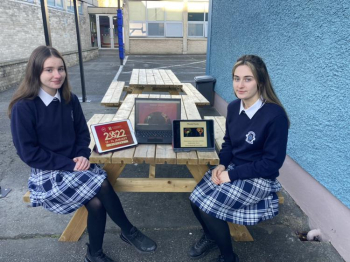 Young Europeans lead the way in digital civic participation
As Europe becomes increasingly digital, young people are stepping up as the most active voices in online civic and political life. In 2025, nearly a quarter (24.3%) of EuropeansRead More...
-
 World Refugee Day: Joint Statement by the European Commission and the High Representative
No country, no region in the world has been spared from the impact of COVID-19. The virus is exacerbating existing inequalities and has a disproportionate effect on refugees,Read More...
-
 World peace under strain — yet some countries still shine
As a storm of conflicts, rising militarisation and geopolitical fragmentation rattles the globe, the annual Global Peace Index 2025 paints a soberingRead More...
Latest News
Young Europeans lead the way in regular physical activity, Eurostat finds
Young Europeans lead the way in regular physical activity, Eurostat finds
Foreign-owned firms account for 16% of EU employment despite representing just 1% of businesses
Foreign-owned firms account for 16% of EU employment despite representing just 1% of businesses
Ukraine receives €1.24 billion boost for drones, missiles and defence production
Ukraine receives €1.24 billion boost for drones, missiles and defence production
Brussels proposes major overhaul of standards system to accelerate innovation and strengthen competitiveness
Brussels proposes major overhaul of standards system to accelerate innovation and strengthen competitiveness
EU high-tech trade swings further into surplus as exports reach €566.5 billion
EU high-tech trade swings further into surplus as exports reach €566.5 billion
Working-age population accounted for 58% of EU total in 2025, with sharp regional differences
Working-age population accounted for 58% of EU total in 2025, with sharp regional differences
EU Commission clears Finland’s €229 million recovery fund payment after key reform milestones
EU Commission clears Finland’s €229 million recovery fund payment after key reform milestones
Europe’s teaching workforce ages as older teachers dominate several EU countries
Europe’s teaching workforce ages as older teachers dominate several EU countries
Bosnia’s election puts EU ambitions and political stability at a crossroads
Bosnia’s election puts EU ambitions and political stability at a crossroads
Commission disburses €2.9 billion under Ukraine Facility to support financial stability and reforms
Commission disburses €2.9 billion under Ukraine Facility to support financial stability and reforms
Must Read
-
Zurich introduces Eruv, creating a Sabbath-friendly public zone for Jewish life
Zurich has quietly drawn a new kind of line across the city — one that cannot be seen at first glance, yet carries deep religious and social meaning. Spanning severalRead More...
-
Zurab Musinyan: “Let my case lie at door of Russian special services combating international terrorism…”
Specialized Oil-Loading Seaport Vitino captured by Russian security officials through hostage taking keeps on being a subject of carve-up and litigations by Russian and international companies....Read More...
-
Young Europeans losing faith in democracy
Recent findings from a comprehensive survey conducted by the YouGov institute for the Tui Foundation reveal a concerning trend among Europe’s youth: a growingRead More...
-
Young Europeans lead the way in regular physical activity, Eurostat finds
Young people across the European Union are significantly more likely to engage in regular physical activity outside working hours than the population as a whole, according toRead More...
-
Young Europeans lead the way in digital civic participation
As Europe becomes increasingly digital, young people are stepping up as the most active voices in online civic and political life. In 2025, nearly a quarter (24.3%) of EuropeansRead More...
-
World Refugee Day: Joint Statement by the European Commission and the High Representative
No country, no region in the world has been spared from the impact of COVID-19. The virus is exacerbating existing inequalities and has a disproportionate effect on refugees,Read More...
-
World peace under strain — yet some countries still shine
As a storm of conflicts, rising militarisation and geopolitical fragmentation rattles the globe, the annual Global Peace Index 2025 paints a soberingRead More...

The ongoing conflict between Ukraine and Russia has brought the issue of democratic systems and their role in conflicts to the forefront. Some argue that
Read more: Can Ukraine's democratic freedoms give them an edge in the conflict with Russia?

The Council of Europe has issued a warning to British lawmakers not to support the government’s Illegal Migration Bill, stating that it could lead to other countries "evading and
Read more: European Human Rights watchdog criticizes UK's Asylum Bill

It's not often German big business openly dabbles in politics, but many companies are urging their employees to reject eurosceptics and right-wing populists in May 26 European
Read more: German big business dives into politics with pro-EU message

Albania’s opposition Democratic Party has been allowed to run in the upcoming May local elections after the Commission of Sanctions and Complaints (CSC) overturned the
Read more: Albania's Democratic Party allowed to run in elections after ban is overturned

A certain approach to the study of issues of society, and democracy as its most important element, is called the scientific method. It helps to create directions for research activities aimed at establishing objective patterns of development of the main historical types of democratic governance, including in its modern forms. Researchers identify several groups of methods used in political science analysis: general scientific, socio-humanitarian and special. General scientific methods consist of two main components or subgroups of cognitive means: logical and heuristic methods, and philosophical and axiological principles for the study of political life. There are general scientific methods such as induction and deduction, analysis and synthesis, diagnosis and prognosis, definition and classification, comparison and analogy, descriptive and specific description and abstract explanatory interpretation, observation and experiment, strategic analysis and logical-mathematical modelling, etc. These methods are also called general-logical. Socio-humanitarian methods include methods of historical comparative and synchronous comparative research, analysis of documents and sources. Special scientific methods include techniques developed by political science itself as modifying or combining other methods into special tools used in political objects analyzing, for instance, simulating political situations using elements of game theory or rating expert assessments of political leaders with scaling, comparative analysis of states and parties, carried out using computer technology. Methods containing attitudes and criteria for a certain understanding and interpretation of political phenomena are called approaches. For example, a psychological approach that helps to study a social reality based on the subjective vision of this reality by a certain individual placed in certain socio-political conditions, in a psychological environment; an economic approach characterized by the determination of a policy by an economy that is its concentrated expression; a sociological approach, meaning the study of the political system, society, party in terms of the interests of the social groups that constitute it, the social structure of the subject being studied, the social statuses and roles played by the individuals that make this group; regulatory value approach, according to which political phenomena are assessed in terms of compliance with the norms of morality, principles of justice and the common good. There are three groups of methods in the political science encyclopedic dictionary used in the study of political processes, including democratic ones: comparative historical, empirical and systemic. Comparative and historical methods include methods of historical description, specific analysis, comparative, periodization, chronological, prognostic, and provide an opportunity to study political phenomena, both in close connection with the historical situation and in qualitative change at various stages of development, making it possible to identify the genetic relationship, their typological connections, differences, allow to cover the phenomenon of democracy as a whole, but not in any part of it. Empirical approaches to political research are associated with the practical need for objective knowledge of political reality related to the participation of citizens in politics. A significant place in empirical research is given to the issue of political behaviour, the study of political culture, the study of the influence of various factors on the political process, the system analysis of large and small political structures, the comprehensive study of political governance, the structural and political analysis of political institutions, etc. Systemic approaches make it possible to study politics as a complex process, identify the most significant elements on the general background of the development of a political phenomenon, to follow their interdependence and interaction. In order to classify the methods of political science research, their division into qualitative and quantitative is also used. The first ones rely on the study and definition of qualitative features and properties of political objects, the second ones rely on the measurement of various parameters using mathematical formalization. However, in modern studies, it is sometimes quite difficult to define the boundaries between qualitative and quantitative methods.