










The European Union has announced a €200 million partnership package for Greenland, as Brussels seeks to deepen its economic and strategic engagement with the Arctic
island amid growing international interest in the region.
European Commission President Ursula von der Leyen announced the agreement on Monday, saying the package reflected Greenland's increasing importance to Europe's economic and security interests.
The funding, which will be deployed this year and in 2027, will support projects covering digital connectivity, sustainable mining, renewable energy and tourism. It will also provide backing for education, fisheries and housing.
“Greenland can count on the EU,” von der Leyen said, describing the agreement as the latest result of closer cooperation between Brussels and Nuuk.
She said the initiative would create new economic opportunities while strengthening Europe's presence across Greenland and the wider Arctic.
“Greenland is a strategic ally and a trusted friend,” von der Leyen said.
The announcement comes as the Arctic assumes greater geopolitical significance, with governments increasingly focused on its natural resources, emerging transport routes and strategic position between Europe and North America.
Greenland, an autonomous territory within the Kingdom of Denmark, possesses substantial mineral resources and occupies a strategically important position in the North Atlantic.
Von der Leyen's visit also takes place against the backdrop of repeated calls from US President Donald Trump for the United States to acquire Greenland. Trump has repeatedly argued that control of the island is important to US national security, while Danish and Greenlandic authorities have rejected the idea that Greenland is available for sale.
The EU's new package signals Brussels' intention to strengthen its relationship with Greenland through investment and long-term cooperation rather than territorial ambitions.
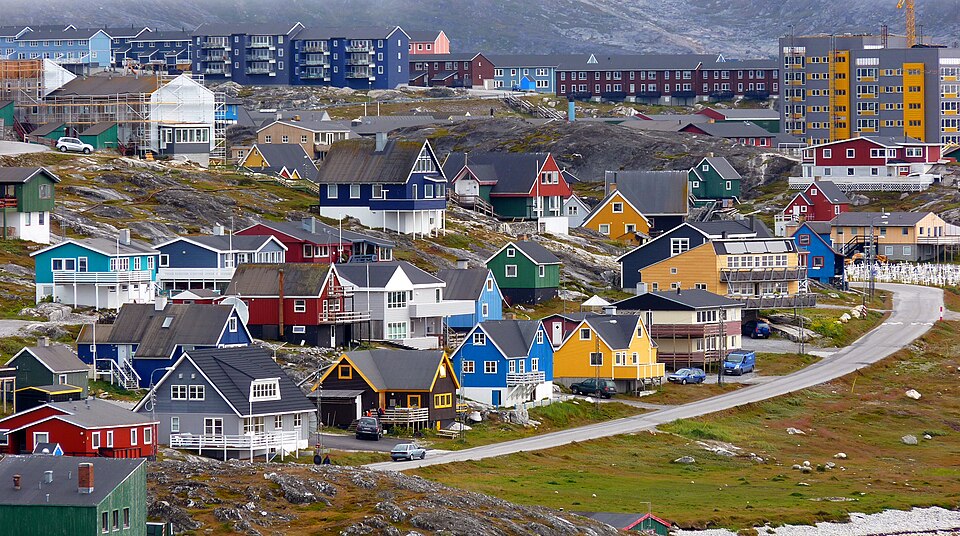
For the European Commission, the agreement also offers a way to reinforce the EU's role in a rapidly changing Arctic, where economic competition and geopolitical tensions are increasingly overlapping. Photo by patano, Wikimedia commons.