

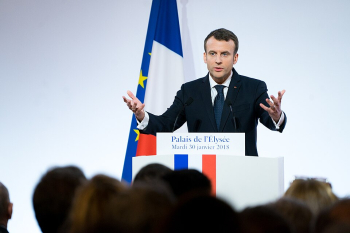









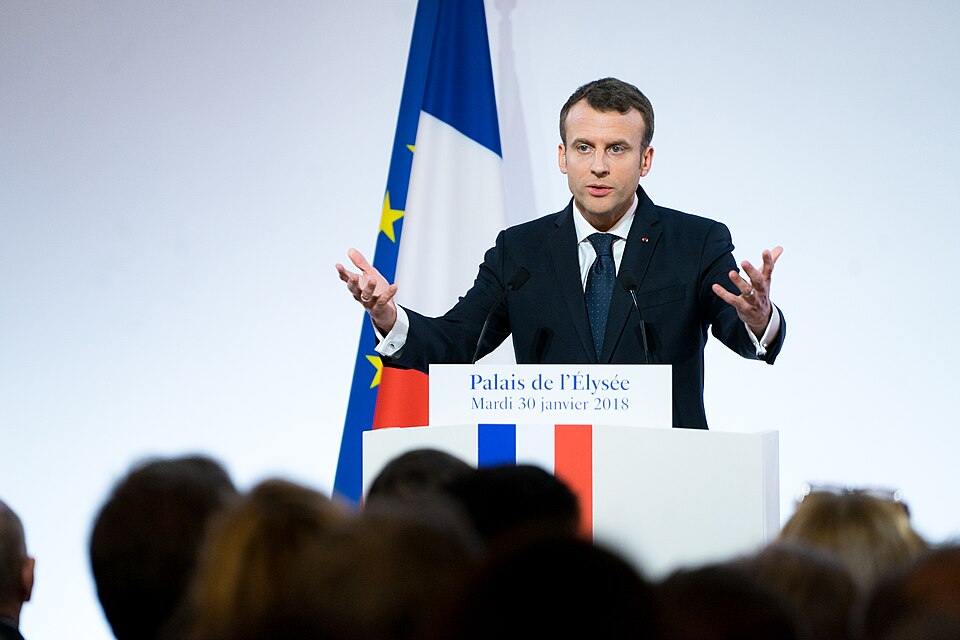
French President Emmanuel Macron has accused the far right, including Marine Le Pen’s National Rally (RN), of helping to normalise racist rhetoric in France. His remarks
come amid mounting political tensions following the killing of a young man in a racially motivated attack near Paris.
The killing, which took place last Friday in Trappes, a diverse town southwest of the French capital, left 26-year-old Pengo Bossio Wangi dead and seven other people injured. The incident has intensified an already heated national debate about racism, immigration and the influence of far-right ideas in politics and the media, with a presidential election approaching.
Speaking in a lengthy interview with YouTube personality Hugo Decrypte, published late Wednesday, Macron argued that certain political movements had contributed to an increasingly permissive climate for racist language and attitudes.
He specifically pointed to the National Rally and groups associated with the party, accusing them of helping to create an environment in which discriminatory rhetoric has become more acceptable.
The president’s intervention prompted an immediate backlash from the anti-immigration party, which has been performing strongly in opinion polls.
Jean-Philippe Tanguy, an RN parliamentarian, rejected Macron’s accusations, arguing that the president himself should be held responsible for the state of French society after nearly nine years in power. Tanguy accused the government of failing to prevent the spread of antisemitism, homophobia and other forms of hatred.
Investigation intensifies debate over racial hatred
The political dispute has grown as investigators examine the circumstances surrounding the Trappes attack.
Anti-terrorism prosecutors said on Thursday that the 39-year-old suspect, identified as Kevin T., had admitted during questioning that he was looking for people he perceived as being of African or Muslim origin.
Investigators also reportedly found a copy of Adolf Hitler’s Mein Kampf among his belongings, along with stickers referring to the National Rally. The suspect, however, denied supporting any particular political party.
The findings have intensified scrutiny of the relationship between political rhetoric and violence, although the presence of party-related material does not in itself establish a direct connection between the suspect and the RN.
The case has also reignited controversy over previous statements by senior figures in the party. RN leader Jordan Bardella described Trappes as a “mini-Islamic state” in 2021, a characterisation that Senator Edwige Diaz defended this week.
Lawyers representing the victim’s family have warned against language that portrays particular communities as inherently suspicious or unwelcome.
Zineb Alami, the lawyer for Bossio Wangi’s father, said the country was experiencing a toxic atmosphere in which certain people were repeatedly presented as illegitimate or threatening.
She stressed that political statements could have serious consequences, arguing that words carry weight.
Political rhetoric under growing scrutiny
The controversy extends beyond the National Rally. Following street protests and episodes of rioting and looting earlier this month, several right-wing politicians, including Bardella, and media commentators blamed immigration for the unrest without presenting evidence establishing such a link.
At a memorial march for Bossio Wangi on Sunday, participants criticised media coverage that they believed was contributing to racial hostility.
Macron’s centrist minority government has also faced accusations that it has failed to respond adequately to the growing acceptance of far-right ideas.
Sociologist Solène Brun told Reuters that the normalisation of far-right thinking was no longer confined to the National Rally but had spread into government circles.
The debate has placed Aurore Bergé, the minister responsible for gender equality and the fight against discrimination, under pressure. Lawmakers called on her this week to withdraw a comment she made last month suggesting that the so-called “Great Replacement” could legitimately be discussed.
The Great Replacement is a far-right conspiracy theory claiming that established European populations are being deliberately replaced by immigrants and other minority groups. The theory has featured in the rhetoric of individuals responsible for far-right attacks in several countries.
Meanwhile, authorities reported that far-right activists seeking confrontations with demonstrators had been observed in more than a dozen French cities last week.
With the presidential election drawing closer, the Trappes killing has become a focal point for a broader confrontation over immigration, racism, political responsibility and the boundaries of public debate. Macron’s accusations have sharpened the divide between his government and the National Rally, while intensifying questions about how political leaders and media organisations influence attitudes towards France’s minority communities. Photo by Jacques Paquier, Wikimedia commons.