
















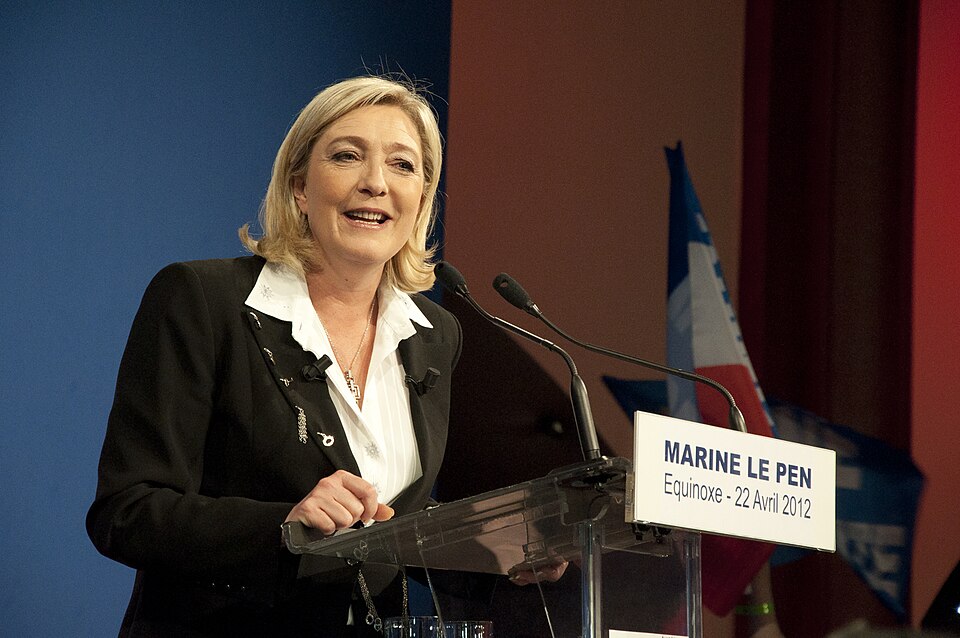
French far-right leader Marine Le Pen on Tuesday forcefully denied accusations that her party ran an organized scheme to embezzle European Parliament funds, as she took the
stand in a high-stakes appeal that could determine her political future.
Speaking before an appeals court in Paris, Le Pen rejected the lower court’s finding that the National Rally (RN) had operated a long-running “system” to misuse EU money by employing party staff in France under the guise of parliamentary assistants. The case stems from activities dating back to her years as a member of the European Parliament.
“The term ‘system’ bothers me,” Le Pen told the court. “It suggests manipulation.” She argued that each assistant’s role should be examined individually, saying the cases reflected “very different realities.”
Last year, a French court convicted Le Pen, her party, and several former European Parliament lawmakers, assistants, and accountants of misusing EU funds between 2004 and 2016. The ruling found that money intended for parliamentary work in Brussels and Strasbourg had instead been used to pay National Rally staff based in France.
The verdict dealt a severe blow to Le Pen, barring her from running for public office for five years — a sanction that threatens to derail what many see as her strongest chance yet to win the presidency in 2027. A three-time presidential candidate, she reached the runoff in both 2017 and 2022, losing on each occasion to Emmanuel Macron, who is constitutionally barred from seeking a third term.
Le Pen, 11 co-defendants, and the party have all appealed the ruling. The hearings are expected to continue until mid-February, with a decision due this summer.
Beyond the election ban, Le Pen was also sentenced in the initial trial to four years in prison — two of them suspended — and fined €100,000. If the appeal fails, she again faces the possibility of up to 10 years behind bars and a fine of as much as €1 million.
Her defense has repeatedly sought to shift responsibility onto the European Parliament itself. Le Pen has argued that her party had no intention of breaking the law and claimed that EU authorities failed to adequately warn lawmakers if rules were being violated.
“If any wrongdoing occurred, the European Parliament did not play the warning role it should have,” she said when the appeal opened last week.
That argument was challenged by EU Parliament official Didier Klethi, who testified that the rules governing parliamentary assistants were clear. Lawmakers receive a monthly stipend — €21,379 in 2024 — to hire staff, he said, but while assistants may engage in political activity, such work is strictly prohibited during paid working hours.
As the appeal unfolds, the outcome carries consequences far beyond the courtroom. If the original ruling is upheld, Le Pen would be sidelined from the 2027 race — a moment that could reshape France’s political landscape at a time when the far right believes victory is finally within reach. Photo by Rémi Noyon, Wikimedia commons.