












The European Commission has unveiled an initial €1.9 billion humanitarian aid budget for 2026, sending a strong signal of commitment at a time when global humanitarian needs
are reaching record levels and several major donors are scaling back their support.
With an estimated 239 million people worldwide in need of humanitarian assistance, the announcement comes amid growing pressure on the international aid system. Commissioner for Equality, Preparedness and Crisis Management Hadja Lahbib is presenting the EU’s pledge this week at the World Economic Forum in Davos, where she is also calling on the private sector to help close the widening funding gap through innovative financing and partnerships.
Sustaining life-saving aid worldwide
The EU’s humanitarian funding focuses on delivering essential, life-saving assistance where it is needed most — including emergency food and shelter, healthcare, protection for vulnerable populations, and education for children affected by crises.
As conflicts intensify and respect for international humanitarian law comes under increasing strain, the Commission stressed that the EU will continue to provide principled, needs-based aid, regardless of geography or political context.
Regional funding priorities for 2026
The €1.9 billion allocation reflects the scale and complexity of crises across the globe:
€557 million for West and Central Africa, covering the Sahel, Lake Chad basin, north-west Nigeria, Central and Southern Africa, the Great Lakes region and the Greater Horn of Africa.
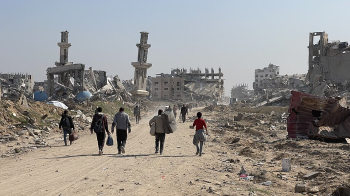
€448 million for the Middle East, with a strong focus on Gaza following last year’s fragile ceasefire, as well as Iraq, Yemen, Syria and Lebanon.
€145 million for Ukraine, as Russia’s invasion enters its fourth year, plus an additional €8 million for humanitarian projects in Moldova.
€126 million to address urgent needs in Afghanistan, Pakistan and Iran.
€95 million for Central and South America and the Caribbean, a region affected by armed conflict, widespread violence, political instability, inequality and environmental pressures.
€73 million for Southeast Asia and the Pacific, particularly in response to the crisis in Myanmar and its spillover effects in Bangladesh.
€14.6 million for North Africa, where political, economic and social challenges continue to fuel humanitarian needs.
In addition, more than €415 million has been set aside to respond to sudden-onset emergencies worldwide and to maintain a strategic humanitarian supply chain.
Engaging business leaders in Davos
Beyond public funding, the Commission is pushing for stronger private sector involvement. In Davos, Commissioner Lahbib is meeting with business leaders and investors to explore how innovation, technology and alternative financing models can support humanitarian responses at scale.
Together with the World Economic Forum, she will co-host a high-level event titled “New Alliances in Aid and Development” on 22 January, focusing on partnerships that can help bridge the growing gap between humanitarian needs and available resources.
A long-standing global donor
The EU and its Member States remain the world’s largest humanitarian aid donor. Since 1992, the European Commission has delivered humanitarian assistance in more than 110 countries, working through non-governmental organisations, UN agencies, international organisations and specialised bodies in EU Member States.
Central to this effort is the European Emergency Response Coordination Centre (ERCC), which operates around the clock to coordinate rapid emergency assistance. Upon request from national authorities or UN bodies, the ERCC helps mobilise civil protection and humanitarian support both inside and outside the EU, acting as a key coordination hub during major disasters.
As humanitarian crises continue to multiply, the Commission’s 2026 budget underscores the EU’s intention to remain a cornerstone of the global humanitarian response — while urging others to step up alongside it.