











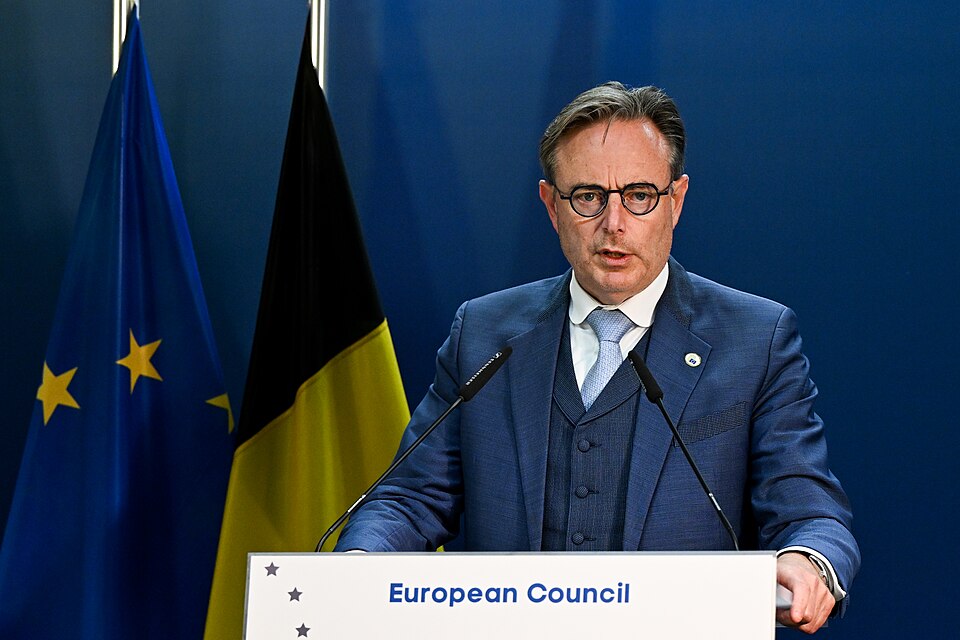
Belgium’s Prime Minister, Bart De Wever, has triggered political debate after suggesting that a negotiated agreement could ultimately be the most realistic way to end the war
between Russia and Ukraine.
In a series of interviews with French-language newspapers, De Wever argued that Europe alone is unlikely to defeat Russian President Vladimir Putin militarily through continued arms deliveries to Ukraine. He also warned that isolating Russia economically would be difficult without stronger backing from the United States.
Because of these limitations, the Belgian prime minister said negotiations might eventually become necessary to bring the conflict to an end.
Call for pragmatism in the war
De Wever suggested that, over time, relations between Europe and Russia might have to be rebuilt. He cautioned that the prolonged war is taking a toll on European economies, particularly through high energy costs. According to him, improved relations with Moscow could eventually help restore cheaper energy supplies.
At the same time, he emphasized that Europe must remain cautious and continue strengthening its military capabilities to ensure its own security.
Government pushback over timing
The remarks quickly sparked criticism within the Belgian government. Belgium’s foreign minister, Maxime Prévot, warned that discussing the normalization of relations with Russia too early could undermine European unity.
Prévot said the current strategy of sanctions and military support is designed to create conditions for meaningful negotiations — but only when Ukraine is able to decide its own future.
“The door to dialogue must remain open,” he said, “but normalisation with Russia is not for tomorrow.”
The comments also fueled debate among coalition partners in Belgium, with some politicians insisting that peace talks can only begin after Russian aggression ends.
Economic concerns behind the comments
De Wever made the statements while promoting the French-language edition of his book *Over Welvaart (Prospérité)*. During the interviews, he also spoke about Belgium’s economic challenges and the need for deeper budget reforms.
The prime minister warned that the government must take difficult financial decisions early in its mandate. A fiscal monitoring committee is expected to warn that Belgium’s public finances are drifting off course, potentially forcing adjustments to the 2026 budget and stricter measures for 2027.
According to De Wever, introducing €3–4 billion in structural savings during the current legislature could help close an estimated €11 billion budget gap projected by the National Bank of Belgium by 2029.
He also suggested that higher taxes on wealthy citizens could be considered in the future, but stressed that the government should first focus on reforms aimed at strengthening businesses and boosting economic growth.
Growing debate across Europe
De Wever’s comments come at a time when discussions about the long-term strategy toward Russia are intensifying across Europe. While many leaders insist that continued pressure on Moscow is essential, others are increasingly raising questions about how and when diplomatic negotiations might eventually take place.
For now, however, Belgium’s government appears divided over whether the time has come to publicly discuss a potential path toward talks with Russia. Photo by © European Union, 1998 – 2026, Wikimedia commons.