










Germany’s political landscape shifted on Sunday as Chancellor Friedrich Merz and his conservative Christian Democrats (CDU) emerged ahead in a key state election in
Rhineland-Palatinate, according to early projections. The result signals a potential turning point in a region long dominated by the Social Democrats (SPD).
Initial figures released by broadcaster ARD placed the CDU at 30.5% of the vote, comfortably ahead of the SPD on 26.9%. If confirmed, the outcome would mark a significant victory for Merz, coming just weeks after his party narrowly lost in Baden-Württemberg.
For the SPD, the result is nothing short of historic — and painful. The party has governed Rhineland-Palatinate for 35 years, and losing its grip on the state underscores a broader crisis that has deepened since the collapse of former Chancellor Olaf Scholz’s federal coalition in 2024. SPD Secretary-General Tim Klüssendorf described the projection as a “bitter setback.”
Despite the setback for their junior partner, CDU officials struck a more optimistic tone. Secretary-General Carsten Linnemann highlighted that combined support for the CDU/CSU bloc and SPD still exceeds 50%, suggesting continued strength for Germany’s centrist parties.
The far-right Alternative for Germany (AfD) is projected to secure around 20% of the vote, reinforcing its position as a powerful force in German politics following similar gains in other regions.
Beyond party politics, the election reflects growing economic anxieties. Rhineland-Palatinate — a major wine-producing region and home to industrial heavyweight BASF — has felt the strain of Germany’s sluggish economy. Concerns over potential energy disruptions linked to tensions involving Iran have further heightened voter unease.
If the results hold, CDU candidate Gordon Schnieder is on track to replace incumbent SPD premier Alexander Schweitzer. A coalition between the CDU and SPD at the state level remains a likely outcome, mirroring the current governing arrangement in Berlin.
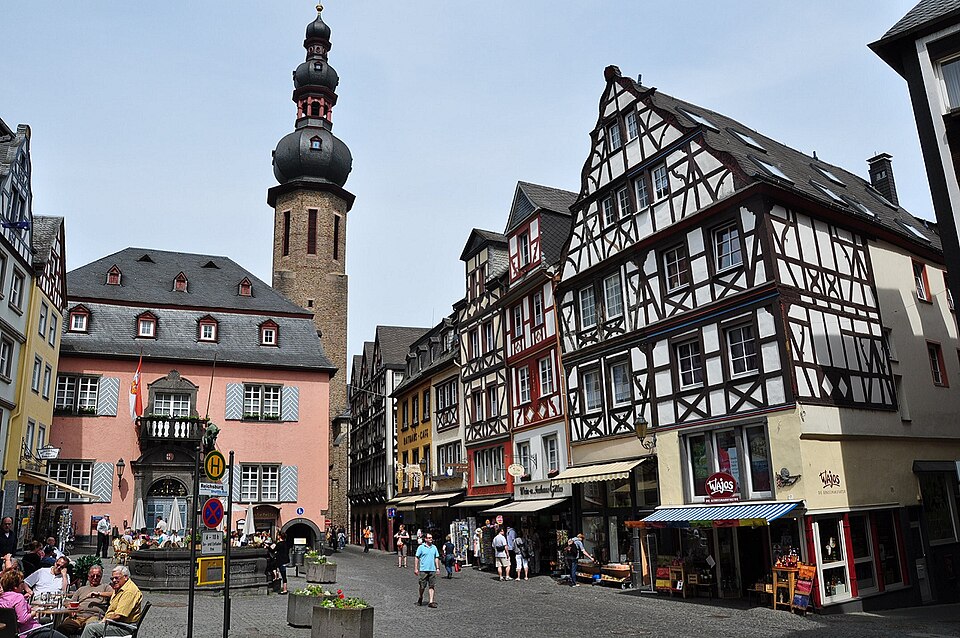
The Rhineland-Palatinate vote is the second in a series of crucial state elections this year. Attention now turns to upcoming contests in Berlin and eastern regions such as Mecklenburg-Vorpommern and Saxony-Anhalt, where the AfD hopes to secure its first major electoral victory. Photo by Vincent van Zeijst, Wikimedia commons.