
Latest News
Italy’s local elections draw over 6 million voters in key early test for Meloni’s government
 Italy’s local elections draw over 6 million voters in key early test for Meloni’s government
Gabriel Attal launches presidential bid, deepening France’s centrist divide
 Gabriel Attal launches presidential bid, deepening France’s centrist divide
EU could fast-track Britain’s return if UK moves to reverse Brexit
 EU could fast-track Britain’s return if UK moves to reverse Brexit
Belgium secures access to Chinese market for apple exports
 Belgium secures access to Chinese market for apple exports
Belgium condemns Russia after deadly overnight strikes on Ukraine, says peace claims “don’t match reality”
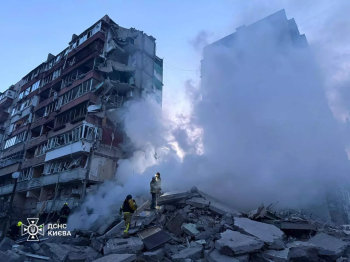 Belgium condemns Russia after deadly overnight strikes on Ukraine, says peace claims “don’t match reality”
Oxford PPE graduate Jonathan Wilkinson named Canada’s EU Ambassador in diplomatic appointment
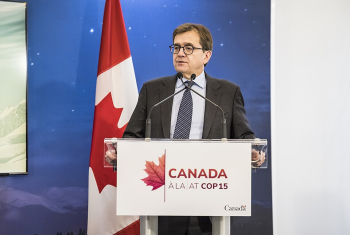 Oxford PPE graduate Jonathan Wilkinson named Canada’s EU Ambassador in diplomatic appointment
EU Commission clears €13 million French support scheme to offset fuel price surge for fishing sector
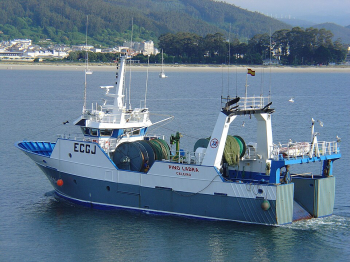 EU Commission clears €13 million French support scheme to offset fuel price surge for fishing sector
European Commission issues guidance to streamline EU water law implementation and support critical raw materials projects
 European Commission issues guidance to streamline EU water law implementation and support critical raw materials projects
EU Parliament urges action to close gender care gap across Europe
 EU Parliament urges action to close gender care gap across Europe
European Commission selects 65 projects under first EU-wide innovation fund heat auction
 European Commission selects 65 projects under first EU-wide innovation fund heat auction
Must Read
-
 Zurich introduces Eruv, creating a Sabbath-friendly public zone for Jewish life
Zurich has quietly drawn a new kind of line across the city — one that cannot be seen at first glance, yet carries deep religious and social meaning. Spanning severalRead More...
Zurich introduces Eruv, creating a Sabbath-friendly public zone for Jewish life
Zurich has quietly drawn a new kind of line across the city — one that cannot be seen at first glance, yet carries deep religious and social meaning. Spanning severalRead More... -
 Zurab Musinyan: “Let my case lie at door of Russian special services combating international terrorism…”
Specialized Oil-Loading Seaport Vitino captured by Russian security officials through hostage taking keeps on being a subject of carve-up and litigations by Russian and international companies....Read More...
Zurab Musinyan: “Let my case lie at door of Russian special services combating international terrorism…”
Specialized Oil-Loading Seaport Vitino captured by Russian security officials through hostage taking keeps on being a subject of carve-up and litigations by Russian and international companies....Read More... -
 Young Europeans losing faith in democracy
Recent findings from a comprehensive survey conducted by the YouGov institute for the Tui Foundation reveal a concerning trend among Europe’s youth: a growingRead More...
Young Europeans losing faith in democracy
Recent findings from a comprehensive survey conducted by the YouGov institute for the Tui Foundation reveal a concerning trend among Europe’s youth: a growingRead More... -
 Young Europeans lead the way in digital civic participation
As Europe becomes increasingly digital, young people are stepping up as the most active voices in online civic and political life. In 2025, nearly a quarter (24.3%) of EuropeansRead More...
Young Europeans lead the way in digital civic participation
As Europe becomes increasingly digital, young people are stepping up as the most active voices in online civic and political life. In 2025, nearly a quarter (24.3%) of EuropeansRead More... -
 World Refugee Day: Joint Statement by the European Commission and the High Representative
No country, no region in the world has been spared from the impact of COVID-19. The virus is exacerbating existing inequalities and has a disproportionate effect on refugees,Read More...
World Refugee Day: Joint Statement by the European Commission and the High Representative
No country, no region in the world has been spared from the impact of COVID-19. The virus is exacerbating existing inequalities and has a disproportionate effect on refugees,Read More... -
 World peace under strain — yet some countries still shine
As a storm of conflicts, rising militarisation and geopolitical fragmentation rattles the globe, the annual Global Peace Index 2025 paints a soberingRead More...
World peace under strain — yet some countries still shine
As a storm of conflicts, rising militarisation and geopolitical fragmentation rattles the globe, the annual Global Peace Index 2025 paints a soberingRead More... -
 Women still a minority among Flemish professors despite gains elsewhere
Women account for just one in three professors and visiting professors at Flemish universities, according to new figures released on Tuesday by Statistiek Vlaanderen.Read More...
Women still a minority among Flemish professors despite gains elsewhere
Women account for just one in three professors and visiting professors at Flemish universities, according to new figures released on Tuesday by Statistiek Vlaanderen.Read More...
Latest News
Italy’s local elections draw over 6 million voters in key early test for Meloni’s government
Italy’s local elections draw over 6 million voters in key early test for Meloni’s government
Gabriel Attal launches presidential bid, deepening France’s centrist divide
Gabriel Attal launches presidential bid, deepening France’s centrist divide
EU could fast-track Britain’s return if UK moves to reverse Brexit
EU could fast-track Britain’s return if UK moves to reverse Brexit
Belgium secures access to Chinese market for apple exports
Belgium secures access to Chinese market for apple exports
Belgium condemns Russia after deadly overnight strikes on Ukraine, says peace claims “don’t match reality”
Belgium condemns Russia after deadly overnight strikes on Ukraine, says peace claims “don’t match reality”
Oxford PPE graduate Jonathan Wilkinson named Canada’s EU Ambassador in diplomatic appointment
Oxford PPE graduate Jonathan Wilkinson named Canada’s EU Ambassador in diplomatic appointment
EU Commission clears €13 million French support scheme to offset fuel price surge for fishing sector
EU Commission clears €13 million French support scheme to offset fuel price surge for fishing sector
European Commission issues guidance to streamline EU water law implementation and support critical raw materials projects
European Commission issues guidance to streamline EU water law implementation and support critical raw materials projects
EU Parliament urges action to close gender care gap across Europe
EU Parliament urges action to close gender care gap across Europe
European Commission selects 65 projects under first EU-wide innovation fund heat auction
European Commission selects 65 projects under first EU-wide innovation fund heat auction
Must Read
-
Zurich introduces Eruv, creating a Sabbath-friendly public zone for Jewish life
Zurich has quietly drawn a new kind of line across the city — one that cannot be seen at first glance, yet carries deep religious and social meaning. Spanning severalRead More...
-
Zurab Musinyan: “Let my case lie at door of Russian special services combating international terrorism…”
Specialized Oil-Loading Seaport Vitino captured by Russian security officials through hostage taking keeps on being a subject of carve-up and litigations by Russian and international companies....Read More...
-
Young Europeans losing faith in democracy
Recent findings from a comprehensive survey conducted by the YouGov institute for the Tui Foundation reveal a concerning trend among Europe’s youth: a growingRead More...
-
Young Europeans lead the way in digital civic participation
As Europe becomes increasingly digital, young people are stepping up as the most active voices in online civic and political life. In 2025, nearly a quarter (24.3%) of EuropeansRead More...
-
World Refugee Day: Joint Statement by the European Commission and the High Representative
No country, no region in the world has been spared from the impact of COVID-19. The virus is exacerbating existing inequalities and has a disproportionate effect on refugees,Read More...
-
World peace under strain — yet some countries still shine
As a storm of conflicts, rising militarisation and geopolitical fragmentation rattles the globe, the annual Global Peace Index 2025 paints a soberingRead More...
-
Women still a minority among Flemish professors despite gains elsewhere
Women account for just one in three professors and visiting professors at Flemish universities, according to new figures released on Tuesday by Statistiek Vlaanderen.Read More...

Facebook has closed 23 mostly pro-government pages in Italy which were spreading fake news and anti-immigrant content, after an investigation by Avaaz, the civil rights group said on Monday.
More than half of the pages, which had a total of almost 2.5 million followers, supported the far-right anti-immigrant League party or the anti-establishment Five Star Movement, which form the ruling coalition, Avaaz said in a statement.
The most active page translates as "We want the Five Star Movement in government" which had shared a quote wrongly attributed to anti-mafia writer Roberto Saviano that he would "prefer to save migrants than Italian earthquake victims."
Saviano was forced to publicly deny having said it.
A pro-League page shared a video which it wrongly said depicted migrants smashing up a police car.
The footage was in fact filmed for a movie, but was viewed almost 10 million times, days ahead of next week's European parliament elections in which Italian populist parties hope to do well.
"This is more proof that lies designed to sow hate and division in our societies are being spread deliberately on social media ahead of the EU elections," said Avaaz's Christoph Schott.
"Facebook has done a good job in taking these pages down, but it says a lot that a multi-billion dollar company is relying on a crowd-funded Avaaz investigation to defend Europe’s democracy. Facebook need to do more, and they need to do it fast."
Avaaz also noted the practice of "recycling followers" used by some supporters of the two ruling parties, whereby a page with non-political content changes its name to become political or partisan, retaining likes and followers.
One such page "was started as an agricultural breeders’ association of the Messina province and eventually became a League-supporting local chapter. The change was made one word at a time, gradually, using the ambiguity of the word 'League' to avoid the automatic checks carried out by Facebook," Avaaz said.
Facebook and other social networks are regularly accused of not doing enough to eliminate fake news from its platform.AFP

Four prominent leaders of Hong Kong’s democracy movement were jailed on Wednesday for their role in organizing mass pro-democracy protests in 2014 that paralyzed the city for months and infuriated Beijing.
The prison terms are the latest hammer blow to city’s beleaguered democracy movement, which has seen key figures jailed or banned from standing as legislators since their civil disobedience movement shook the city but failed to win any concessions.
Nine activists were all found guilty earlier in April of at least one charge in a prosecution that deployed rarely used colonial-era public nuisance laws over their participation in the Umbrella Movement protests, which called for free elections for the city’s leader.
Their trial renewed alarm over shrinking freedoms under an assertive China, which has rejected demands by Hong Kongers for a greater say in how the financial hub is run.
Two key leaders of the mass protests — sociology professor Chan Kin-man, 60, and law professor Benny Tai, 54 — received the longest sentences of 16 months in jail, sparking tears in court and angry chants from hundreds of supporters gathered outside.
Two other leaders — activist Raphael Wong and lawmaker Shiu Ka-chun — received eight month sentences while the rest either had their jail terms suspended or received a community service order. One defendant, lawmaker Tanya Chan, had her sentencing adjourned because she needs brain surgery.
The jail terms are the steepest yet for anyone involved in the 79-day protest, which vividly illustrated the huge anger — particularly among Hong Kong’s youth — over the city’s leadership and direction.
As Wong was led away by guards he proclaimed: “Our determination to fight for democracy will not change.”
Tai and Chan founded a civil disobedience campaign known as “Occupy Central” in 2013 alongside 75-year-old Baptist minister Chu Yiu-ming, who was one of the defendants to have his jail term suspended. AFP, photo by Mk2010, wikimedia.

Ugandan police said Tuesday it had placed pop star MP Bobi Wine under "preventive arrest" as the fiery government critic warned his opposition movement would not be cowed into silence.
Wine's confinement under house arrest in Kampala came as the United States rebuked the government for its heavy-handed crackdown on the political opposition and urged it respect democratic rights.
In recent days, police cancelled one of Wine's concerts and fired tear gas at fans who rallied behind the colourful singer-turned-MP, who has emerged a potential challenger to veteran President Yoweri Museveni.
Wine, whose real name is Robert Kyagulanyi, tried to leave his home in the capital Tuesday only to come face-to-face with riot police encircling his leafy residence.
The singer, eschewing his trademark red beret for a dark suit and red tie, said he was "under siege" but would still urge supporters to exercise their right to demonstrate.
"This is our country", the 36-year-old local music sensation told reporters at the gates of his home.
Police spokesman Fred Enanga told AFP that Wine "planned to disrupt public order" and officers would stay put outside his home until further notice.
"The preventive arrest policy works when someone is about to commit a crime, and officers stop him from committing that crime," Enanga said.
Wine's charisma and music steeped in anti-government messaging has attracted a muscular response from Kampala, which has charged him with treason and repeatedly shut down his rowdy concerts that double as political rallies.
The cancellation of a much-hyped performance Monday sparked clashes between opposition supporters and baton-wielding police.
- People are 'fed up' -
The US embassy in Kampala rebuked the government for resorting to heavy-handed tactics.
"Strong leaders and states do not stifle speech –- they allow their citizens to participate fully and without fear in a vibrant multi-party democracy," the statement said.
Museveni seized power in 1986 at the head of a rebel army and has ruled Uganda ever since.
The Supreme Court last week upheld the constitutional validity of removing age caps for presidents, clearing the way for 74-year-old Museveni to run again.
But he faces a fight in Wine, who has rallied Uganda's youth behind his defiant music and provocative challenges to a leader twice his age.
Wine warned that the toppling of long-serving autocrats in Algeria and Sudan recently under the weight of popular protest had not gone unnoticed in Uganda.
"This is what we are left with -- to call on all Ugandans to protest peacefully until Museveni leaves power," Wine told AFP.
"Museveni should be aware the people are fed up and the earlier the better, he will be swept out of power."
Paris university cancels conference featuring Jewish philosopher’s address due to threat of protests
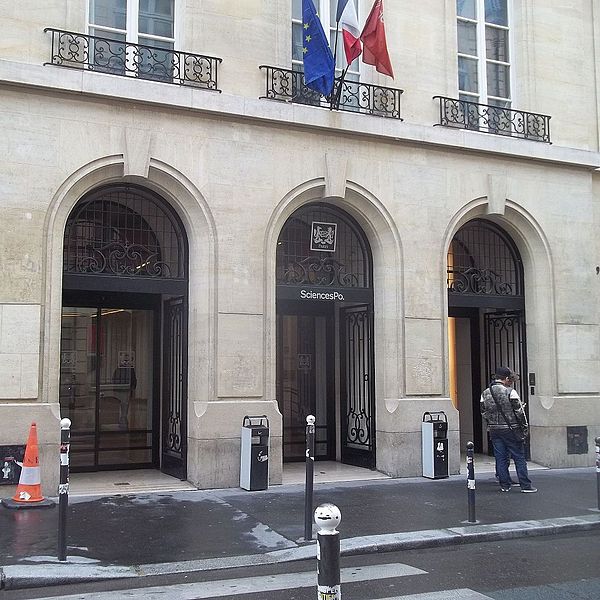
Organizers canceled a conference at a Paris university featuring an address by Jewish philosopher Alain Finkielkraut following the threat of protests.
“Security is our top priority and it’s preferable to take no risks,” organizers of the event at Sciences Po university wrote Tuesday.
The conference on Europe’s future was to include other speakers, but they were not named in the letter threatening protests. Finkielkraut was accosted recently on a Paris street for being a “Zionist.”
In their statement, the authors of the call to demonstrate outside the conference at Sciences Po wrote: “We cannot accept Finkielkraut’s ‘modern Europe’ and his islamophobic, racist, sexist and homophobic rhetoric.”
The university recently canceled an event on “Israeli apartheid,” which the protesters alleged as showing a pro-Israeli bias by faculty.
Finkielkraut is a centrist thinker who has criticized the far right, as well as Muslim communities and far-left activists, for failing to integrate. A best-selling author, Finkielkraut entered the pantheon of French academia in 2016 when he was admitted into the Academie Francaise, a council of 40 greats elected for life.
A Zionist supporter of Israel, he is a member of the dovish J Call group styled after the J Street lobby in the United States.JTA
In February, police extracted Finkielkraut from a hostile crowd after he was recognized on the street by participants of so-called yellow vests demonstrations over the cost of living. His assailants called him a “dirty Zionist” and told him to “go back to Tel Aviv.” photo by Maxou-44/wikimedia
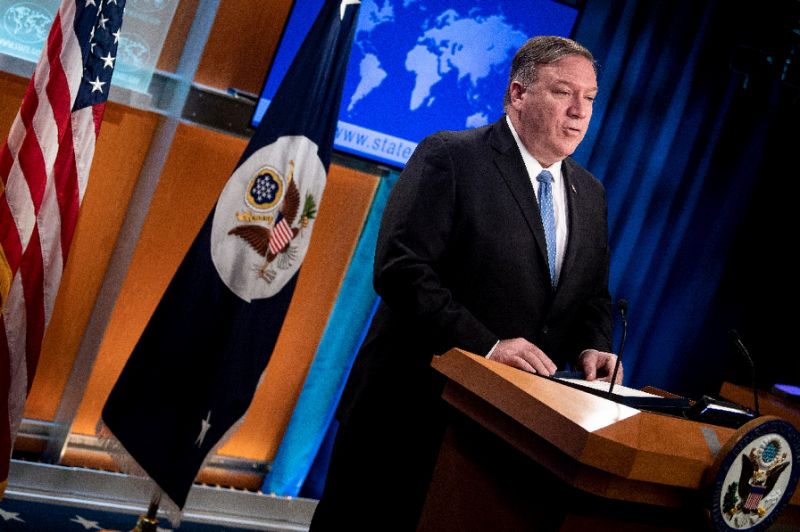
The European Union and Canada warned Wednesday of reprisals after the United States for the first time allowed lawsuits against foreign companies operating in Cuba, including EU and Canadian firms.
US Secretary of State Mike Pompeo announced Washington will on May 2 end routine wavers to the 1996 Helms-Burton act and allow for lawsuits over property seized by Cuba.
"The EU and Canada consider the extraterritorial application of unilateral Cuba-related measures contrary to international law," they said in a joint statement from Brussels.
It was signed by EU foreign policy chief Federica Mogherini and Trade Commissioner Cecilia Malmstrom, along with Canadian Foreign Minister Chrystia Freeland.
"We are determined to work together to protect the interests of our companies in the context of the WTO", the Geneva-based World Trade Organization.
"Our respective laws allow any US claims to be followed by counter-claims in European and Canadian courts," the three officials said.
"The US decision to allow suits against foreign companies can only lead to an unnecessary spiral of legal actions," they warned.
Mogherini and Malmstrom had previously sent a similar warning to Pompeo in a letter dated April 10, according to a copy of a letter obtained by AFP.
"Any person or company doing business in Cuba should heed this announcement," Pompeo told reporters in the US.
Under the Title II provision of the Helms-Burton Act, any companies that operate in property seized by Cuba during Fidel Castro's 1959 communist revolution could starting next month face lawsuits in US courts from the vast and politically powerful Cuban American diaspora.
- EU counter-claims threatened -
Pompeo called on all businesses that own buildings in Cuba to "fully investigate whether they are stolen in service of a failed communist experiment".
In their letter, Mogherini and Malmstrom urged Pompeo to stick to what they said was an agreement on managing policy differences over Cuba under which the US waived Title III and the EU suspended a threatened case at the World Trade Organization against Washington.
They said they were calling on Washington "to maintain a full waiver of Title III for EU companies and citizens", the letter said.
"Failing this, the EU will be obliged to use all means at its disposal, including in cooperation with other international partners, to protect its interests," they said.
"The EU is considering a possible launch of the WTO case," the letter added.
Mogherini and Malmstrom warned that "any claims in US courts would likely be followed by counter-claims by EU companies in EU courts", according to their letter.
Kimberly Breier, the top US diplomat for Latin America, said the United States would not issue any exemptions to the new law.
But Breier said businesses would only be affected if they operate in properties seized from Cubans who have emigrated to the United States.
"I think the vast number of European companies will not have any concerns operating in Cuba," she said.
Another senior US State Department official told reporters on condition of anonymity that "any European company, any American company, any company around the world that trafficks in property that was confiscated by the regime does have the possiblity of being hit by this legislation".
But the official could "not give an assessment on how many companies that applies to". AFP