












Deindustrialisation of Ukraine after the war is a real risk, not a hypothesis. Look at Germany. Until recently, it was Europe’s industrial powerhouse. Today, the country is facing
a dramatic erosion of its industrial base: 486,000 jobs disappeared in the first quarter of 2026, including 171,000 in manufacturing, according to Germany’s Federal Statistical Office.
Tanja Gönner, chief executive of the Federation of German Industries (BDI), has described the trend openly as deindustrialisation. Germany is losing around 15,000 industrial jobs every month and, in her words, has “lost ground in terms of competitiveness”.
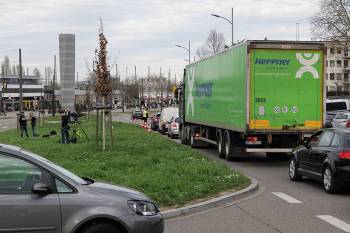
Volkswagen offers a striking example. The carmaker is preparing the largest workforce reductions in its history, potentially affecting up to 100,000 jobs, alongside the closure of at least four plants in Germany. The problem is not simply high operating or energy costs. Chinese competition is becoming increasingly decisive. The share of foreign carmakers in the Chinese market fell from 57% in 2020 to 32% in 2025, while BYD is already opening manufacturing plants in Europe.
BASF, ArcelorMittal and other industrial giants are also reducing their presence on the continent. Across the EU, the number of new industrial investment projects has declined for a third consecutive year.
Now consider a very different picture.
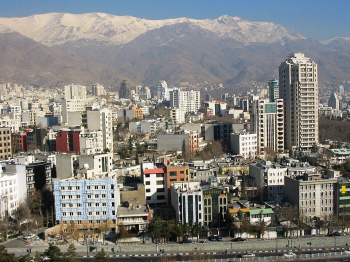
Vietnam’s GDP grew by 8.02% in 2025, and growth is accelerating rather than slowing: the economy expanded by 8.18% in the first half of 2026. Standard Chartered and UOB have recently raised their forecasts for full-year growth to between 8.5% and 9.5%.
Record foreign investment, manufacturing and exports are driving the economy. There is no miracle involved — simply a consistent economic strategy built around a network of free-trade agreements, stability and the deliberate development of industrial and export zones.
This is where an important point for Ukraine emerges: Asian markets should not be treated as an “additional” opportunity, but as a strategic direction.
As the German example demonstrates, Europe itself is facing a structural industrial crisis and is unlikely to become a major source of demand for Ukrainian industrial goods in the coming years. On the contrary, European markets may increasingly become a source of competition from low-cost imports.
Asia presents a different opportunity. Its expanding middle class, efforts to diversify supply chains away from China under the “China+1” strategy, and the active search by Vietnam, India, Gulf states and Southeast Asian economies for new industrial partners all create potential openings for Ukraine.
For Kyiv, this points towards a parallel strategy: European integration should go hand in hand with free-trade agreements modelled partly on Vietnam’s approach, new logistics corridors through the Black Sea and Turkey, and export offices across Asian markets.
Such a strategy would not only diversify risks but also improve access to capital. Asian investors are increasingly looking for opportunities outside traditional Western markets.
And this is not some abstract “post-war” risk. It is already happening in one of Ukraine’s most important export sectors.
The mining and metals industry, one of the country’s major contributors to the state budget — generating UAH 190 billion in taxes over five years — is facing unprecedented pressure.
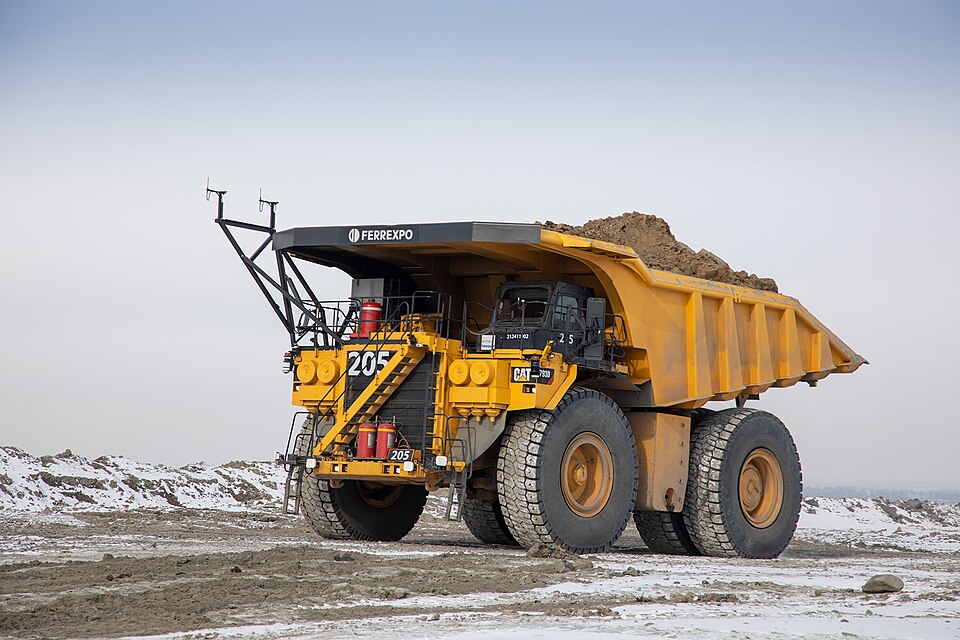
Ferrexpo, Ukraine’s largest producer of iron ore pellets, temporarily suspended production at its mining and processing facilities in August 2026 because of the threat of attacks in the ports region. In the first quarter, production volumes fell by 45% compared with the previous quarter and by 72% year on year. The company is currently operating only one of its four production lines.
The Poltava Mining and Processing Plant had already been forced to halt operations for around six weeks in January because of electricity shortages. Since 3 August 2026, it has been shut down for a second time — this time because of the blockade of ports. Finished products cannot be shipped, leaving the company short of working capital.
According to Ferrexpo, without new financing, its available funds will last only until mid-September.
The suspension of the maritime corridor in July has hit the sector particularly hard. According to the GMK Center, the impact is greater than that of the full blockade in 2022. Back then, the EU helped offset the loss of access to the sea by opening its market to Ukrainian goods. Today, the situation is moving in the opposite direction.
New import quotas could reduce Ukrainian steel deliveries to the EU by 60%, while the tariff applied above the quota has doubled from 25% to 50%.
Then there is the Carbon Border Adjustment Mechanism (CBAM), which is expected to reduce exports by an estimated $400–450 million this year, alongside a 68% increase in imports of rolled steel into the Ukrainian domestic market.
Taken together, the figures point to a serious deterioration. Ukraine produced 7.4 million tonnes of steel in 2025. Output could fall to between 6.2 million and 6.5 million tonnes in 2026, and then to just 5.6–5.8 million tonnes in 2027 — below the historic low recorded in 2023.
For post-war Ukraine, the window of opportunity will be narrow.
Dr Dmytro Sobolyev, advisor
Photo by RobSimmons223311, Wikimedia commons.