














The European Union has formally launched a sweeping reform of its customs system, beginning a transition towards a more integrated, digital and data-driven framework for
managing goods entering and leaving the bloc.
The new rules follow their formal approval by the Council of the European Union and the European Parliament and were published in the EU's Official Journal on 19 September. Implementation will take place progressively, with the first elements taking effect from this week.
At the centre of the overhaul is a redesigned Union Customs Code (UCC), alongside the creation of a new EU Customs Authority (EUCA) and a single European customs data infrastructure. Together, these measures are intended to replace fragmented national systems with a more coordinated approach to customs control.
The reform comes as European customs authorities face rapidly expanding e-commerce, increasingly complex international supply chains, geopolitical instability and growing demands for stronger consumer and product protection.
A single framework for EU customs
The revised Union Customs Code provides the legal foundation for the new system and significantly changes the way customs procedures are organised across the EU.
Rather than relying on a collection of largely national processes, the new framework is designed to make the Customs Union function more consistently as a single system. Procedures will be harmonised, risk assessment strengthened and administrative requirements reduced for businesses engaged in legitimate trade.
Over time, traders will be able to use a common European entry point for customs operations instead of navigating multiple national systems.
The reform also expands the strategic role of customs authorities. In addition to collecting customs duties, customs services will play a stronger part in enforcing EU rules covering areas such as product safety, environmental requirements and intellectual property.
Importers will face clearer responsibilities, while reporting and information requirements are expected to become more streamlined. Companies considered trusted traders will have access to substantially simplified procedures.
EU Customs Authority to coordinate border risks
A major institutional change is the creation of the EU Customs Authority, which is based in Lille and was legally established on 20 September.
The authority will strengthen cooperation between national customs administrations and support a more coordinated response to risks affecting the EU's external borders.
One of its most important responsibilities will be developing the EU Customs Data Hub. The new platform is intended to replace the fragmented IT infrastructure currently used by national customs administrations and create a common European system for managing customs information.
The Data Hub will provide businesses with a single interface for imports and exports and for exchanging information and completing customs formalities.
According to the European Commission, replacing the existing systems could generate annual savings of almost €2.3 billion in operating costs for Member States and approximately €2.58 billion in administrative costs for businesses.
The Data Hub is scheduled to become operational for e-commerce in July 2028. For other categories of trade, its implementation is expected to be completed by 2031 at the latest.
The new architecture is also intended to improve cooperation between customs, tax, market surveillance and other authorities, while giving the EU greater capacity to respond to emergencies and emerging threats at its borders.
New approach to low-value e-commerce imports
The reform also addresses one of the fastest-growing pressures on European customs services: the huge volume of inexpensive parcels ordered online from outside the EU.
As part of the wider changes, the EU has removed the previous €150 customs-duty exemption for low-value consignments. From 1 July 2026, a temporary €3 customs duty applies to eligible low-value consignments, with the temporary system scheduled to remain in place until July 2028. After that period, the normal customs-duty arrangements will apply.
The new customs framework also introduces an EU-wide handling fee for small parcels. The charge is intended to help cover the growing costs associated with processing large numbers of low-value shipments.
The handling fee is scheduled to begin in November 2026. Its fixed amount will be determined by the European Commission through a delegated act.
Implementation will take place in stages
Although the adoption of the new UCC completes the legislative process, the transformation of the EU customs system will not happen overnight.
Member States will have 12 months to implement the new rules in full, while the newly established EU Customs Authority is expected to begin operations in 2027.
The next major milestone will be the launch of the Customs Data Hub for e-commerce consignments, which is scheduled to become mandatory from 1 July 2028.
For wider international trade, the transition to the European Data Hub will continue until 2031 at the latest.
Reform designed for a changing trading environment
The EU Customs Union dates back to 1968 and has been a central component of European integration. By removing customs barriers between Member States, it helped establish the foundations for the Single Market and the free movement of goods.
The scale and nature of international trade, however, have changed dramatically since the system was created.
Customs authorities now process billions of consignments every year, while online shopping has generated an unprecedented increase in small parcels arriving from outside the EU. At the same time, authorities must respond to technological change, environmental objectives, shifting global supply chains, geopolitical tensions and new security risks.
The European Commission presented its proposal for a comprehensive customs reform in May 2023. The objective was to create a system capable of handling these pressures through greater digitalisation, shared data, stronger risk analysis and closer cooperation between European and national authorities.
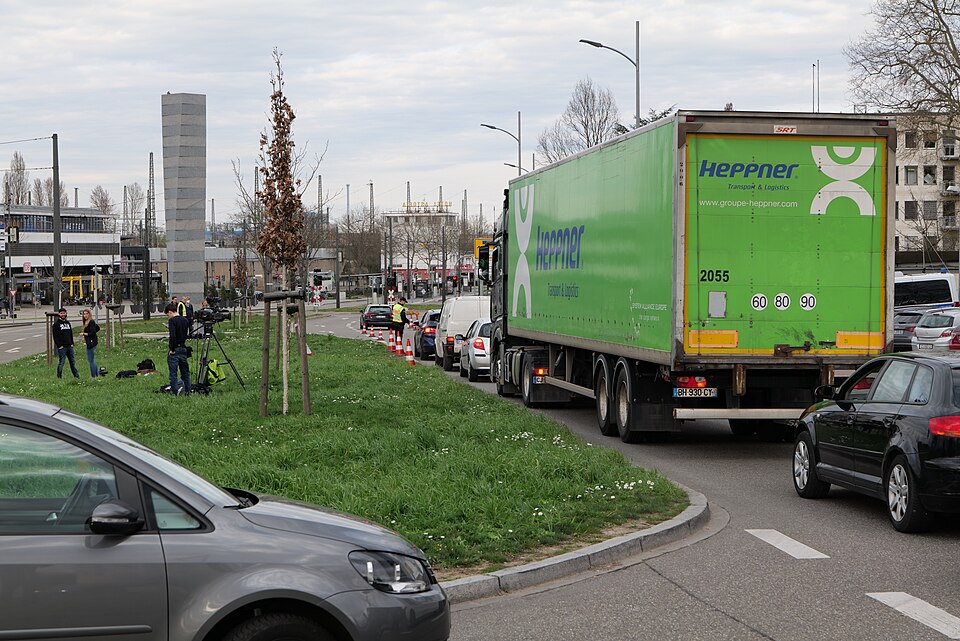
The implementation now underway represents the most substantial modernisation of the EU customs framework in decades, with the ultimate aim of making customs procedures more consistent for businesses while strengthening the EU's ability to monitor and control goods crossing its external borders. Photo by Leonhard Lenz, Wikimedia commons.