













Introduction
The European security system is undergoing a period of reassessment. Changes in the balance of power, the growth of EU strategic autonomy, and tense transatlantic relations are prompting experts to discuss scenarios that were previously considered marginal. At the center of these debates is France's role as the only European Union country with nuclear capabilities, the potential consequences of revisiting NATO membership, and the risks of fragmenting the Western security architecture.
France and responsibility for European security
After the United Kingdom left the EU, France remains the only member state with its own nuclear forces. This reinforces Paris's perception as one of the key guarantors of European security and raises questions about its responsibility for protecting peripheral regions, including the Arctic.
In expert debates, there is sometimes the argument that increased geopolitical competition in the Arctic—including the status of Greenland—requires a clearer EU stance. In this context, France is seen as capable of politically and strategically supporting allies, preventing any scenarios of unilateral pressure or attempts to revise territorial status. The focus is on deterrence and diplomatic protection of international law principles rather than military confrontation.
Debate on France's exit from NATO: Clémence Guetté's initiative
Recently, an active debate began in the French parliament regarding France's NATO participation. On January 9, 2026, Vice President of the National Assembly of France, Clémence Guetté of the left-wing party La France Insoumise, officially submitted a resolution proposing France's exit from NATO. (europediplomatic.com)
Guetté emphasizes that current U.S. policies undermine the international order and threaten peace, making France's participation in a U.S.-dominated alliance dangerous. Key arguments include:
U.S. actions allegedly violate the sovereignty of other states, including Venezuela and Palestine;
The U.S. is allegedly considering pressure on Greenland, potentially threatening the region's autonomy;
American military operations are conducted without regard for international law.
Clémence Guetté proposes starting with an exit from NATO's integrated command, as France did in 1966, followed by a full withdrawal from the alliance. (c4defence.com)
Her initiative has elicited a variety of reactions: some politicians and experts see it as a chance to enhance France's strategic autonomy and reduce the risk of automatic involvement in military conflicts, while others warn of the threat of isolation, the need for alternative collective security mechanisms, and potential economic consequences. European allies are also watching cautiously, as France's withdrawal from NATO could destabilize the EU's overall security architecture. (tpz.al)
Risks of NATO structure disruption
NATO has served not only as a military alliance but also as a political framework for Western countries for decades. Its weakening or fragmentation could have far-reaching consequences.
Experts warn that dismantling a unified deterrence structure could lead to increased regional tensions among Western states themselves. Without common rules and de-escalation mechanisms, old disputes—territorial, economic, or political—could escalate into dozens of major conflicts. Even if these do not become full-scale wars, the level of instability and militarization within the West would significantly increase.
Conclusion
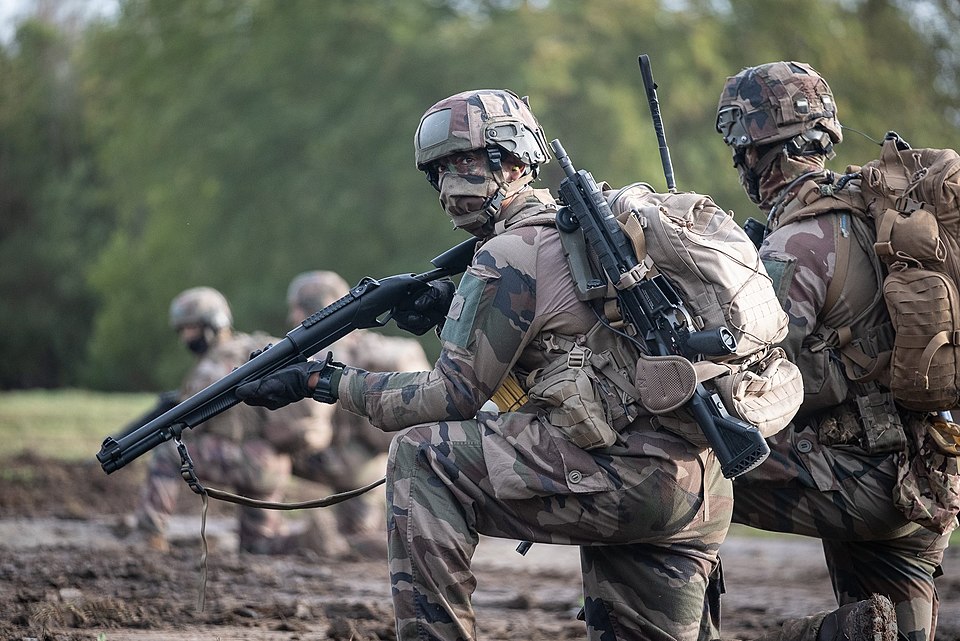
Debates about France's role, NATO's future, and European security reflect a broader crisis of trust and a transformation of international relations. France, with unique capabilities in the EU, is indeed at the center of these discussions. Clémence Guetté's initiative highlights domestic and European tensions, showing that any radical scenarios—from Arctic defense to withdrawal from military alliances—require careful analysis, as the cost of security mistakes for the West could be extremely high. Photo by Guillaume Cabre/French Army, Wikimedia comons.
Edward Sagalsky,
Vice President CEDS