









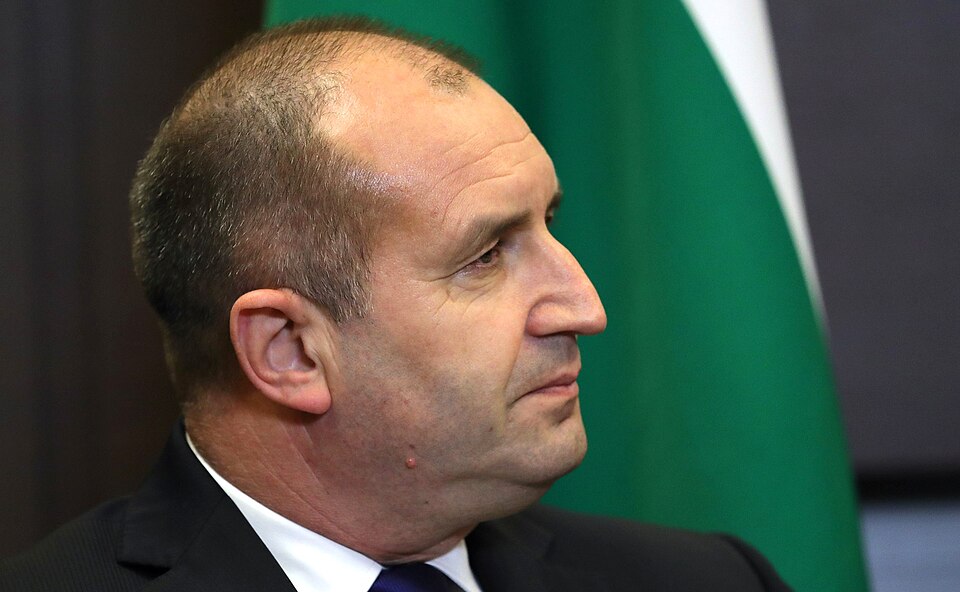
Former president Rumen Radev has emerged as the clear winner in Bulgaria’s latest parliamentary election, securing a decisive mandate that could fundamentally alter the
country’s political direction. His sweeping victory is already sparking debate about whether Bulgaria is edging toward a more personality-driven style of leadership seen elsewhere in Europe.
According to near-final results from the Central Election Commission, Radev’s Progressive Bulgaria party captured roughly 44.7% of the vote, far ahead of its competitors. The centre-right GERB-UDF alliance, led by Boyko Borissov, trailed with 13.4%, while the reformist bloc Continue the Change–Democratic Bulgaria secured 12.8%. Other parties, including the Movement for Rights and Freedoms and the nationalist Vazrazhdane, also cleared the electoral threshold.
If confirmed, the outcome would hand Radev something Bulgaria has not seen in decades: a single-party parliamentary majority. The country has been mired in political instability since 2021, cycling through eight elections in just a few years. This result could finally bring an end to fragile coalitions and repeated trips to the polls.
A shift toward strong leadership?
Radev’s campaign leaned heavily on his personal image rather than traditional party structures. Promising to dismantle what he describes as an entrenched “oligarchic model,” he positioned himself as an anti-corruption figure capable of restoring order.
That approach has drawn comparisons to Hungary’s long-dominant leader Viktor Orban, known for consolidating power and reshaping institutions around a strong executive. Like Orban, Radev has expressed scepticism toward certain EU policies, particularly on Russia and the war in Ukraine. During his presidency, he opposed sending military aid to Kyiv and questioned the impact of sanctions on Moscow, advocating instead for dialogue and pragmatic diplomacy.
At the same time, Radev has framed his stance as a defence of national interests, echoing broader trends across Europe where leaders emphasize sovereignty over alignment with Brussels.
Key differences remain
Despite surface similarities, analysts caution against overstating the comparison. Unlike Orban, Radev has not challenged Bulgaria’s EU membership or proposed a fundamental break from European institutions. Instead, he has called for a more pragmatic role within the bloc.
Bulgaria’s political system also remains more fragmented, with institutional checks that could limit sweeping changes. Even with a majority, significant reforms—especially in the judiciary—will likely require broader consensus.
Moreover, Radev’s support base is unusually diverse, spanning pro-European voters frustrated with corruption as well as constituencies more sympathetic to Russia. This coalition may constrain any dramatic geopolitical pivot.
Elections reflect public fatigue
The latest vote highlights deep voter frustration after years of instability. Since mass anti-corruption protests in 2021, Bulgaria has struggled with low trust in political parties and repeated electoral deadlock.
Turnout in this election rose to 48.8%, a notable increase from previous votes, suggesting renewed public engagement. Many younger voters in particular rallied behind Radev, seeing him as a vehicle for change rather than focusing on ideological divisions.
Bulgaria uses a proportional representation system with a 4% threshold for parliamentary entry, often resulting in fragmented legislatures. This has been a key factor behind the succession of inconclusive elections in recent years. Radev’s apparent majority therefore marks a significant departure from the norm.
What comes next?
Radev has described his victory as a “triumph of hope over distrust,” pledging to tackle corruption and restore effective governance. However, expectations are high.
Bulgaria continues to face economic challenges, including inflation and sluggish investment growth. Delivering tangible reforms while maintaining political unity will be a major test for the new government.
The central question now is whether Radev will act as a reform-driven leader focused on institutional change—or gradually consolidate power in a more centralised style of governance. Photo by Kremlin.ru, Wikimedia commons.