














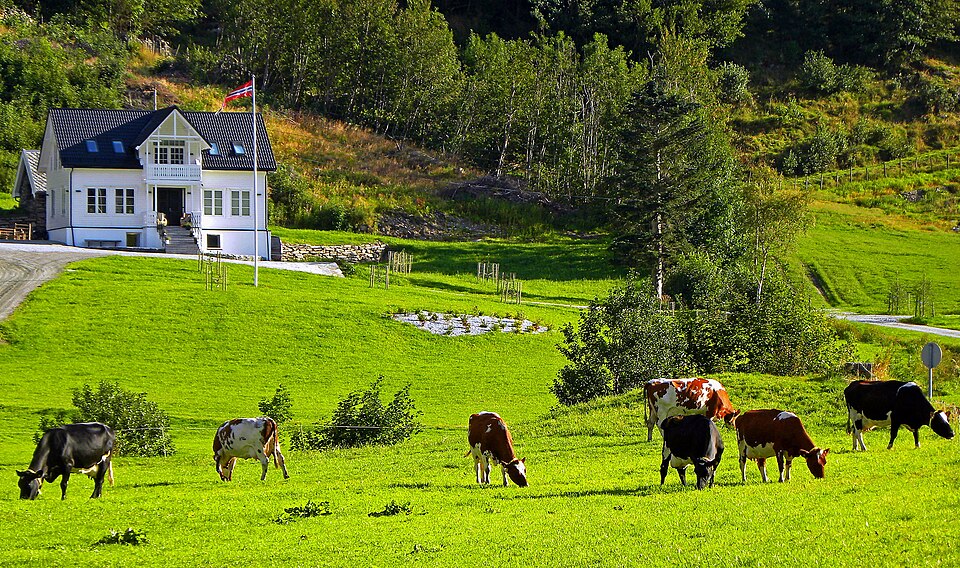
Norway’s government has agreed to significantly increase support for the country’s farmers, adding NOK 3.66 billion in subsidies over the coming year as part of its annual
agricultural settlement. The deal marks one of the largest injections of state funding into the sector in recent years.
The increase is intended to reduce the so-called “income gap” between farmers and salaried workers, a long-standing issue in Norway’s heavily subsidized agricultural system. Many farms remain small and struggle to achieve economies of scale, making them dependent on public support to remain viable.
This year’s agreement follows negotiations in which farmers’ organizations initially demanded NOK 4.2 billion in additional funding. The government’s revised offer, raised by NOK 460 million in the final stretch of talks ahead of Norway’s May 17 national celebrations, ultimately fell short of that demand but exceeded last year’s increase of NOK 1.1 billion.
Officials said the additional funding is partly aimed at offsetting rising operating costs, including fuel expenses for agricultural machinery. The support is also targeted toward lower-income farmers, particularly those in livestock production such as sheep and cattle, who have faced tighter margins compared to larger-scale producers in poultry, eggs, and crop farming.
Leaders of Norway’s main farming organizations welcomed the outcome, describing it as a step toward strengthening domestic food production and improving national self-sufficiency. They emphasized the importance of maintaining agricultural activity across the country, especially in regions where farming conditions are more challenging.
The agreement also reflects growing political attention to food security and preparedness amid international uncertainty, a theme highlighted by representatives of small-scale farmers during the negotiations.
The Agriculture Minister said the settlement aligns with parliamentary goals to raise farm incomes by 2027 and described the package as improving working conditions in the sector. Measures include more flexible arrangements for parental and welfare leave, as well as improved access to substitute labor for farmers needing time off.
Authorities estimate the impact on consumer prices will be limited, projecting an average annual increase of around NOK 600 per person.
The agreement is expected to be approved by Parliament before the summer recess. Photo by Odd Roar Aalborg, Wikimedia commons.