















The European Union’s industrial sector has continued a long-term downward trajectory in energy consumption, even as shifts in fuel types signal a gradual transition away from
fossil-based inputs.
In 2024, EU industry used 8,835 petajoules (PJ) of energy—an 8.1% decrease compared with 2014. The decline extends a broader pattern that has been underway since 1990, reflecting both efficiency gains and structural changes in industrial activity.
Electricity remained the single largest energy source for industry, accounting for 2,945 PJ (33.3%), closely followed by natural gas at 2,817 PJ (31.9%). Renewable energy and biofuels ranked third at 999 PJ (11.3%), overtaking oil and petroleum products, which stood at 922 PJ (10.4%).
Smaller shares were made up of solid fossil fuels (484 PJ; 5.5%), heat (483 PJ; 5.5%), and non-renewable waste (186 PJ; 2.1%).
Compared with 2014, most energy sources saw declines in use. The steepest drops were recorded in solid fossil fuels, which fell by 34.8%, and heat, down 23.7%. However, not all trends moved downward: non-renewable waste rose by 32.1%, while renewables and biofuels increased by 24.3%, underscoring a gradual shift in the industrial energy mix.
Food industry defies the broader decline
While overall industrial energy demand fell, the food, beverages, and tobacco sector moved in the opposite direction. Energy consumption in the sector rose to 1,134 PJ, representing 12.8% of total industrial energy use and marking a 4.7% increase compared with 2014.
This subsector remains heavily reliant on natural gas, which accounted for 525 PJ (46.3%), and electricity at 401 PJ (35.3%). Smaller contributions came from renewables and biofuels (68 PJ; 6.0%), oil and petroleum products (60 PJ; 5.3%), heat (47 PJ; 4.2%), solid fossil fuels (32 PJ; 2.8%), and non-renewable waste (1 PJ; 0.1%).
The strongest growth was seen in cleaner and alternative sources. Use of renewables and biofuels surged by 68.4%, while non-renewable waste increased by 47.4%. Electricity and natural gas also posted moderate gains of 8.1% and 5.0% respectively. In contrast, solid fossil fuels continued their decline, falling by 36.4%.
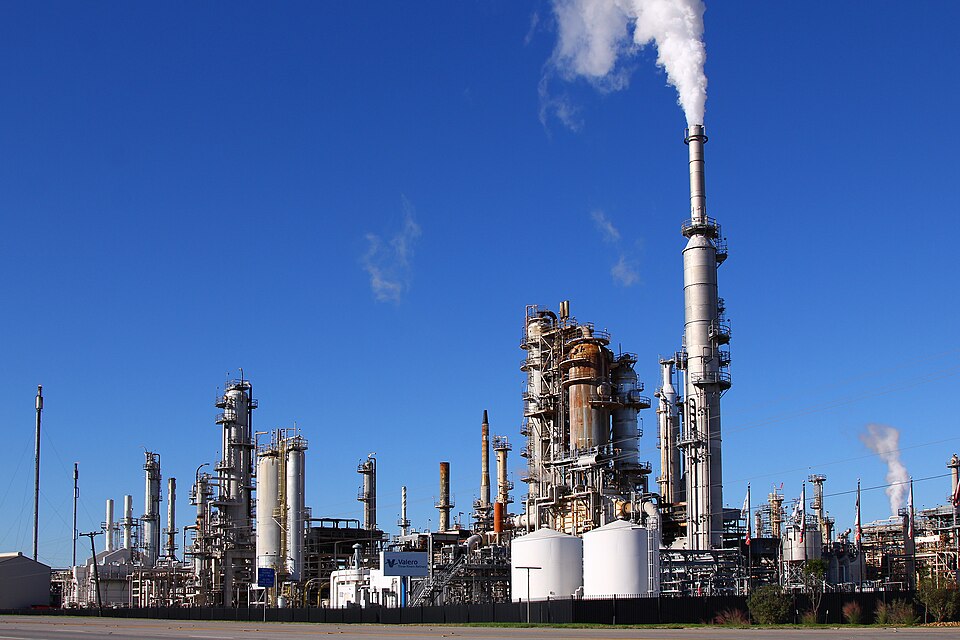
Together, the data points to a European industrial landscape that is consuming less energy overall, while gradually reshaping its energy mix toward lower-carbon sources—though sectoral exceptions highlight that the transition is uneven. Photo by Larry D. Moore, Wikimedia commons.