












Germany and France have decided to terminate their flagship joint effort to develop a next-generation fighter aircraft, marking the collapse of one of Europe’s most ambitious
defence collaborations.
The decision was reached after German Chancellor Friedrich Merz and French President Emmanuel Macron concluded there was no realistic path forward for resolving long-standing disputes between the industrial partners involved in the programme.
According to German officials, the two leaders discussed the stalled initiative on the sidelines of the EU–Western Balkans summit in Montenegro last week. They agreed that months of negotiations had failed to bridge fundamental disagreements between the aerospace companies tasked with delivering the aircraft.
At the centre of the dispute were Airbus, representing Germany and Spain, and France’s Dassault Aviation, which were unable to align on design authority, intellectual property rights, and technical requirements for the aircraft.
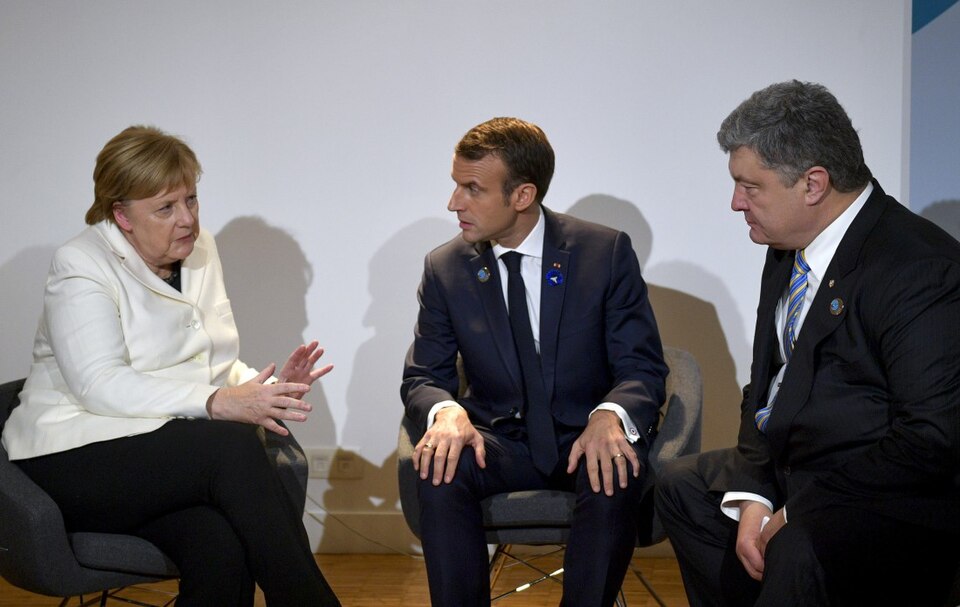
The programme—originally launched in 2017 by Macron and then-German Chancellor Angela Merkel—was intended to produce a “Future Combat Air System” (FCAS), a sixth-generation fighter supported by drones and a highly secure battlefield data network often described as a “combat cloud.”
Despite its strategic importance, the €100-billion project increasingly became mired in industrial rivalry and competing national priorities. Officials now acknowledge that the core ambition—a jointly built manned fighter jet—has effectively been shelved.
A German official said Chancellor Merz had advised Macron against pursuing the joint aircraft further, citing irreconcilable differences between the contractors. While no formal joint statement has fully detailed the shutdown, both governments have accepted that compromise on the main platform is no longer feasible.
Macron’s office expressed regret over the failure of Airbus and Dassault Aviation to reach an agreement, while reiterating that Franco-German defence cooperation remains essential for Europe’s long-term security.
The collapse comes at a sensitive moment for European defence planning, as officials warn of heightened security risks from Russia and increasing pressure from the United States for Europe to strengthen its own military capabilities.
Industry analysts say the breakdown highlights deeper structural challenges in Europe’s defence integration. Douglas Barrie of the International Institute for Strategic Studies noted that the outcome sends a weak signal to both Washington and Moscow about Europe’s ability to coordinate major defence projects.
Although the core fighter jet has been abandoned, some elements of the FCAS initiative—particularly digital systems and drone coordination platforms—may continue under the same programme name in a reduced or restructured form.
The decision also reflects long-running tensions between the industrial partners. Workers’ representatives in Germany’s IG Metall welcomed the move, arguing that prolonged deadlock had become unsustainable and detrimental to Germany’s aerospace sector.
For now, the collapse of the joint fighter jet marks the end of a project once seen as a cornerstone of European strategic autonomy—and a rare casualty of deepening Franco-German industrial rivalry. Photo by president.gov.ua, Wikimedia commons.