













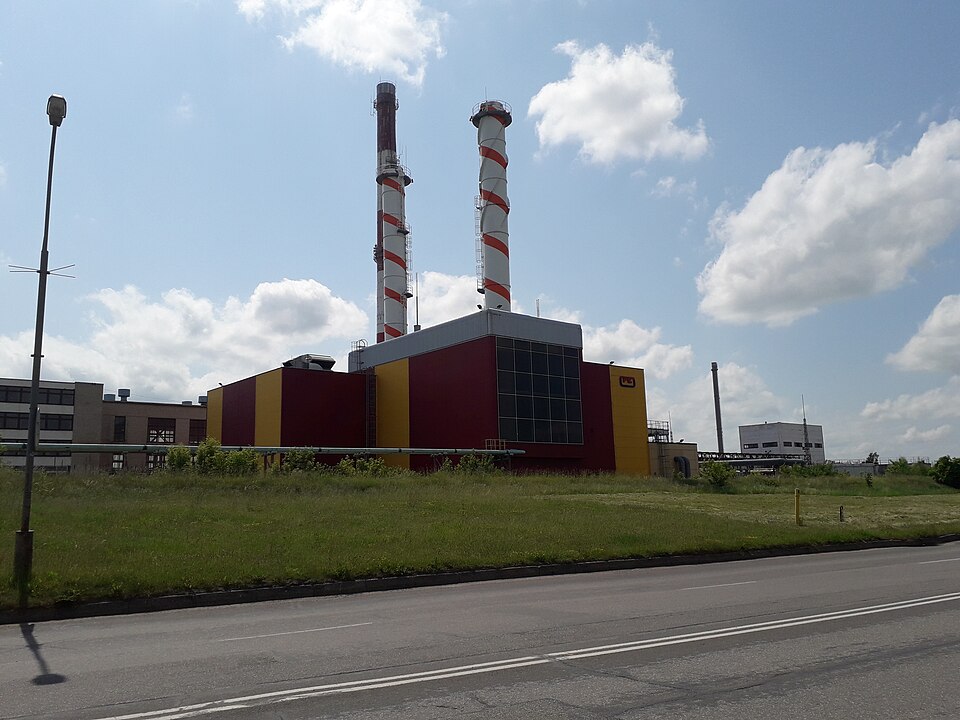
The European Commission has completed a landmark operation to relocate an entire thermal power plant from Lithuania to Ukraine, in what officials describe as the largest and
most complex logistics effort ever coordinated by the EU.
The delivery marks a critical boost to Ukraine’s energy grid, which has sustained repeated damage from Russian strikes since the start of the full-scale invasion. The plant’s equipment, now installed and operating in Ukraine, is capable of supplying electricity to around one million people — offering vital relief to communities hit by blackouts and infrastructure losses.
The transfer took 11 months and required 149 shipments, together weighing more than 2,399 tonnes. Forty of those shipments were classified as oversized, including mammoth transformers and stators, each tipping the scales at roughly 172 tonnes. EU officials credited the Polish Governmental Agency for Strategic Reserves for helping manage the transport of these extraordinary loads across borders.
The effort forms part of the bloc’s wider support strategy for Ukraine, delivered through the EU Civil Protection Mechanism (UCPM). Since Russia launched its full-scale invasion in 2022, the EU has supplied 9,500 power generators and 7,200 transformers to help stabilise Ukraine’s energy system. Overall, energy-related support provided via the UCPM is estimated to have assisted nine million Ukrainians.
Beyond infrastructure, the EU has channelled more than €1.2 billion in humanitarian aid to Ukraine and delivered over 160,000 tonnes of relief supplies. All 27 EU Member States — alongside six participating partners, including Norway, Türkiye, North Macedonia, Iceland, Serbia and Moldova — have contributed in-kind assistance through the Mechanism.
The UCPM has also played a key role in Ukraine’s medical response, organising the evacuation of more than 4,700 patients to specialist hospitals across 22 European countries.
The EU Civil Protection Mechanism acts as the bloc’s emergency coordination framework. When activated by national authorities facing crisis conditions, requests are processed by the Emergency Response Coordination Centre in Brussels — a round-the-clock operations hub that deploys equipment, experts and relief to disaster zones worldwide.
Officials say the successful relocation of the Lithuanian power station demonstrates the scale of EU solidarity with Ukraine and its ability to mobilise rapid, cross-border assistance under extreme conditions. Photo by Obivan Kenobi, Wikimedia commons.