












Switzerland has formally launched its 2026 chairmanship of the Organization for Security and Co-operation in Europe (OSCE) with a major international
conference on combating anti-Semitism and intolerance, held in the eastern Swiss city of St. Gallen.
The two-day conference, titled “Combating Anti-Semitism: Addressing Challenges of Intolerance and Discrimination”, brings together representatives from OSCE participating States, international organizations, and civil society to assess current trends and strengthen co-operation against hatred and discrimination. St. Gallen was chosen for its long tradition of interreligious dialogue, underscoring the conference’s focus on inclusion and mutual respect.
It is the first of four international conferences Switzerland will host during its OSCE Chairpersonship in 2026. Participants are examining the rise of anti-Semitism and other forms of intolerance, while exploring practical ways to translate political commitments into concrete action.
Opening the conference, Federal Councillor Ignazio Cassis, Switzerland’s Head of the Federal Department of Foreign Affairs and OSCE Chairman-in-Office, warned that the idea that anti-Semitism belonged to the past has proven dangerously false.
“The promise of ‘never again’ was long thought to belong to history,” Cassis said. “Yet hatred persists and is once again turning into violence and horror – through attacks on synagogues and memorial sites, through insults in the streets, in schools, and increasingly online.”
Cassis stressed that remembrance alone is not enough. “Building a common future of peace and security is not an abstract ideal,” he said. “It is daily work. Now is the time to turn memory into action.”
The conference aims to move beyond reaffirming existing OSCE commitments by identifying coordinated political responses and practical measures to counter hatred. Speakers emphasized that success depends on sustained political will, close co-operation among institutions, and honest engagement with difficult realities.
OSCE Secretary General Feridun H. Sinirlioğlu highlighted that combating anti-Semitism, safeguarding freedom of religion or belief, and promoting tolerance have long been central to the organization’s mandate. He underlined the importance of trust and co-operation between participating States, institutions, and affected communities, reaffirming the OSCE’s readiness to support inclusive and secure societies.
Maria Telalian, Director of the OSCE Office for Democratic Institutions and Human Rights (ODIHR), warned of the security risks posed by unchecked hatred. “We do not need to look far back in history to see the horrific consequences when anti-Semitism is allowed to take root,” she said. “Combating prejudice is not only a moral obligation, but a matter of security.”
Discussions at the conference focus on preventive approaches and good practices, analysis of current trends based on data from ODIHR and the EU Agency for Fundamental Rights (FRA), and effective policy responses to strengthen community protection and social resilience. Special attention is also being given to the role of sport as a platform for inclusion and as a tool to counter anti-Semitism and racism.
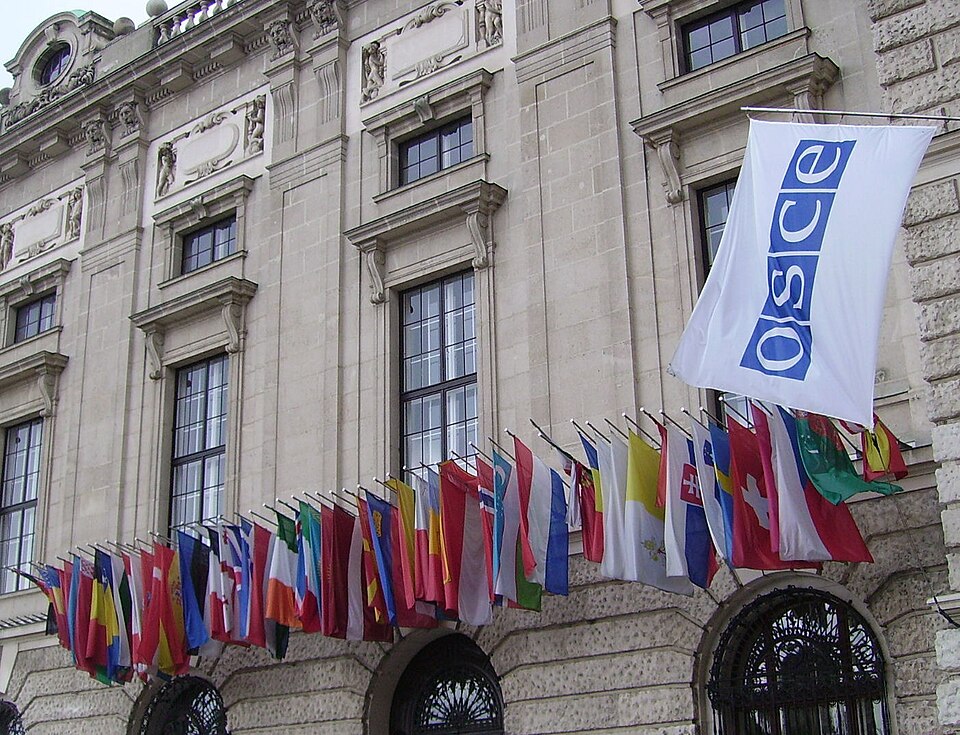
The conference continues with expert panels and exchanges aimed at reinforcing co-operation between governments and civil society — with the shared goal of transforming commitments into meaningful, lasting action. Photo by Immanuel Giel, Wiimedia commons.