













Temporary protection for people fleeing Ukraine continued to expand across the European Union in November 2025, with the total number of beneficiaries
reaching 4.33 million by the end of the month. This marked an increase of 30,615 people, or 0.7%, compared with October, highlighting the ongoing impact of Russia’s war against Ukraine nearly four years after it began.
Germany, Poland and Czechia host the most refugees
Germany remained the largest host country, sheltering 1.24 million people under temporary protection—almost 29% of the EU total. Poland followed with 968,750 beneficiaries (22.4%), while Czechia hosted 392,670 people, accounting for just over 9% of all protected Ukrainians in the EU.
Across the 26 EU countries for which data are available, 21 recorded an increase in the number of people under temporary protection in November. The biggest absolute rises were seen in:
- Germany: +11,040 people (+0.9%)
- Poland: +3,745 (+0.4%)
- Spain: +2,810 (+1.1%)
By contrast, five countries registered declines, with the sharpest drops in France (-870 people, -1.6%) and Lithuania (-575, -1.1%).
Fewer new protection decisions in November
The pace of new temporary protection decisions slowed noticeably. In November 2025, EU countries issued 53,735 new decisions, a drop of 32.5% compared with September and 27.8% compared with October. This decline brought numbers back to levels seen before a Ukrainian government decree in late August 2025, which temporarily increased departures by allowing men aged 18 to 22 to leave the country without restrictions.
Highest impact per capita in Central Europe
When measured relative to population size, Central European countries continue to feel the strongest impact. The highest ratios of temporary protection beneficiaries per 1,000 inhabitants were recorded in:
- Czechia: 36.0
- Poland: 26.5
- Slovakia: 25.7
At the EU level, the average stood at 9.6 beneficiaries per 1,000 people.
Women and children form the majority
As of 30 November 2025, Ukrainian citizens made up more than 98.4% of all people under temporary protection in the EU. The demographic breakdown shows a strong presence of families:
- Adult women: 43.6%
- Minors: 30.7%
- Adult men: 25.7%
Protection extended until 2027
The data are based on the EU’s Temporary Protection Directive, activated through Council Implementing Decision 2022/382 in March 2022 in response to the mass displacement caused by the war. In a move reflecting the protracted nature of the conflict, the European Council decided on 13 June 2025 to extend temporary protection by one year—from 4 March 2026 to 4 March 2027.
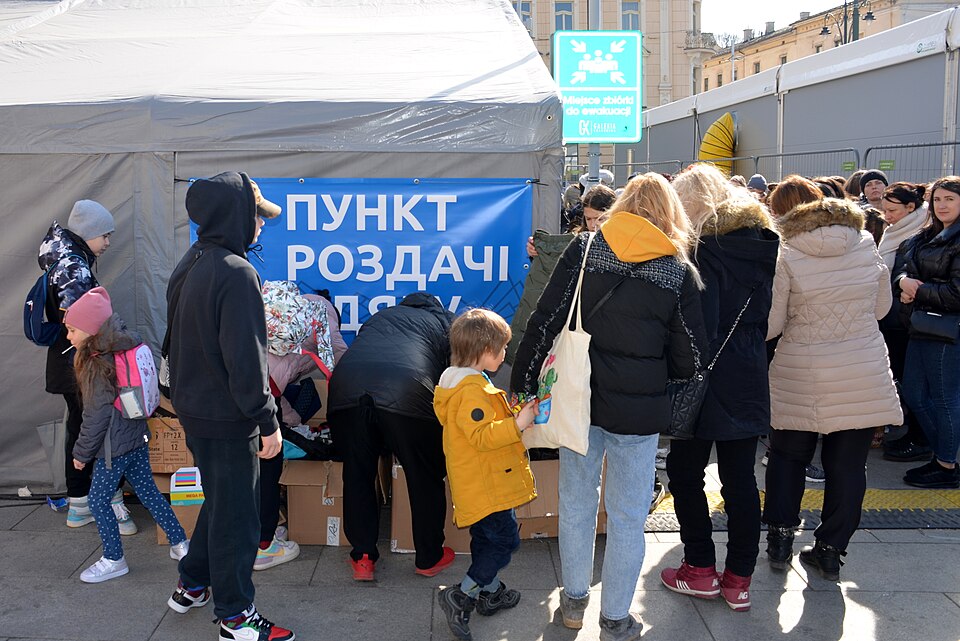
The extension provides continued legal certainty and access to housing, education and the labour market for millions of Ukrainians who remain unable to return home. Photo by Silar, Wikimedia commons.