










The Flemish government has approved a new “Eastern Strategy” designed to steer Flemish companies toward opportunities in the future reconstruction of Ukraine. The decision
was taken on Monday, just ahead of the fourth anniversary of Russia’s full-scale invasion.
Since the war began, Flanders has already channelled nearly €7.5 million in aid to Ukraine, with an additional €1.1 million earmarked for this year. Until now, most of that support has focused on emergency relief, including the delivery of power generators and other urgent assistance.
With the Eastern Strategy, the Flemish government is signalling a shift in priorities: from short-term crisis response to long-term reconstruction and economic engagement.
Team Flanders for Ukraine
Under the banner “Team Flanders for Ukraine”, three key agencies — Flanders Investment & Trade, business support body VLAIO, and the Flemish investment company Participatiemaatschappij Vlaanderen — will work together to guide companies interested in reconstruction projects. Their role will include matchmaking with local Ukrainian partners and helping firms navigate European funding programmes linked to rebuilding efforts.
Minister president Matthias Diependaele of N-VA said: "We see that cautious attempts are now being made to reach a peace agreement. If we want to support the Ukrainian people, we must prepare for reconstruction. (...) If Flanders does not commit to this today, others will take its place".
Beyond rebuilding: security and diplomacy
The Eastern Strategy goes beyond economic opportunities. Flanders also plans to join the international mine clearance coalition for Ukraine, which pools expertise and resources to remove landmines and unexploded ordnance — a major obstacle to safe reconstruction and agricultural recovery.
At the same time, the strategy widens Flanders’ gaze to Eastern Europe more broadly. The region is seen as a zone of sustained economic growth, offering long-term export potential for Flemish businesses.
The government is therefore reviewing its diplomatic footprint in the region, with Warsaw highlighted as a key political and economic hub.
As Ukraine continues to press its European ambitions — most recently with President Volodymyr Zelensky calling for a clear accession timeline to the European Union — Flanders is positioning itself to play an early and active role in what could become one of Europe’s largest reconstruction efforts in decades.
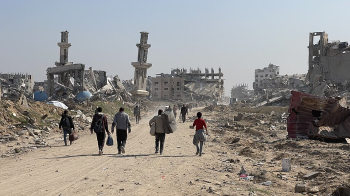
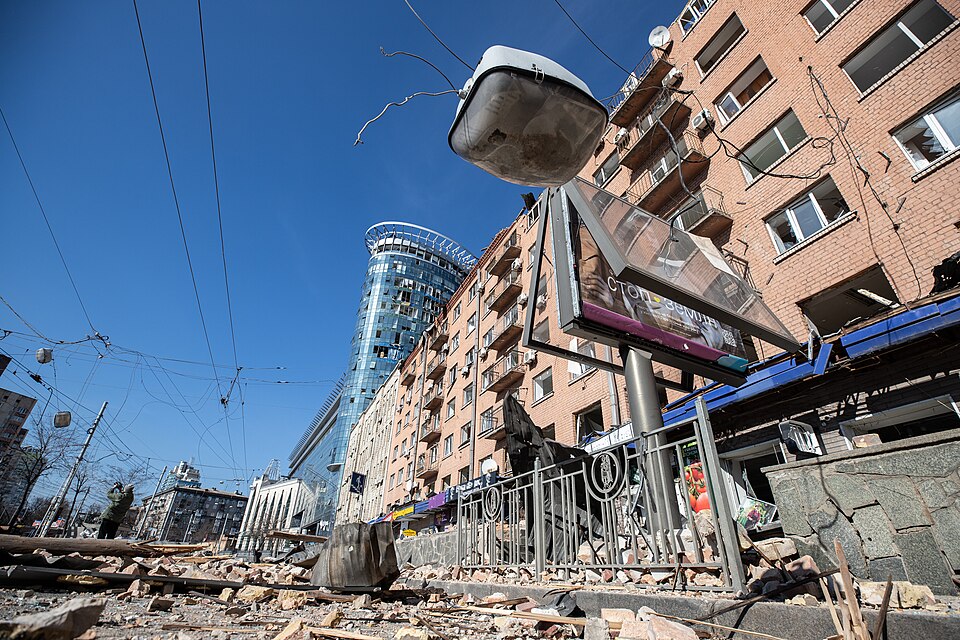
In Diependaele’s words, the message is clear: Flanders must be willing to look east — and act early — if it wants to secure both economic opportunities and a meaningful role in rebuilding Ukraine. Photo by Kyivcity.gov.ua, Wikimedia commons.