













Asylum applications across the European Union fell significantly at the end of 2025, reflecting shifting migration patterns and evolving pressures on national systems, according to
the latest data released by Eurostat.
In December 2025, some 47,650 first-time asylum seekers from outside the EU applied for international protection. This represents a steep 23% decline compared with the same month a year earlier and a 13% drop from November figures. The downward trend suggests a cooling in new arrivals after periods of higher demand earlier in the year.
At the same time, repeat applications told a different story. Authorities registered 9,255 subsequent claims—up 29% year-on-year—indicating that more individuals are reapplying after initial refusals, even as overall new applications decline.
Venezuelans top the list of applicants
For the first time in months, Venezuelans emerged as the largest group seeking asylum in the EU, with 6,675 first-time applicants. They were followed by Afghans (4,900), Bangladeshis (3,190) and Syrians (2,025), highlighting a diversification in the nationalities of those arriving at Europe’s borders.
Southern Europe remains under pressure
Four countries—Italy, Spain, France and Germany—continued to bear the bulk of applications, together receiving 72% of all first-time claims in December. Italy and Spain led the rankings, underlining the continued importance of Mediterranean routes into the EU.
Relative to population size, Greece recorded the highest rate of asylum applicants, with 39.1 per 100,000 people. Ireland and Spain followed, indicating disproportionate pressure on certain national systems despite overall EU-level declines.
Children arriving alone
A particularly vulnerable group—unaccompanied minors—remains a key concern. In December, 1,330 children applied for asylum without a parent or guardian. Most came from Somalia, Afghanistan, Venezuela, Egypt and Eritrea.
The Netherlands received the highest number of such applications, followed by Greece, Germany, Spain and Belgium, reflecting the uneven distribution of responsibility among member states.
More decisions, more approvals
While applications declined, decision-making accelerated. In the fourth quarter of 2025, EU countries issued 229,735 first-instance asylum decisions—an increase of 15% compared with the same period in 2024.
Of these, 45% were positive, granting protection to 103,550 people. This marks a modest rise in recognition rates and a notable increase in absolute numbers compared with earlier periods.
Among successful applicants, 56% were granted full refugee status, while others received either humanitarian status (23%) or subsidiary protection (21%). Afghans, Venezuelans and Syrians accounted for the largest share of those granted protection.
Germany, Spain and France issued the highest number of positive decisions, reinforcing their central role in the EU asylum system.
A system in transition
The latest figures come as the EU prepares to implement major reforms under its new migration and asylum pact, aimed at improving burden-sharing and speeding up procedures.
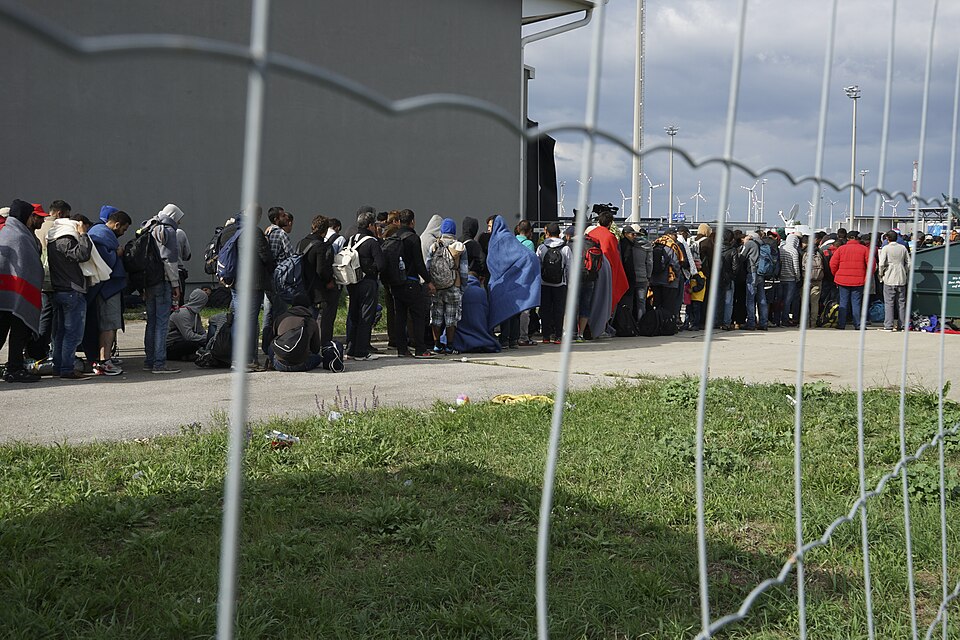
Despite the recent decline in applications, the data suggest that Europe’s asylum landscape remains dynamic—shaped by geopolitical shifts, changing migration routes and ongoing policy reforms. Photo by Mstyslav Chernov, Wikimedia commons.