


Latest News

Belgium backs France’s expanded nuclear deterrence plan as Macron seeks stronger European defence

Belgium backs France’s expanded nuclear deterrence plan as Macron seeks stronger European defence Belgium backs France’s expanded nuclear deterrence plan as Macron seeks stronger European defence
  Belgium will take part in a new French-led nuclear deterrence initiative, Prime Minister Bart De Wever confirmed, marking a significant...
Read More...

Women now hold over a third of EU managerial roles, but gaps remain

Women now hold over a third of EU managerial roles, but gaps remain Women now hold over a third of EU managerial roles, but gaps remain
  In 2024, women occupied 35.2% of managerial positions across the European Union, marking a steady rise from 31.8% a decade earlier, according...
Read More...

EU approves €266.8 million payment to Slovenia under NextGenerationEU recovery plan

EU approves €266.8 million payment to Slovenia under NextGenerationEU recovery plan EU approves €266.8 million payment to Slovenia under NextGenerationEU recovery plan
  The European Commission has given the green light to Slovenia’s fifth payment request worth €266.8 million under NextGenerationEU,...
Read More...

Must Read

Most Popular Stories

VIDEO AND audio news:

Features, views, analysis

business

Latest News

Belgium backs France’s expanded nuclear deterrence plan as Macron seeks stronger European defence

Belgium backs France’s expanded nuclear deterrence plan as Macron seeks stronger European defence Belgium backs France’s expanded nuclear deterrence plan as Macron seeks stronger European defence
  Belgium will take part in a new French-led nuclear deterrence initiative, Prime Minister Bart De Wever confirmed, marking a significant...
Read More...

Women now hold over a third of EU managerial roles, but gaps remain

Women now hold over a third of EU managerial roles, but gaps remain Women now hold over a third of EU managerial roles, but gaps remain
  In 2024, women occupied 35.2% of managerial positions across the European Union, marking a steady rise from 31.8% a decade earlier, according...
Read More...

EU approves €266.8 million payment to Slovenia under NextGenerationEU recovery plan

EU approves €266.8 million payment to Slovenia under NextGenerationEU recovery plan EU approves €266.8 million payment to Slovenia under NextGenerationEU recovery plan
  The European Commission has given the green light to Slovenia’s fifth payment request worth €266.8 million under NextGenerationEU,...
Read More...

Must Read

Most Popular Stories

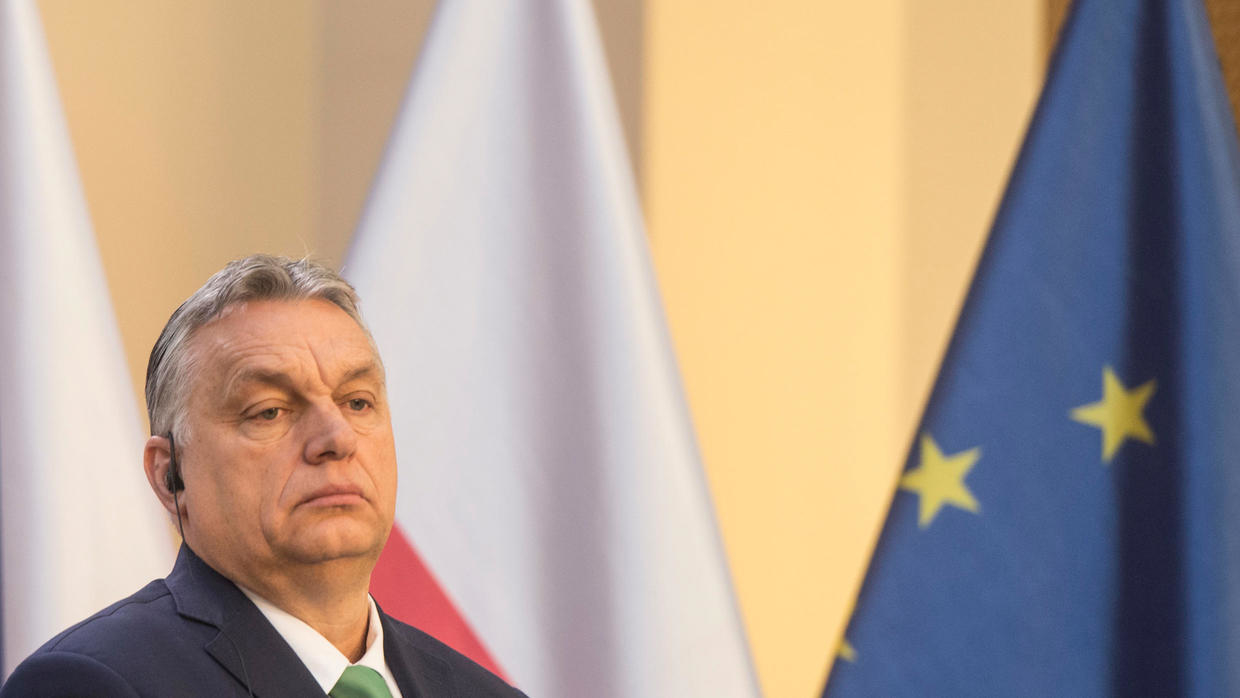
Hungary, Serbia and Montenegro can no longer be called democracies after unprecedented democratic backsliding, a rights watchdog said Wednesday,

noting the especially "precipitous" fall down the rankings of Prime Minister Viktor Orban's "regime".

The US-based Freedom House declared in its annual "Nations in Transit" report that Hungary is instead a "hybrid regime...in a 'grey zone' between democracies and pure autocracies".

Balkan states Serbia and Montenegro have also lost their democratic status for the first time since 2003 due to "years of increasing state capture, abuse of power, and strongman tactics employed" by their respective Presidents Aleksandar Vucic and Milo Djukanovic, the report said.

The decline of EU member Hungary, once a "democratic frontrunner" in 2005, was "the most precipitous ever tracked" by the human rights group. 

In 2020 Hungary became the first country to fall by two of the group's ranking categories and "leave the group of democracies entirely," the report said.

"Hungary today can no longer be regarded as a democracy," Freedom House said.

Orban's government has "dropped any pretence of respecting democratic institutions," it said.

"After centralising power, tilting the electoral playing field, taking over much of the media, and harassing critical civil society organisations since 2010, Orban moved during 2019 to consolidate control over new areas of public life, including education and the arts." 

The adoption in March of a COVID-19 emergency law that lets the government rule by decree indefinitely "has further exposed the undemocratic character of Orban's regime".

A Hungarian government spokesperson dismissed the ranking and described the group as the "fist" of the "Soros network", referring to the US billionaire George Soros long accused by Orban of meddling in Hungary. 

"Freedom House was once known as the bipartisan human rights organisation. With their Soros funding they've declined," said Zoltan Kovacs in a Twitter post.

"Anyone who doesn't conform to their liberal view, gets downgraded," he said.

Freedom House also reported a "stunning democratic breakdown" across the 29 countries it surveyed from central Europe to central Asia, noting there are now "fewer democracies in the region today than at any point since the annual report was launched in 1995".AFP

deneme