
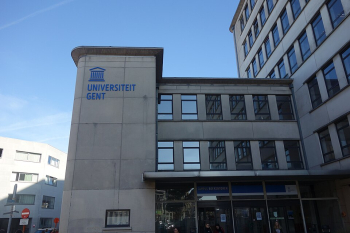














The Flemish government has commissioned the region’s five universities to develop a comprehensive framework for the use of artificial intelligence in education, as part of a
wider strategy to prepare Flanders for the growing impact of AI.
Education Minister Zuhal Demir announced that €10 million has been allocated to the initiative, which aims to provide schools with clear guidance on integrating AI technologies safely and effectively into teaching and learning.
The move comes as AI tools become increasingly common in classrooms. Recent research indicates that around one in four primary school teachers in Flanders already use AI applications, while usage rises to nearly half among teachers in the second and third stages of secondary education.
Demir said the rapid adoption of AI highlights the need for a structured approach to ensure schools are not left to navigate legal, ethical and technical challenges on their own.
The framework will be developed in collaboration with universities of applied sciences, research institutions and private-sector partners. Its primary objective is to help students develop the skills needed to use AI critically, responsibly and safely, while ensuring the education system remains aligned with evolving labour market demands.
In addition to supporting students, the initiative will explore ways AI can assist teachers by reducing administrative burdens, improving lesson preparation, delivering faster feedback and helping identify learning gaps among pupils.
A central requirement of the project is that AI applications operate within secure digital environments and integrate with existing school systems without compromising data protection.
“Our children must learn to work with AI without their data, attention and thinking being controlled by systems over which we have no control,” Demir said.
Despite the introduction of a common framework, schools will retain full autonomy over how they implement AI technologies. According to Demir, educational institutions will continue to make pedagogical decisions based on their own priorities, student populations and teaching teams.
“Flanders provides safe pathways and clear safety rules, allowing schools to make stronger choices without having to assess legal, technical and ethical risks individually,” she said.
The initiative forms part of the Flemish government’s broader AI vision, Flanders AI-Ready, Everyone Included, which seeks to accelerate the responsible adoption of artificial intelligence across education, business and public administration.
The strategy also includes plans to establish a High AI Council, which will advise the government on AI deployment in the public sector and assess its potential impact on employment and the economy.
Flemish Minister-President Matthias Diependaele described education as the starting point for the region’s AI ambitions. “For us, education is where we determine how Flanders will deal with artificial intelligence,” Diependaele said. “If we want everyone to participate in this transformation, we must begin by giving young people and teachers the knowledge and skills to use AI consciously, safely and confidently.” Photo by Vysotsky, Wikimedia commons.