








At the House of European History, a new exhibition titled Postcolonial? sets out to tackle a question that remains deeply unsettled: has Europe moved beyond the legacies of
empire?
Running until 17 March 2027, the show unfolds across four thematic chapters, guiding visitors through a long and often uncomfortable history. It begins in the 15th century, when European powers launched overseas expansion, building empires that reshaped continents. Through maps, archival material and visual displays, the exhibition exposes the mechanisms that sustained colonial rule—systems rooted in extraction, racial hierarchies and global inequality.
Belgium’s own colonial history forms an important, if implicit, backdrop to the narrative. Under King Leopold II, the Congo Free State became one of the most notorious examples of colonial exploitation in the late 19th century. Vast rubber and ivory profits came at an immense human cost, with millions of Congolese subjected to forced labour, violence and repression. Though Belgium later annexed the territory as the Belgian Congo, the structures of inequality and extraction remained deeply entrenched—legacies that still shape debates in Europe today.
The exhibition moves forward to the mid-20th century, capturing the wave of decolonisation that followed the World War II. Key moments such as the Pan-African Congress and the Bandung Conference are presented through documents and testimonies that reflect the optimism of newly independent nations. Yet this sense of liberation is presented with caution. Independence did not erase structural inequalities; instead, many persisted in new economic and political forms.
In its final section, the exhibition brings the story into the present. Through contemporary artworks, personal accounts and activist perspectives, it draws connections between colonial histories and today’s global realities—from trade imbalances to cultural memory and identity debates. The question mark in the title is no accident. Rather than offering closure, the exhibition leaves visitors with a challenge: to reconsider Europe’s place in a world still shaped by its imperial past.
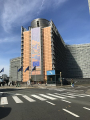
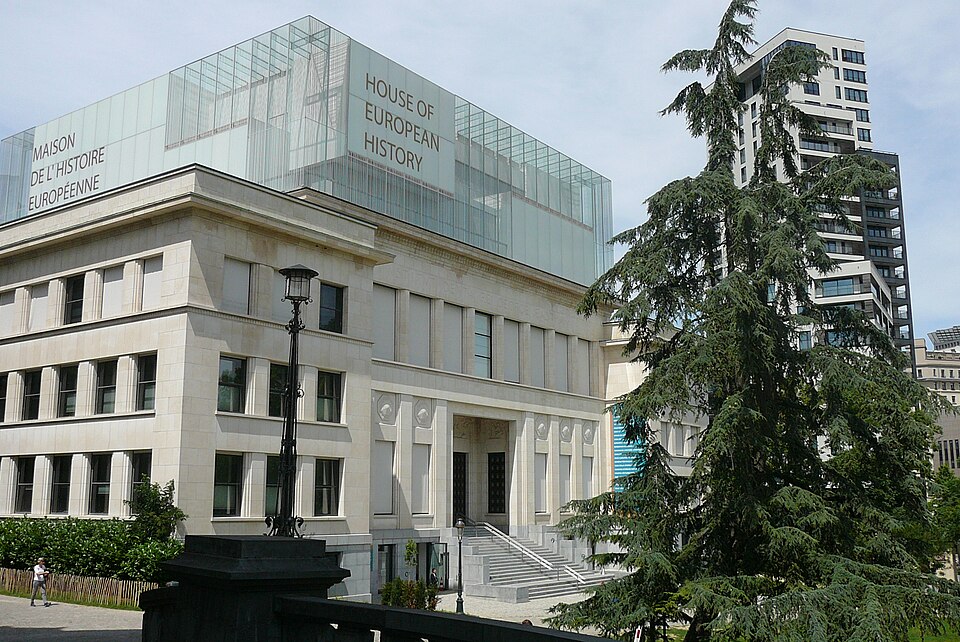
Even the setting adds a layer of reflection. Located in Brussels’ Leopold Park, the museum—housed in a repurposed historic building—mirrors the exhibition’s central tension: how to present a history that is not yet fully resolved. Photo by Guy Delsaut, Wikimedia commons.