













Women now represent a slim majority of Europe’s science and technology workforce, yet they remain less visible in the specialist ranks of scientists and engineers, according to
new EU data.
In 2025, around 81.6 million people aged 15 to 74 were employed in science and technology roles across the European Union, marking a 1.8% rise compared with 2024—an increase of roughly 1.5 million workers. Over the past decade, employment in the sector has expanded by 25.3%.
Women accounted for 52.5% of the workforce, or about 42.8 million people. Their presence has steadily strengthened, rising 2.3% in a year and nearly 28% since 2015. In absolute terms, this amounts to more than 9.3 million additional women working in science and technology roles over the last ten years. The majority are employed in service-related activities.
Science and technology occupations cover jobs requiring advanced expertise in fields such as physical and life sciences, social sciences, humanities, and related technical disciplines.
Strong regional differences across Europe
At regional level (NUTS 1), the highest shares of women in science and technology in 2025 were recorded in Latvia (62.4%), Hungary’s Great Plain and North region (61.1%), and Estonia (60.5%).
By contrast, the lowest proportions were found in Corsica (42.7%), Malta (46.0%), and Italy’s Centre region (47.2%).
Scientists and engineers: progress slower at the top
Scientists and engineers make up nearly a quarter (24.8%) of all science and technology workers in the EU, with Germany reporting the largest absolute number at 4.2 million.
However, women remain underrepresented in this subgroup. In 2025, they accounted for 40.8% of scientists and engineers—well below parity despite being the majority in the broader science and technology workforce.
Progress in this area has been modest. Over the past decade, the share of women among scientists and engineers increased by just 0.5 percentage points, even though their absolute numbers rose sharply—from 5.3 million in 2015 to 8.2 million in 2025, a 54.4% increase.
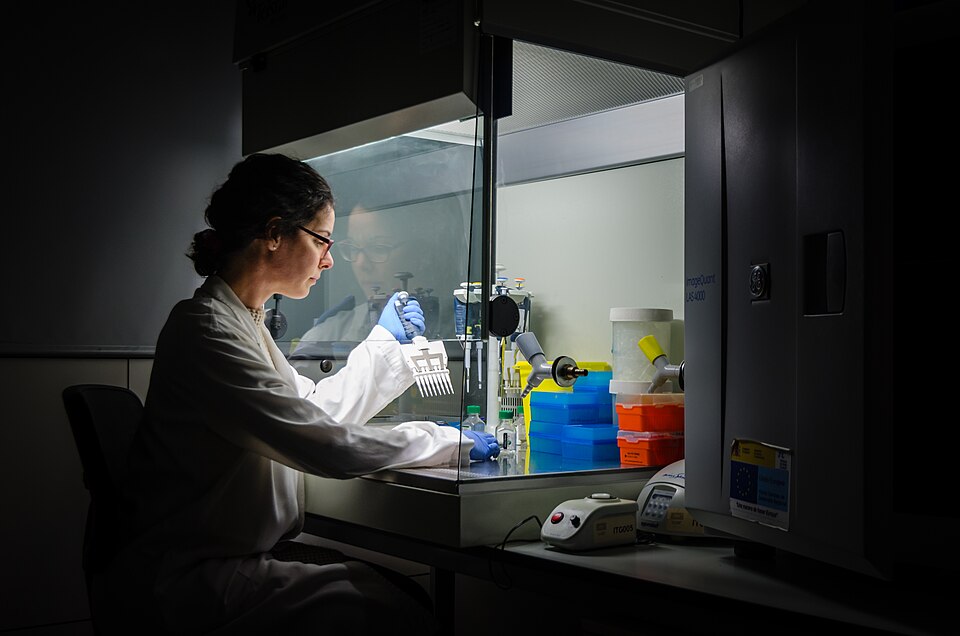
The data highlight a widening presence of women in Europe’s science and technology labour market overall, alongside persistent structural gaps in more specialised and senior technical roles. Photo by axventura, Wikimedia commons.