















The European Union is moving decisively to defend its steel sector, agreeing on a significant overhaul of import rules that will sharply limit the flow of cheaper steel from outside
the bloc. Lawmakers and member state representatives reached a late-night deal on Monday to reinforce trade protections, reflecting growing concern over the competitiveness of Europe’s heavy industry.
Under the new framework, the volume of steel allowed into the EU without duties will be cut dramatically. Annual tariff-free quotas will drop to 18.3 million tonnes—nearly half the level permitted in 2024. Any imports exceeding that cap will now face a steep 50% tariff, doubling the current rate and marking one of the bloc’s toughest trade defenses in recent years.
The policy is primarily aimed at curbing the impact of low-cost steel from major exporting countries such as China, India and Turkey. European officials argue that global overcapacity—particularly driven by state-supported production in some regions—has distorted prices and placed unsustainable pressure on EU manufacturers. By tightening quotas and raising tariffs, Brussels hopes to stabilize the internal market and give domestic producers room to recover.
Broader EU steel policy context
This move is part of a wider evolution in EU trade policy, which has increasingly leaned toward “strategic autonomy” in key industries. Steel, considered critical for infrastructure, defense, and the green transition, has been at the center of this shift.
In recent years, the EU has relied on a combination of **safeguard measures**, **anti-dumping duties**, and **carbon-related policies** such as the Carbon Border Adjustment Mechanism (CBAM). The latest tariff increase builds on these tools by directly restricting volumes while making excess imports significantly more expensive.
Analysts note that the policy aligns with similar protectionist trends globally, including U.S. tariffs under Section 232. However, the EU continues to frame its approach as compliant with World Trade Organization rules, emphasizing that safeguards are temporary and proportionate responses to market disruption.
Relief for European producers
For major steelmakers, the stricter regime could offer long-awaited relief. Companies have struggled with shrinking margins, volatile demand, and intense price competition from imports.
ArcelorMittal’s operations in Ghent illustrate the pressure facing the sector. The company has warned in recent months about declining profitability at certain units, even considering the closure of a specialized production line that employs around 90 workers. More broadly, the site—one of the largest in Europe—has been affected by weakening demand from the automotive industry.
Yet the outlook has recently improved. ArcelorMittal reported a strong rebound in earnings, posting a net profit of $3.15 billion for 2025—more than double the previous year. The company has signaled that tighter EU trade measures could further support recovery by reducing the influx of cheaper steel and increasing capacity utilization at its European plants.
Executives expect the benefits to materialize gradually, with more visible gains likely from the second half of 2026 and into 2027 as the new rules take full effect.
Balancing protection and competition
While industry groups have largely welcomed the changes, critics warn that higher tariffs could raise costs for downstream sectors such as construction and automotive manufacturing. The EU now faces the challenge of balancing industrial protection with broader economic competitiveness.
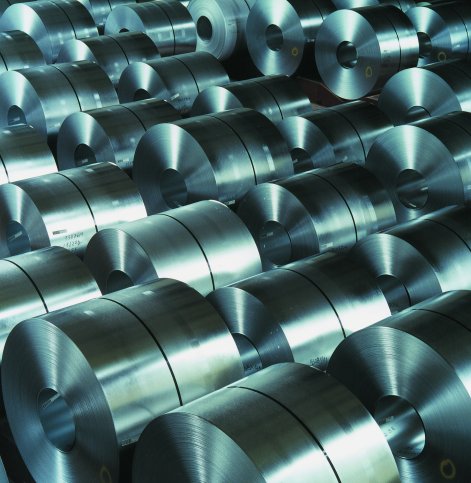
Still, the latest decision sends a clear message: Europe is prepared to take stronger action to defend its industrial base in an increasingly competitive global market. Photo by Stahl-Zentrum/ThyssenKrupp Steel Europe, Wikimedia commons.