





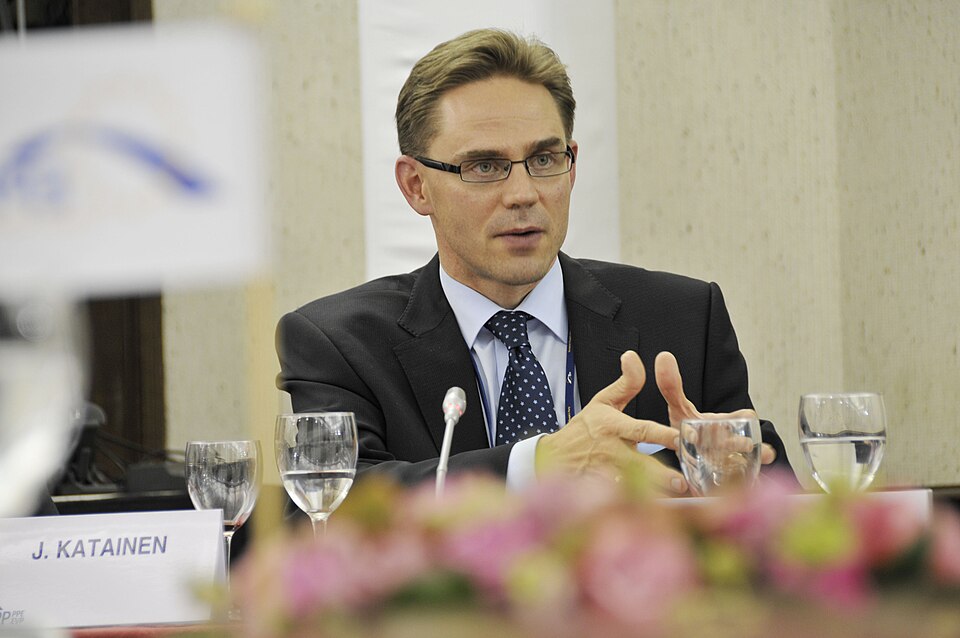
The European Commission has appointed Jyrki Katainen as Special Adviser on EU-Arctic relations, signaling a renewed push to reinforce Europe’s role in a region increasingly
shaped by geopolitical competition and climate change.
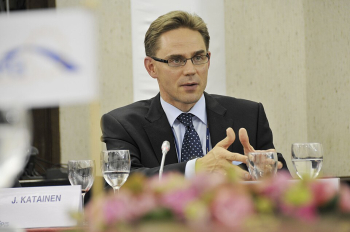
Katainen, a former Vice-President of the Commission, will advise on how the EU can sharpen its strategic presence in the Arctic. In his new role, he will report to Jozef Síkela and help coordinate efforts across EU institutions, member states, and international partners.
The appointment comes at a time when the Arctic is gaining prominence not only as an environmental hotspot but also as a zone of economic opportunity and security concern. Melting ice is opening new shipping routes and access to natural resources, while global powers are increasing their presence in the region.
Speaking earlier this year at the EU Arctic Forum 2026, Commission President Ursula von der Leyen reaffirmed that the EU would update its Arctic strategy to better align with Europe’s broader security and economic priorities. Katainen is expected to play a key role in shaping that revised policy.
His mandate will focus on several core areas: economic security, sustainable development, connectivity, and climate and energy policy. He will also work closely with EU diplomatic services, Arctic nations, and regional stakeholders—including offices in Denmark, Finland, Sweden, and Greenland.
A region of strategic importance
The Arctic has become a focal point for EU policy due to its dual role in climate regulation and global trade. The EU’s Arctic policy traditionally emphasizes environmental protection, scientific research, and cooperation with indigenous communities. However, recent geopolitical shifts—particularly increased activity by countries like Russia and China—have prompted Brussels to adopt a more strategic lens.
The upcoming revision of the EU Arctic policy is expected to reflect this shift. It will likely integrate security considerations with the EU’s Green Deal objectives, aiming to balance economic interests with environmental responsibility.
In addition, EU Arctic policy operates within a framework of international cooperation, including engagement with the Arctic Council and alignment with global climate agreements. The bloc also seeks to ensure that development in the region respects international law and the rights of indigenous populations.
Experienced leadership
Katainen brings extensive experience to the role. Before joining the Commission, he served as Prime Minister of Finland from 2011 to 2014 and held the position of Finance Minister from 2007 to 2011. His background in economic policy and European governance is expected to support the EU’s increasingly complex Arctic agenda.
His appointment underscores the EU’s intention to remain an influential actor in the Arctic, at a time when the region’s future is becoming a matter of global significance. Photo by European People's Party, Wikimedia commons.