














The number of people seeking asylum in the European Union fell sharply compared with a year earlier, even as applications showed a modest rebound at the start of 2026.
According to newly released data from Eurostat, 51,160 first-time asylum seekers applied for international protection across EU member states in January 2026. This represents a 23% decrease compared with January 2025, though figures rose by 7% from December 2025 levels.
At the same time, 9,500 repeat applicants—those filing subsequent claims—were recorded, marking a 9% annual increase and a slight 3% rise month-on-month.
Venezuelans lead asylum requests
Venezuelan nationals continued to top the list of asylum seekers in the EU, with 7,300 first-time applications filed in January. They were followed by applicants from Afghanistan (4,790), Bangladesh (2,940) and Egypt (2,280).
The prominence of Venezuelans reflects ongoing political and economic instability in the country, which has driven migration flows toward Europe in recent years.
Southern and Western Europe remain key destinations
Four countries—Spain, Italy, France and Germany—accounted for three-quarters of all first-time asylum applications. Spain received the highest number (10,860), closely followed by Italy (10,660), France (9,290) and Germany (7,645).
When adjusted for population size, however, Greece recorded the highest rate of asylum seekers, with 46.7 applicants per 100,000 people. Spain and Ireland followed with 22.1 and 20.1 respectively.
Concerns over unaccompanied minors
The data also highlights the continued presence of vulnerable groups among asylum seekers. In January 2026, 1,220 unaccompanied minors applied for asylum in the EU.
Most came from Egypt (270), Somalia (175), Venezuela (155), Afghanistan (140) and Sudan (70). Greece received the largest number of these children (375), followed by Germany, Spain, the Netherlands and France.
A system under long-term pressure
The latest figures come against the backdrop of a decade of fluctuating migration pressures in Europe. The EU asylum system has been under strain since the peak of the 2015–2016 migration crisis, when more than one million people arrived in Europe seeking protection.
Since then, applications have varied significantly, shaped by geopolitical conflicts, economic instability and EU policy reforms. While total applications declined in 2024 for the first time in several years, the overall number remained historically high, underscoring the persistent demand for protection in the bloc.
In response, the EU has gradually overhauled its asylum framework, including updates to the Common European Asylum System and a new Migration and Asylum Pact aimed at tightening border procedures and improving burden-sharing among member states.
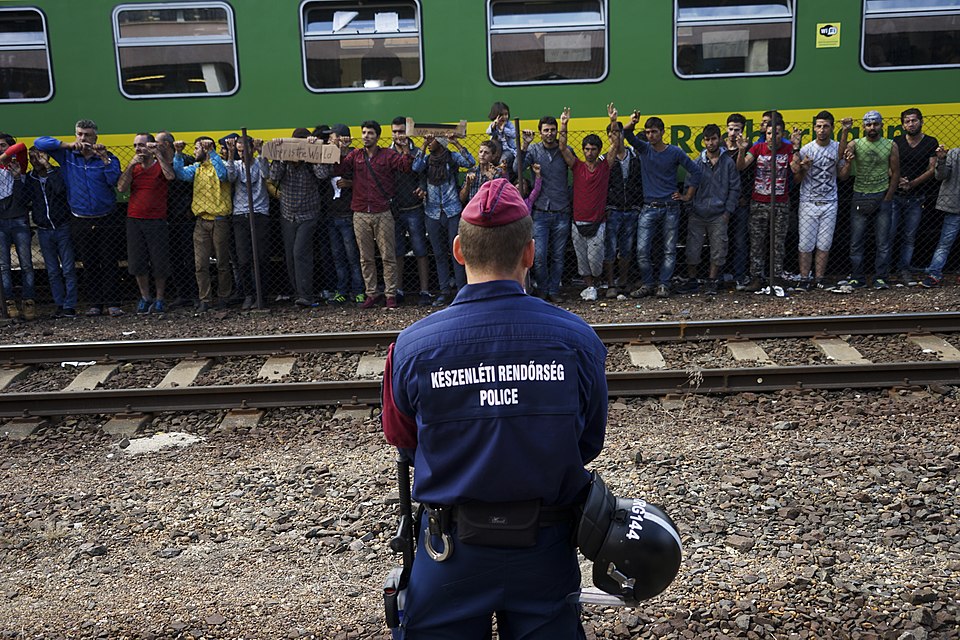
Despite fewer irregular arrivals compared with the 2015 peak, migration continues to be a central political issue across Europe, with policymakers balancing humanitarian obligations against growing domestic pressure to limit inflows. Photo by Mstyslav Chernov, Wikimedia commons.