











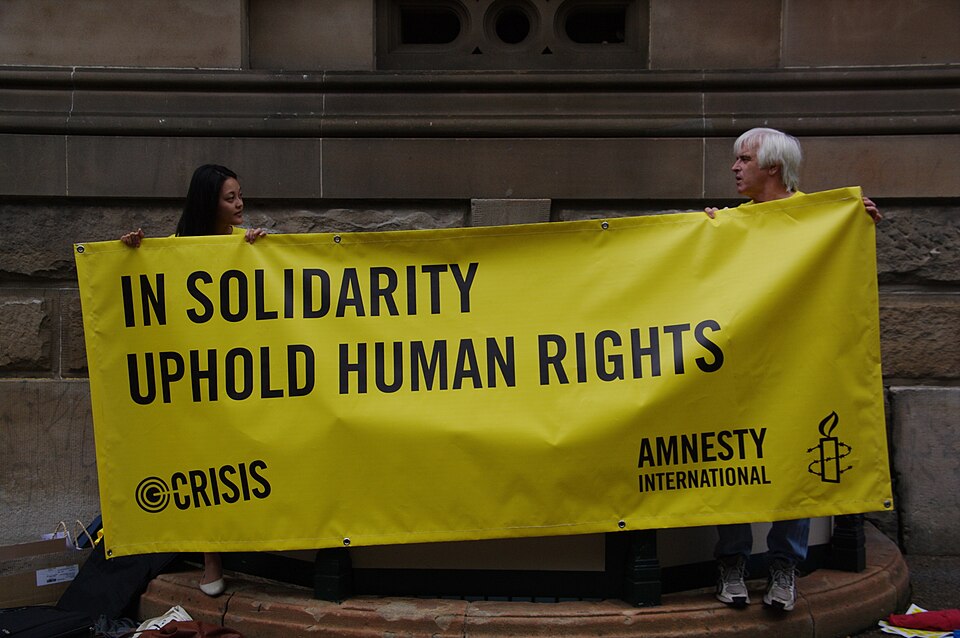
Belgium has long projected itself as a global advocate for human rights, but a new report suggests that its actions do not always match its rhetoric. According to Amnesty
International, the country must apply its principles more consistently if it wants to maintain credibility on the world stage.
The assessment appears in Amnesty’s 2025 annual report, *The State of the World’s Human Rights*, which evaluates conditions in 144 countries. The report paints a troubling global picture—marked by unlawful conflicts, economic pressure tactics, and a culture of impunity. Amnesty’s Secretary General, Agnès Callamard, did not mince words, warning that global leadership is faltering at a critical moment. She argued that powerful nations are too often either complicit in abuses or unwilling to act decisively.
Within this international context, Belgium occupies a complex position. On one hand, Amnesty acknowledges that the country has taken meaningful steps, including political backing for the International Criminal Court and measures aimed at halting arms transfers linked to the conflict in Gaza. These actions reinforce Belgium’s reputation as a supporter of international justice.
However, Amnesty highlights a persistent gap between commitments and implementation. While the Belgian government announced further steps in 2025 to address the humanitarian crisis in Gaza—including restrictions on goods from illegally occupied territories—many of these measures have yet to be enforced. Concerns have also been raised about regional plans that could loosen regulations on arms exports, potentially undermining earlier commitments.
Domestic challenges raise further concerns
Beyond foreign policy, the report draws attention to several domestic human rights issues. Belgium has faced criticism from the European Court of Human Rights over its treatment of asylum seekers. In multiple rulings, the court found that individuals were left without shelter or basic support for extended periods—sometimes nearly a year—despite legal orders requiring assistance. Such conditions were deemed to violate fundamental protections against inhuman or degrading treatment.
Prison overcrowding is another pressing issue. Facilities across the country are operating well beyond capacity, with reports of detainees sleeping on mattresses on the floor. This situation reflects deeper structural problems within the penal system and raises serious concerns about detainees’ dignity and living conditions.
Amnesty also points to restrictions on the right to peaceful protest, slow progress on expanding access to abortion, and ongoing government subsidies for fossil fuels as areas where Belgium’s policies fall short of its human rights commitments.
A broader human rights context in Belgium
Despite these criticisms, Belgium remains a country with a strong legal and institutional framework for protecting human rights. It is a signatory to major international treaties and hosts key institutions such as the International Criminal Court in nearby The Hague. Civil society organizations are active, and freedom of expression and press are generally well protected.
Yet the report underscores a key message: credibility in human rights is not built on declarations alone. For Belgium, maintaining its standing will depend on closing the gap between policy and practice—both at home and abroad. Photo by Richard Potts, Wikimedia commons.