













The European Union’s aquaculture sector experienced a modest downturn in 2024, with total production falling to around 1 million tonnes, according to newly released data
from Eurostat. The overall value of the industry reached €4.6 billion, marking a slight decline compared to the previous year.
Production volumes dropped by 3.7%, while the sector’s total value slipped by 3.6%, reflecting ongoing pressures ranging from rising operational costs to environmental constraints and stricter sustainability standards. Despite the dip, aquaculture remains a key pillar of Europe’s food system, supplying a significant share of seafood consumed across the bloc.
Southern Europe leads production
Aquaculture output across the EU continues to be concentrated in a handful of countries. Spain maintained its position as the largest producer, accounting for nearly a quarter of total EU output with over 246,000 tonnes. France and Greece followed, contributing 17.9% and 12.6% respectively.
Italy and Poland also ranked among the top five producers, though at notably lower levels. Together, these five countries generated more than two-thirds of the EU’s farmed aquatic output, underlining the regional concentration of the industry, particularly around the Mediterranean.
Mussels dominate volume, trout drives value
In terms of species, mussels were by far the most widely produced, making up nearly one-third of total live weight. Their dominance reflects relatively low production costs and strong demand across European markets.
However, when measured by value rather than volume, trout emerged as the sector’s top performer, accounting for 17.9% of total aquaculture value. Seabass and gilthead seabream also ranked highly, highlighting the premium placed on certain finfish species in European markets.
A sector in transition
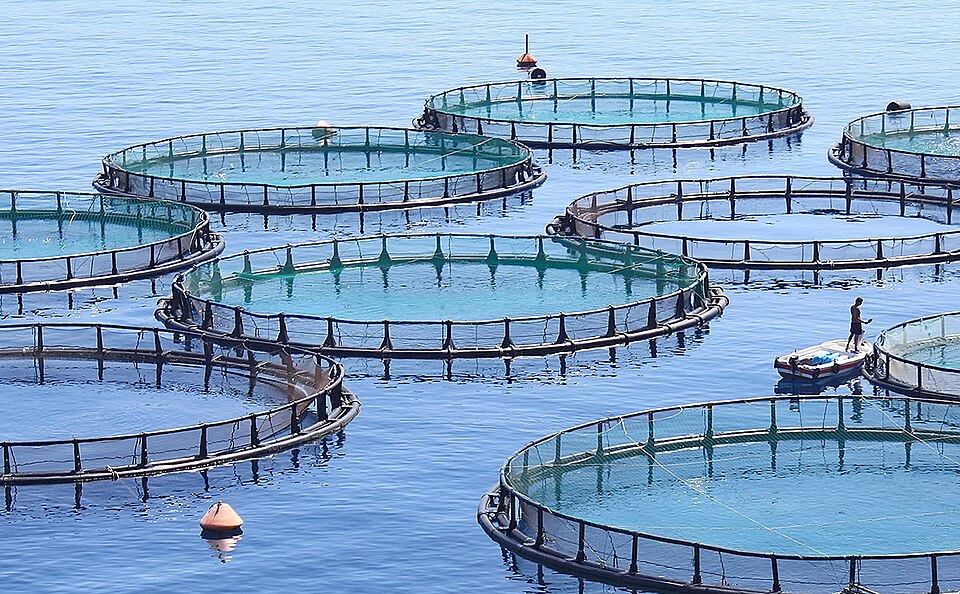
EU aquaculture plays a strategic role in reducing dependence on seafood imports while supporting coastal economies. The industry spans a diverse range of activities—from shellfish farming in Atlantic waters to intensive fish farming in Mediterranean cages and freshwater systems across Central and Eastern Europe.
In recent years, the EU has increasingly emphasized sustainable aquaculture practices. Policies under the Common Fisheries Policy and the European Green Deal aim to balance production growth with environmental protection, animal welfare, and climate resilience.
Looking ahead, innovation in areas such as offshore aquaculture, algae cultivation, and recirculating aquaculture systems (RAS) is expected to shape the sector’s future. While 2024 marked a slight contraction, long-term prospects remain tied to technological advancement and the EU’s ability to scale sustainable production. Photo by Asc1733, Wikimedia commons.