














The European Commission has announced plans to mobilise €2 million from the European Globalisation Adjustment Fund for Displaced Workers (EGF) to assist 803 employees
laid off following the collapse of Belgian high-tech car glass manufacturer Soliver.
The funding forms part of a broader EU effort to cushion the social and economic impact of industrial restructuring. Since its creation in 2007, the EGF has supported nearly 185,000 displaced workers across 20 Member States, distributing €735 million to help people re-enter the labour market.
Targeted support for re-employment
The latest proposal will finance a package of tailored support measures, including career counselling, job search assistance, training in both specialised and transferable skills, and recruitment events. These initiatives are designed to help former Soliver employees transition into new roles as quickly as possible.
The total cost of the programme is estimated at €2.5 million. Of this, 85% (€2.1 million) will be funded by the Commission, while the remaining 15% (€0.4 million) will come from Flemish public employment services. Belgian authorities had already begun assisting workers in June 2025, ahead of the company’s official bankruptcy declaration on 1 July 2025, with the EGF able to reimburse these early interventions retroactively.
Approval still pending
The proposal must now be approved by both the European Parliament and the Council of the European Union. Adoption requires a simple majority in Parliament and a qualified majority in the Council.
Strong track record of reintegration
According to the latest EGF activity report, 81% of workers receiving support through the fund secure new employment within 18 months. The programme is widely seen as a key tool in strengthening Europe’s workforce by improving employability and supporting economic adaptability.
EU workers’ rights and labour policy context
The initiative also reflects the EU’s broader commitment to protecting workers’ rights during periods of economic transition. Under frameworks such as the European Pillar of Social Rights, the EU promotes fair working conditions, access to training, and active support for employment.
Recent policy developments are pushing these protections further. In February 2026, EU institutions reached a political agreement to expand the scope of the EGF, allowing support to be offered even before layoffs occur. This preventative approach aims to help workers retrain early, either to stay within their current companies in new roles or to move smoothly into new jobs elsewhere.
Additionally, the Commission’s Skills Guarantee pilot—launched in November 2025—focuses on workers in industries undergoing major transformation, such as the automotive sector. The initiative is part of the wider “Union of Skills” strategy, which seeks to future-proof Europe’s workforce by aligning training with emerging economic needs.
A shift toward proactive labour protection
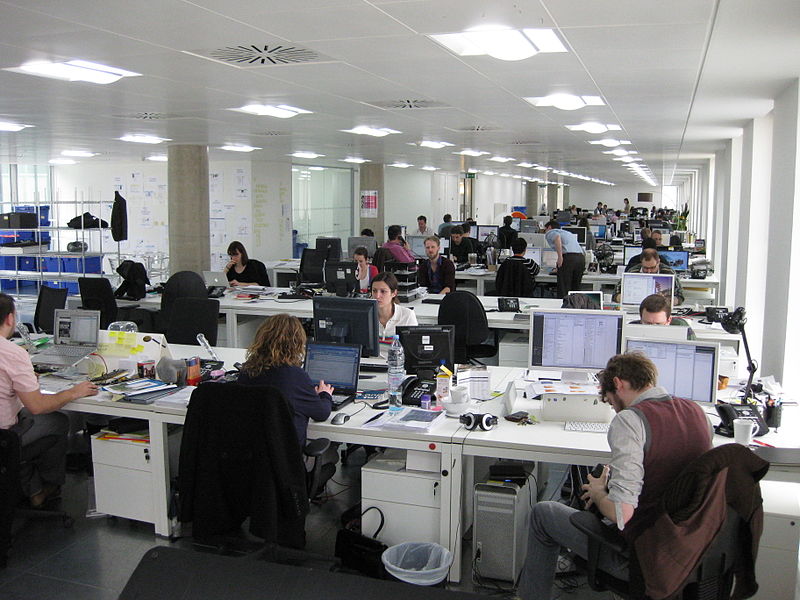
Together, these measures signal a shift in EU labour policy—from reactive support after job losses to proactive intervention aimed at preventing unemployment and ensuring smoother career transitions. As industries continue to evolve rapidly, such policies are expected to play a crucial role in maintaining both economic competitiveness and social stability across the bloc. Photo by Phil Whitehouse, Wikimedia commons.