













The number of people facing poverty or social exclusion across the European Union saw a modest decline in 2025, yet the scale of the issue remains striking. According to newly
released data, 92.7 million individuals—equivalent to 20.9% of the EU population—were still living under conditions that put them at risk.
These figures reflect people experiencing at least one of three key challenges: low income, severe material and social deprivation, or very limited participation in the workforce. While the latest numbers mark a slight improvement from 2024—when 93.3 million people (21.0%) were affected—the overall situation continues to highlight deep structural inequalities across the bloc.
Disparities between countries remain significant. Bulgaria recorded the highest proportion of people at risk, at 29.0%, followed closely by Greece (27.5%) and Romania (27.4%). On the other end of the spectrum, Czechia reported the lowest rate at 11.5%, with Poland (15.0%) and Slovenia (15.5%) also performing comparatively well.
Despite the marginal improvement, poverty in the EU remains a persistent and complex challenge. Rising living costs, housing shortages, and unequal access to stable employment continue to push vulnerable groups—including children, single-parent households, and the elderly—toward economic insecurity. Social protection systems differ widely across member states, contributing to uneven outcomes.
Experts note that while economic recovery and labor market improvements in some regions have helped reduce the overall figures, inflation and energy costs in recent years have offset progress for many households. As a result, millions remain just one financial shock away from falling deeper into poverty.
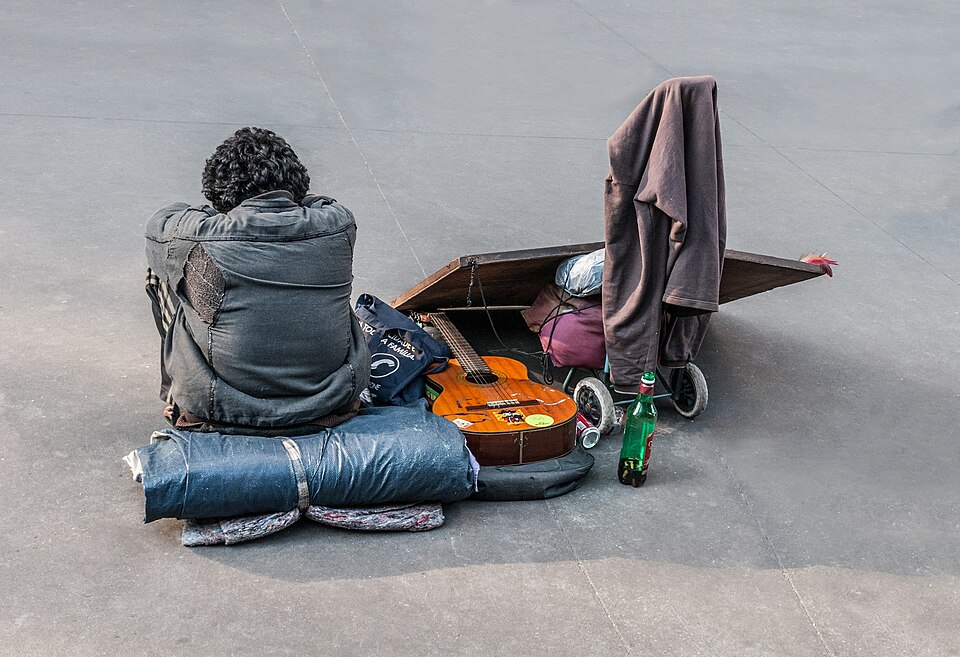
The data underscores the importance of continued policy efforts at both national and EU levels, including investment in social welfare programs, education, and job creation. Without sustained action, the goal of significantly reducing poverty across Europe may remain out of reach. Photo by Wilfredor, Wikimedia commons.