








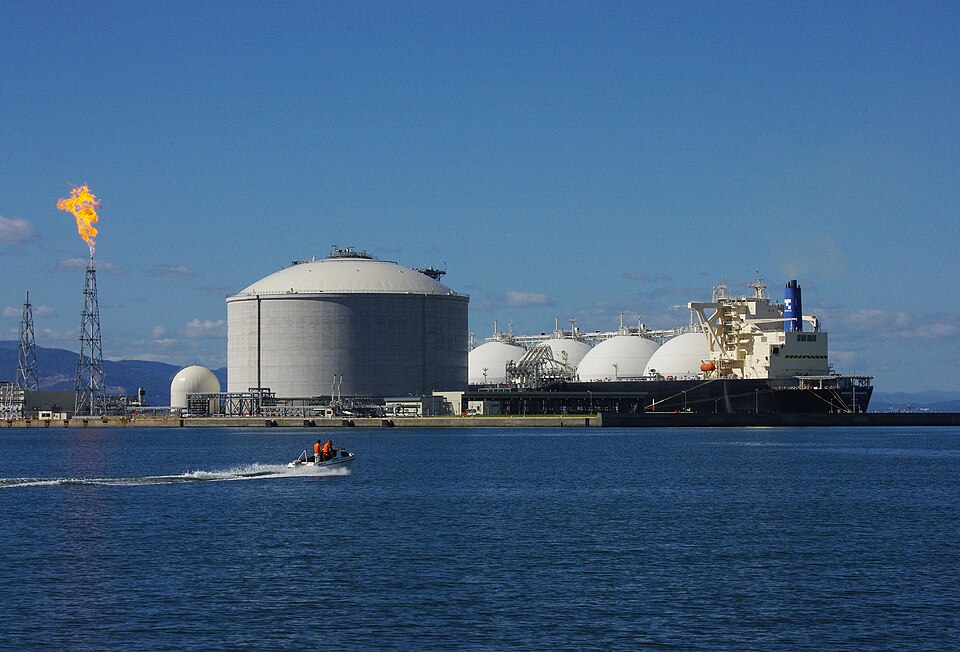
The Netherlands continued to import liquefied natural gas (LNG) from Russia during the first quarter of the year, with Russian supplies accounting for 12 percent of total LNG
imports, according to figures from the Institute for Energy Economics and Financial Analysis (IEEFA) cited by NOS.
The Netherlands was among five European Union member states still receiving Russian LNG during the period. Belgium recorded the highest share at 40 percent, followed by France with 35 percent, Spain with 26 percent, Portugal with 11 percent, and the Netherlands with 12 percent.
It remains unclear how much of the Russian LNG imported into the Netherlands is consumed domestically, as large volumes are also shipped onward through the port of Rotterdam, one of Europe’s main energy transit hubs.
The EU has already agreed to phase out Russian gas imports in response to Moscow’s invasion of Ukraine in 2022. A ban on Russian LNG imports is scheduled to take effect in early 2027, while imports of Russian pipeline gas are expected to be prohibited from autumn next year. Although EU countries are no longer permitted to sign new gas contracts with Russia, existing long-term agreements remain in force.
European dependence on Russian gas has fallen sharply since the start of the war, but Brussels delayed a full ban to allow member states time to secure alternative energy supplies and expand import infrastructure.
However, growing instability in the Middle East could complicate those plans. Jilles van den Beukel of the Hague Centre for Strategic Studies warned that tensions involving Iran and the potential closure of the Strait of Hormuz may disrupt global gas markets.
“I wouldn’t be surprised if Brussels pushed back the ban date further because of this,” Van den Beukel told NOS.
He described the situation as a difficult balancing act for the EU.
“On the one hand, you don’t want to make the LNG market even tighter — and therefore more expensive — but on the other hand, you don’t want to fill Putin’s war chest either.” Photo by とまりん, Wikimedia commons.