










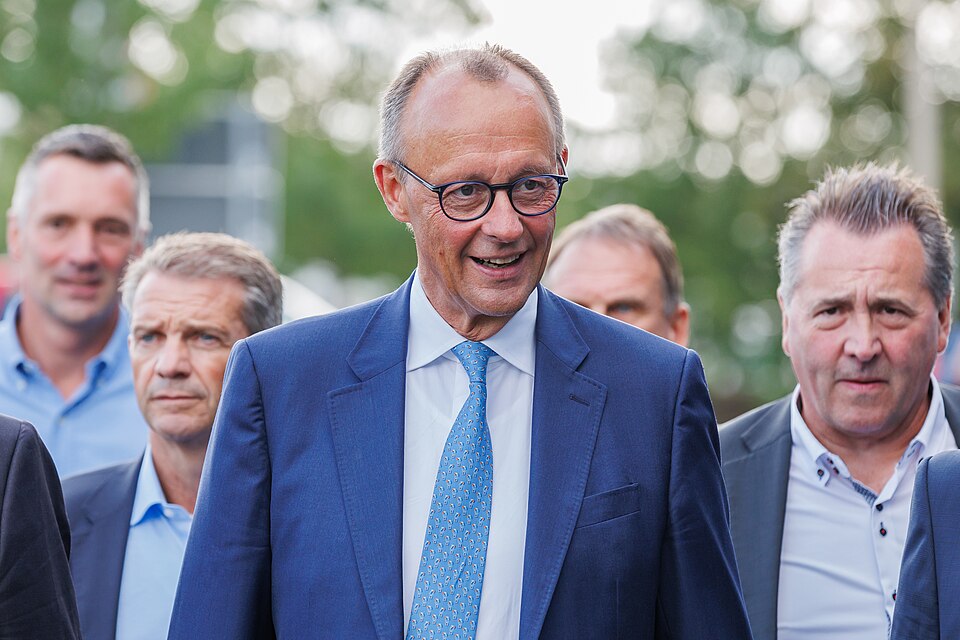
German Chancellor Friedrich Merz acknowledged growing public frustration with his leadership on Friday, admitting he has struggled to connect with voters after remarks about
work culture sparked backlash across the country.
Speaking at a Catholic convention in Wuerzburg, Merz said he needed to communicate the government’s agenda more effectively as his approval ratings continue to slide nearly a year after taking office.
“I have been increasingly asking myself why we are apparently failing to convince people that the course we are pursuing is the right one,” Merz said, adding that he must improve the way he explains government policy and build a stronger emotional connection with the public.
The conservative leader has faced mounting criticism in recent months while attempting to revive Germany’s stagnant economy and contain the rise of the far-right Alternative for Germany (AfD). Polls now place his conservative bloc several points behind the AfD, while coalition partner Social Democratic Party of Germany (SPD) continues to struggle after poor performances in recent regional elections.
Merz recently angered many Germans after suggesting that shorter working weeks and excessive sick leave were undermining the country’s competitiveness. Germany already records some of the lowest average working hours in the European Union.
Attempting to clarify the comments on Friday, Merz insisted he had never described Germans as lazy.
“No one in my party has ever said people in Germany are lazy — not even me,” he said. “I simply pointed out that countries such as Switzerland work significantly more hours per year and are economically more successful.”
The chancellor also moved to downplay tensions inside his coalition government, which has been divided over tax, healthcare and welfare reforms.
“Perhaps we are arguing too much and delivering too few results,” Merz admitted.
A recent DeutschlandTREND survey found only 16% of voters satisfied with Merz’s performance — the lowest approval rating recorded for any German chancellor in the poll. Photo by Steffen Prößdorf, Wikimedia commons.