















A new update on early childhood education across the European Union shows continued progress toward near-universal participation in pre-primary schooling.
In 2024, 95.0% of children aged between three and the compulsory primary school starting age were enrolled in pre-primary education across the EU. This marks a steady increase from 91.2% in 2014, reflecting a decade-long expansion of early childhood education access.
The figures place the European Union close to its strategic target under the European Education Area framework, which aims for at least 96% participation in early childhood education and care by 2030.
Participation levels, however, vary significantly between member states. France reported full coverage at 100%, followed closely by Belgium at 98.1%, while Lithuania and Hungary each reached 97.9%.
At the lower end of the scale, Romania recorded 76.5%, followed by Slovakia at 81.8% and Czechia at 86.4%, highlighting persistent regional disparities in access to early education.
The data also underline the highly gendered nature of the sector. Across the EU, women made up 95.1% of pre-primary education staff. Several countries reported near-total female representation, including Romania (99.7%), Slovakia (99.6%) and Hungary (99.5%). Lower—but still dominant—shares were observed in the Netherlands (87.8%), France (91.6%) and Denmark (92.5%).
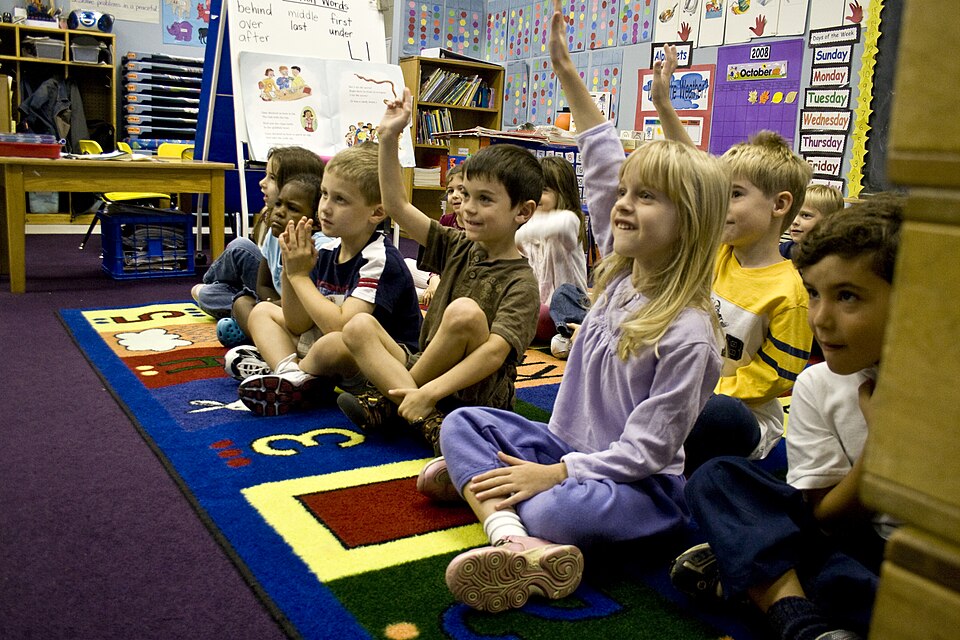
Overall, the latest figures point to sustained investment and growing participation in early childhood education across the EU, while also indicating remaining gaps between member states and the continued dominance of women in the teaching workforce. Photo by woodleywonderworks, Wikimedia commons.