











The number of beehives on farms across the European Union has reached a record 9.4 million in 2023, marking a significant rise in managed honeybee populations over the past
three years, according to newly released farm structure statistics.
This represents an increase of 1.3 million hives, or 16%, compared with 2020, when EU farms recorded about 8.1 million beehives. The figures reflect only hives located on farms, meaning the total number of beehives across the EU is likely higher.
Southern and eastern Europe dominate hive numbers
In 2023, Italy led the bloc with nearly 1.9 million beehives on farms, the highest national total in the EU. It was followed by Romania with 1.7 million, Greece with 1.2 million, and Bulgaria with 1.0 million.
The data show a mixed trend across the bloc. Out of countries with available statistics, 12 recorded increases in hive numbers since 2020, while 10 saw declines.
Italy saw the most dramatic growth, adding more than 822,000 hives — a 79% increase over the period. In contrast, notable decreases were recorded in Hungary, down 152,110 hives (–34%), and Spain, which lost 131,440 hives (–14%).
Bees remain vital to European agriculture
Honeybees play a crucial role in European food systems, pollinating crops across a wide range of climates and agricultural regions. Their ability to survive winter by clustering in hives and relying on stored honey makes them especially resilient compared with many wild pollinators.
However, experts continue to warn that while managed hive numbers are rising in some areas, wild pollinator populations remain under pressure from habitat loss, pesticides, disease, and climate change.
Policy response and conservation push
The release of the data coincides with initiatives at EU level to address pollinator decline. The European Commission has advanced a renewed strategy, titled 'A New Deal for Pollinators', aimed at reversing the long-term decline of insects essential for biodiversity and food production.
The initiative builds on earlier efforts such as the 2018 EU Pollinators Initiative and responds to the European Citizens’ Initiative 'Save bees and farmers!', which called for stronger protections for pollinating insects.
It is also aligned with the broader EU environmental agenda, including the Nature Restoration Regulation and the EU Biodiversity Strategy 2030, which together set targets to restore ecosystems and halt biodiversity loss by 2030.
A symbolic year for pollinators
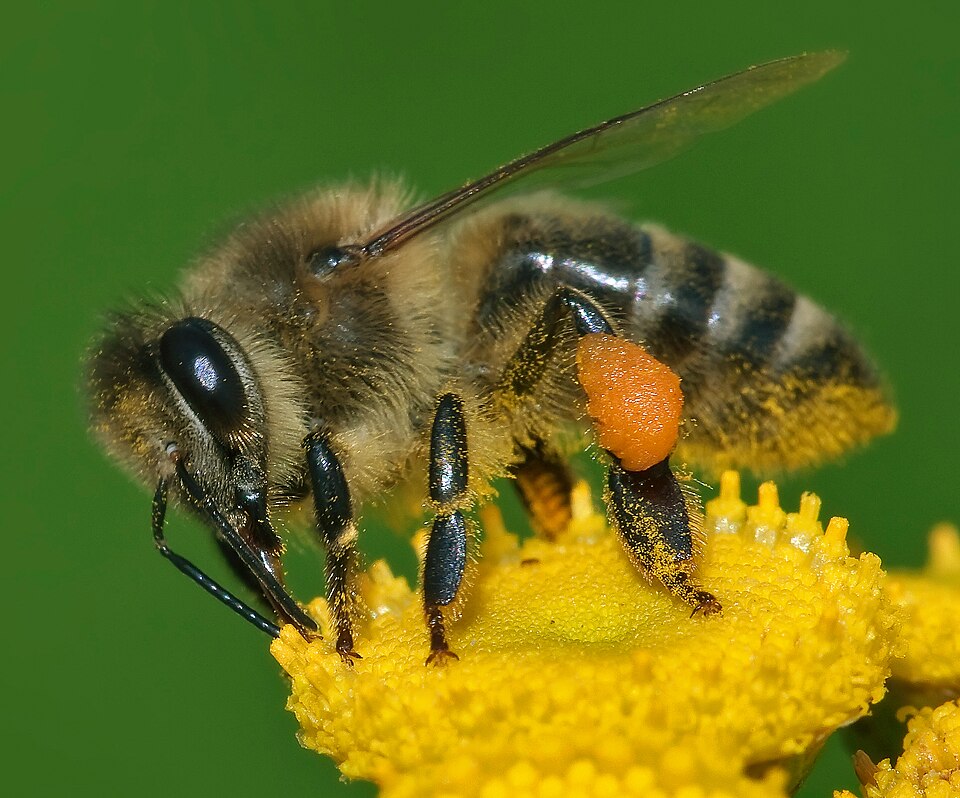
The findings were highlighted in connection with World Bee Day, which draws attention to the essential role of bees and other pollinators in sustaining ecosystems, food production, and environmental health across Europe and beyond. Photo by Andreas Trepte, Wikimedia commons.