










At the Ukraine Recovery Conference, European Commission President Ursula von der Leyen announced the disbursement of €3.2 billion to Ukraine, marking the first
instalment of the new macro-financial assistance (MFA) under the €90 billion Ukraine Support Loan framework.
The MFA forms part of a broader EU financial package designed to support Ukraine in 2026–2027, combining budgetary assistance with targeted support for defence-related needs. The overall programme is intended to help Ukraine maintain macroeconomic stability, sustain essential state functions, and reinforce its defence capacity amid Russia’s ongoing war of aggression.
President von der Leyen stated that Ukraine’s recovery and future prosperity require substantial and immediate investment, noting that the European Union and its Member States have already mobilised over €200 billion in combined economic, financial, and military support since the start of the full-scale invasion. She confirmed that alongside today’s macro-financial assistance, the EU will begin disbursing the first €6 billion tranche dedicated to drone production in the coming days.
First MFA disbursement under structured reform framework
Today’s €3.2 billion payment is the first of three MFA instalments planned for 2026, out of a total €8.35 billion allocated for the year under this instrument. The assistance is governed by a Memorandum of Understanding signed in May 2026 between the European Union and Ukraine, which sets out policy conditions and reform commitments required for disbursement.
Each instalment is released subject to Ukraine meeting agreed benchmarks aimed at strengthening public financial management, improving revenue mobilisation, and enhancing fiscal sustainability.
For this first tranche, Ukraine met seven policy conditions. These included steps to expand domestic revenue collection, such as extending the military levy, submitting draft legislation on taxation of digital platform income, and removing VAT exemptions for low-value imported goods. Additional progress was made in customs reform, alignment with EU customs standards, and improvements to public investment and medium-term fiscal planning systems.
Purpose of the support package
The MFA is designed to provide predictable and flexible financial assistance to help Ukraine manage urgent financing needs caused by the war. The continued destruction and economic disruption resulting from Russia’s invasion place sustained pressure on Ukraine’s public finances.
EU support aims to stabilise the macro-financial environment, ensure continuity of government services, and enable continued spending on priority areas, including reconstruction and recovery.
Background: €90 billion Ukraine Support Loan framework
The Ukraine Support Loan was established under Regulation (EU) 2026/467, adopted by the European Parliament and the Council in February 2026. It provides for up to €90 billion in total support structured across two pillars:
Strengthening Ukraine’s defence capabilities and defence industrial base
Supporting state functions, public services, and economic resilience
Following Ukraine’s submission of its Financing Strategy in March 2026, the Council approved an implementing decision in April 2026 allocating up to €45 billion for 2026. This includes €16.7 billion in budget support and €28.3 billion in defence-industrial assistance.
The MFA component of the budget support is split into instalments of €8.35 billion for 2026, with further disbursements expected later in the year, subject to reform progress. Indicative future payments include €3.7 billion in September 2026 and €1.45 billion towards the end of the year.
In total, since the beginning of Russia’s war against Ukraine, the EU and its Member States have provided over €211 billion in support, including contributions from immobilised Russian assets.
Outlook
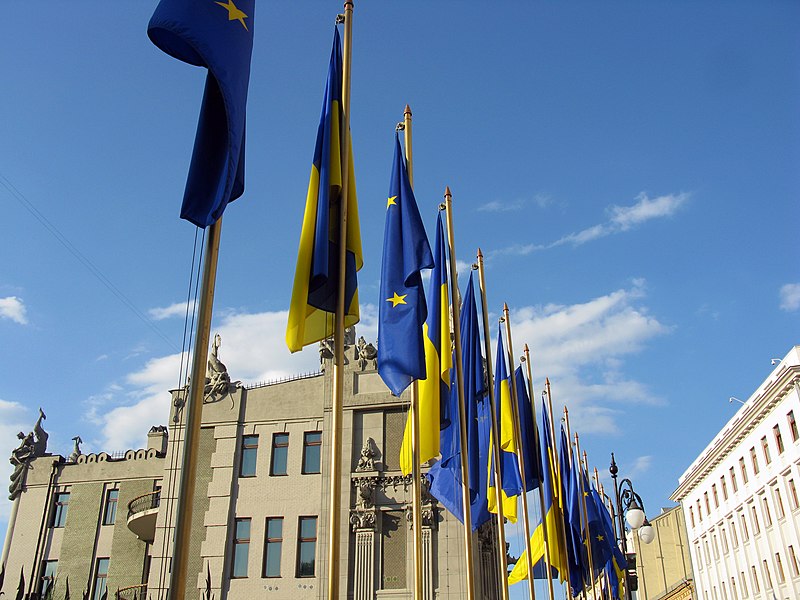
Further disbursements under both the macro-financial assistance and defence components of the Ukraine Support Loan are expected throughout 2026 and 2027, contingent on continued policy implementation and reform progress by Ukraine. Photo by Andrew Bossi from Laurel, MD, USA, Wikimedia commons.