











People across the European Union are expected to spend more time in the workforce than ever before, with the average working life reaching 37.5 years in 2025, according to
new figures.
The estimate, covering people aged 15 and over, marks an increase from 37.2 years in 2024. Since 2016, the expected length of working life in the EU has risen by 2.3 years, from 35.2 years to 37.5 years.
However, the figures vary widely between member states, reflecting differences in labour markets, education patterns and retirement ages.
The longest working lives are recorded in northern and western Europe. Seven EU countries are expected to have average working lives of at least 40 years in 2025.
The Netherlands tops the ranking, with people expected to work an average of 44 years, followed by Sweden at 43.4 years and Denmark at 42.6 years. Estonia (41.5 years), Ireland (40.7), Germany (40.2) and Finland (40.1) also recorded working-life averages above 40 years.
At the other end of the scale, Romania has the shortest expected working life in the EU at 32.7 years, followed by Italy with 33 years and Bulgaria with 34.6 years.
Men continue to have longer working lives than women
The data also shows a persistent gap between men and women in expected years spent in employment.
In 2025, men in the EU are expected to work an average of 39.5 years, compared with 35.4 years for women.
The longest working lives for men are found in the Netherlands, where the average reaches 45.9 years, followed by Sweden and Denmark at 44.5 years each. Ireland records the fourth-highest figure, at 43.4 years.
The shortest expected working lives for men are in Bulgaria (35.9 years), Romania (36 years) and Croatia (36.3 years).
For women, Sweden records the longest expected working life in the EU at 42.3 years, followed by the Netherlands (41.9 years) and Estonia (41.8 years).
Women in Italy have the shortest expected working life, at 28.4 years, while Romania records 29.1 years and Greece 31.8 years.
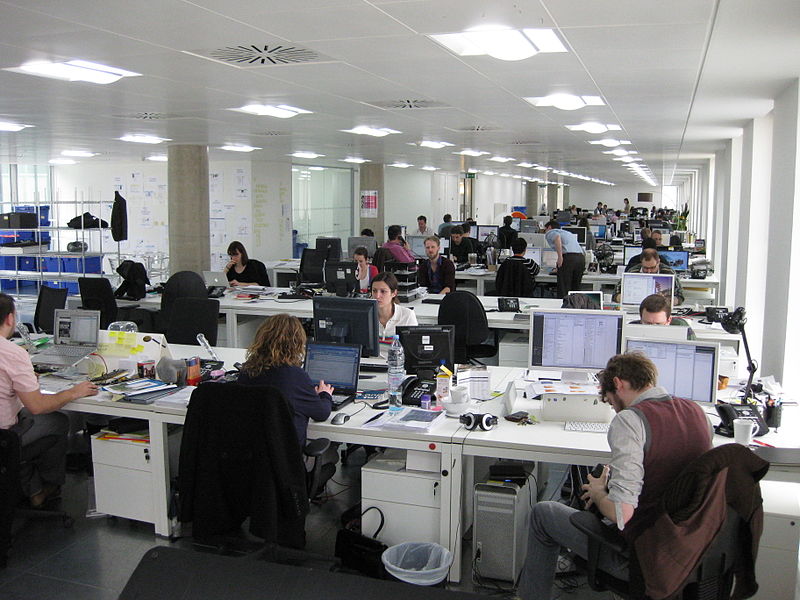
The figures highlight continuing differences across Europe in employment participation, career length and the balance between work and retirement. Photo by Phil Whitehouse, Wikimedia commons.