









Belarus has sharply escalated military activity in its western regions, placing key units on combat readiness and rapidly summoning thousands of
reservists, moves that opposition figures warn amount to a covert mobilization under the guise of routine inspections.
A large-scale check of the combat readiness of Belarus’s armed forces has been under way since January 16, ordered on an emergency basis by President Alexander Lukashenko. Speaking on January 26, Lukashenko said the inspection would continue through the spring.
On the same day, Defense Minister Viktor Khrenin announced that the military had launched a separate internal review of units and formations. He said the inspection ordered by the president and the one conducted by the Defense Ministry and General Staff were parallel but independent processes.
Western Command placed on readiness
The scope of the campaign has widened in recent weeks. On February 21, the Defense Ministry reported that forces of the Western Operational Command had been placed on combat readiness. According to the ministry, commanders began checking units’ ability to carry out assigned missions following a coordination meeting, while reservist-related activities were held in the Grodno garrison near the Polish and Lithuanian borders.
At the same time, residents across western Belarus reported the sudden call-up of thousands of reservists. Social media posts described summonses being delivered without warning, including to men with three children who are typically exempt from service. In several cases, those called up were ordered to report the very same day.
One woman wrote that her husband, who appeared to be working at a draft office, processed around 1,500 people from Grodno in a single day before reservists were sent onward to other locations. Another local resident said calling up 4,000 to 5,000 people per day was “impossible to consider routine.”
Independent outlets said the process appears to violate Belarusian law, which requires at least seven days’ notice for reservists and generally exempts fathers of large families.
“They brought the summons at 9 p.m. on the 16th, and we were told to report the next morning,” a woman named Irina wrote on Threads, as quoted by the independent portal Zerkalo.io.
Opposition warns of “hidden mobilization”
Opposition figures say the scale and speed of the call-ups are unprecedented. Pavel Latushka, deputy head of the United Transitional Cabinet of Belarus, told Ukrainian broadcaster Kyiv24 that the current measures differ sharply from previous reservist training campaigns.
According to Latushka, the authorities are using a sudden readiness inspection as a pretext for what he described as “hidden mobilization.” He said social and medical deferments are reportedly being ignored and that those summoned are transferred directly to military units.
State-aligned media have offered limited details. The pro-government War TV channel said on Sunday that reservists assigned to the Western Operational Command had taken the military oath during the inspections, without specifying how many were involved.
Drills continue as diplomacy intensifies
Lukashenko was briefed on February 18 by Security Council Secretary Alexander Wolfovich on the progress of the inspections, according to state news agency BelTA. Wolfovich said the second phase had concluded, covering readiness checks for most units across nearly all branches of the armed forces, including special forces.
The Defense Ministry said drills are continuing at training grounds nationwide, focusing on weapons handling and physical fitness. Ongoing exercises reportedly involve artillery units, military intelligence cadets, special forces, air defense missile systems and electronic warfare troops, with night firing and live-fire training.
The military activity comes ahead of a meeting of the Supreme State Council of the Union State of Russia and Belarus, scheduled for February 26 in Moscow. Lukashenko is expected to meet Russian President Vladimir Putin. The two leaders spoke by phone on February 19, following earlier talks on February 8, and Lukashenko has also held discussions with Union State Secretary Sergei Glazyev.
Ukraine responds with sanctions
Meanwhile, Ukrainian President Volodymyr Zelensky has increased pressure on Minsk. On Wednesday, he signed a decree imposing sanctions on Lukashenko, accusing Belarus of deepening its support for Russia’s war effort.
Zelensky said Belarus is hosting the Oreshnik weapons complex, that around 3,000 industrial plants are supporting Russia’s military industry, and that relay stations deployed in Belarus in the second half of last year have improved Russia’s ability to strike Ukrainian cities with drones.
Against this backdrop, a visit to Kyiv by opposition leader Sviatlana Tsikhanouskaya, who styles herself as the “President of Free Belarus,” is expected soon. The visit follows an invitation from Zelensky, conveyed during a recent meeting in Vilnius.
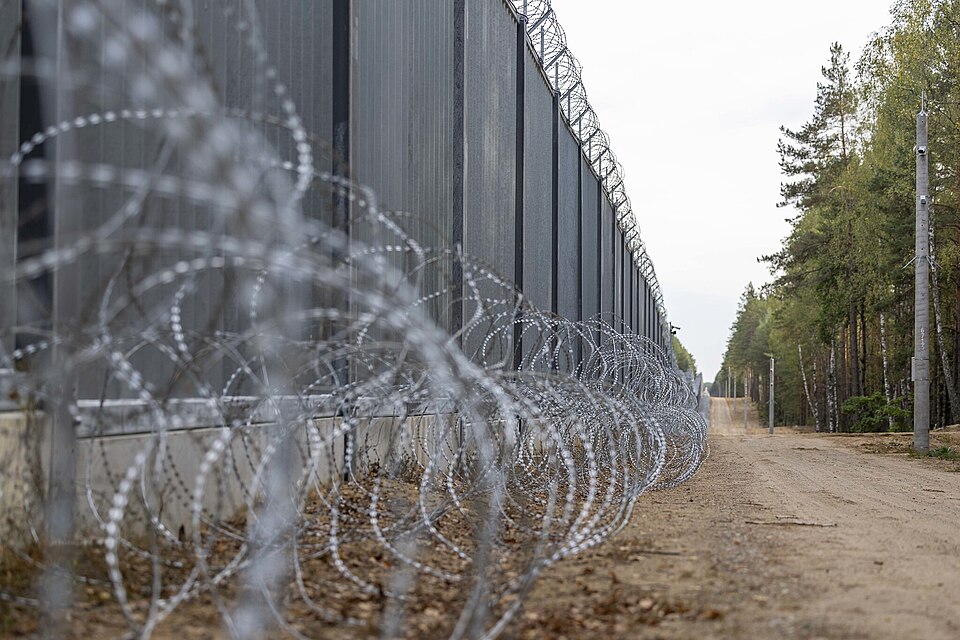
As Belarus ramps up military readiness along its western flank, the sudden reservist call-ups are fueling uncertainty both inside the country and among its neighbors—raising fresh questions about Minsk’s next steps and its role in the broader regional conflict. Photo by Ministry of National Defence of Lithuania, Wikimedia commons.