











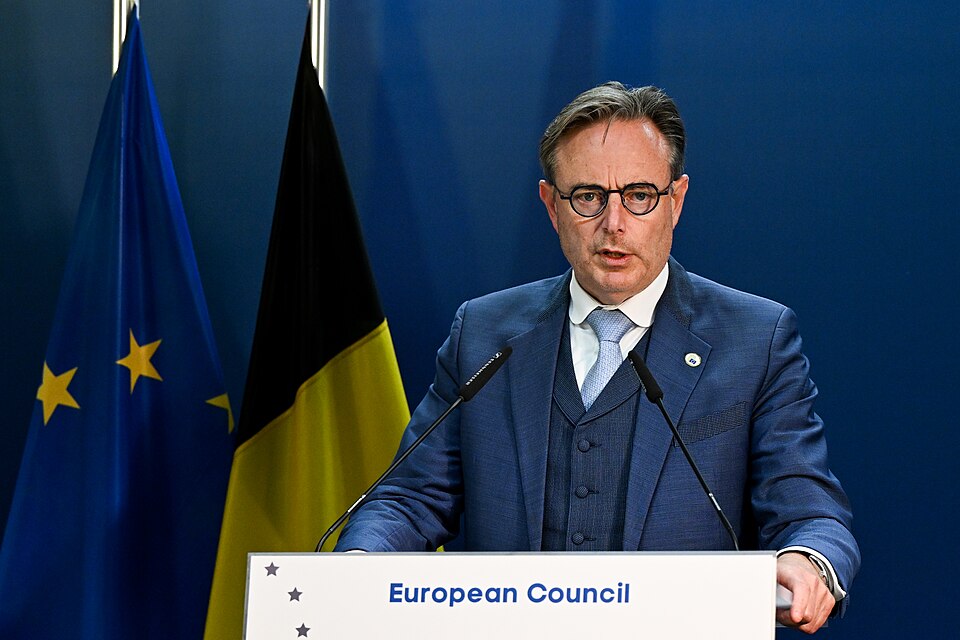
Belgium will take part in a new French-led nuclear deterrence initiative, Prime Minister Bart De Wever confirmed, marking a significant step in closer
European defence cooperation under France’s nuclear umbrella.
The move follows an announcement by French President Emmanuel Macron, who said France plans to strengthen its nuclear posture in response to what he described as the near collapse of the global arms-control framework. While Macron said the number of French warheads would increase, he declined to set a specific target and announced that Paris would no longer publicly disclose the size of its nuclear arsenal.
“We are currently living on a geopolitical fault line full of risks,” Macron said, arguing that the current international climate requires a tougher and more resilient defence model.
Belgium signs on to “advanced deterrence”
De Wever welcomed the French initiative, calling it “an important step towards a stronger European defence policy.” He confirmed that Belgium is ready to “work closely with France on a credible and strengthened deterrent,” a message he also shared publicly on social media.
The cooperation is part of what Macron has termed an “advanced deterrence” framework, aimed at involving European partners more closely in France’s nuclear strategy without sharing decision-making authority. Eight countries have already agreed to participate: Belgium, the Netherlands, the United Kingdom, Germany, Poland, Greece, Sweden and Denmark.
Under the plan, French strategic air force units could eventually be stationed on the territory of partner countries. Paris believes that dispersing its forces across Europe would complicate the strategic calculations of potential adversaries and reinforce deterrence. The cooperation may also include joint military exercises and so-called “signalling” operations, in which France demonstrates its nuclear capabilities beyond its own borders.
No shared control over nuclear weapons
Belgian officials stressed that the arrangement is ad hoc and does not require immediate financial investment. The proposal was discussed and approved by the entire Belgian government last week.
For Belgium, the partnership offers access to additional expertise and what officials describe as enhanced protection under the French nuclear umbrella. The geographically broader deployment is also seen as boosting the credibility of that deterrent.
Macron, however, was clear about the limits of the cooperation. The authority to use nuclear weapons will remain “unconditionally and exclusively” in French hands. “There will be no shared decision-making under any circumstances,” he said.
The initiative reflects growing European concern over security guarantees and deterrence at a time of heightened global tensions, as EU countries look for ways to reinforce collective defence while respecting national sovereignty. Photo by © European Union, 1998 – 2026, Wikimedia commons.