











The European Union has secured another €1.4 billion in revenue generated from immobilised Russian central bank assets, reinforcing its financial and military support for Ukraine
as the war with Russia continues.
The funds, received yesterday, stem from interest accrued on cash balances linked to frozen assets of the Russian Central Bank held within EU-based financial institutions. This marks the fourth such transfer, following a previous tranche distributed in August 2025, and covers profits accumulated during the second half of last year.
Although the underlying Russian assets remain frozen under EU sanctions, the interest they generate is being redirected. Under a framework agreed upon by EU member states, these proceeds are now being channelled to support Ukraine’s economy and defence.
European Commission President Ursula von der Leyen emphasized the importance of the move, stating that the funds will help sustain Ukraine’s government operations, maintain essential public services, and strengthen its armed forces. She reaffirmed the EU’s long-term commitment to Ukraine’s sovereignty and victory.
Most of the funds—around 95%—will be directed through the Ukraine Loan Cooperation Mechanism (ULCM), which helps Kyiv manage and repay large-scale international loans, including a broader €45 billion support package coordinated with G7 partners. The remaining 5% will go to the European Peace Facility, which finances military assistance and defence capabilities for Ukraine.
Broader context: EU support for Ukraine
Since the start of Russia’s full-scale invasion in 2022, the EU has emerged as one of Ukraine’s largest backers, providing tens of billions of euros in economic, humanitarian, and military aid.
Key elements of EU support include:
- Macro-financial assistance: Long-term loans and grants to stabilize Ukraine’s economy
- Military aid: Weapons, training, and defence funding via the European Peace Facility
- Humanitarian support: Assistance for civilians, refugees, and reconstruction efforts
- Sanctions on Russia: Targeting financial systems, energy exports, and key industries
A significant innovation in EU policy has been the use of profits from frozen Russian assets—rather than the assets themselves—to finance Ukraine’s needs. This approach avoids legal complications while still holding Russia financially accountable.
Background
The immobilisation of Russian central bank assets is part of a broader sanctions regime introduced by the EU in response to Russia’s invasion of Ukraine. These measures prevent Russia from accessing hundreds of billions of euros in reserves held abroad.
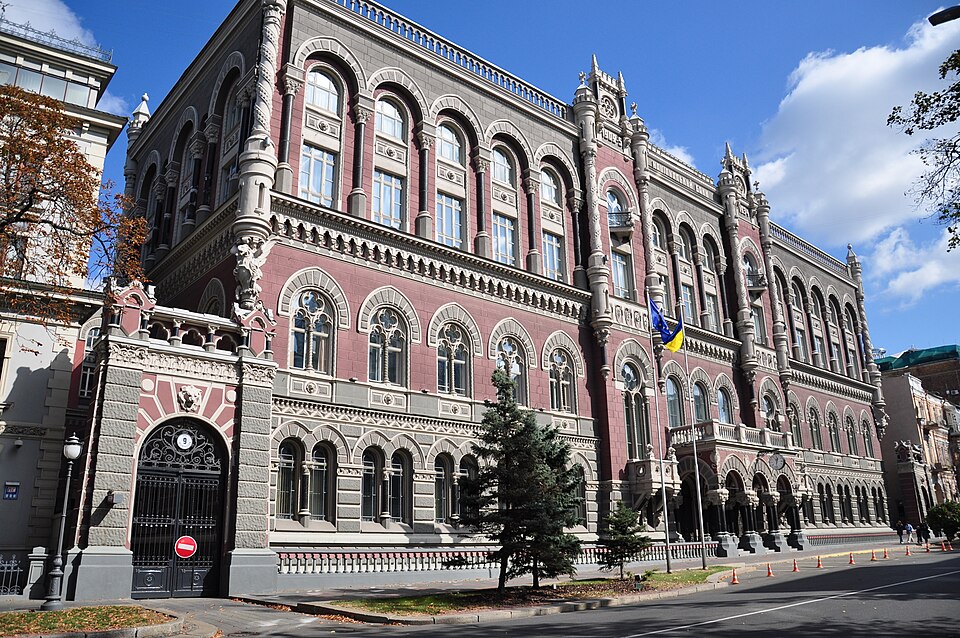
As these assets generate interest over time, EU authorities have moved to capture and repurpose those earnings. Legal frameworks adopted in 2024 and strengthened in 2025 ensure that these profits are retained within the EU and used to support Ukraine, rather than returned to Russia. Photo by Musia-97, Wikimedia commons.