











A new report by the We Are Monitoring Association has raised serious allegations of abuse against migrants and refugees at the Poland–Belarus border, describing a pattern of
violence, forced returns and degrading treatment by both countries’ security forces.
The report, titled “They Did Not Let Us Speak,” was released on the anniversary of Poland’s decision to suspend the right to apply for international protection at the border — a move that has drawn criticism from human rights groups across Europe.
Drawing on 18 testimonies collected over the past year, the authors argue that the policy has not resolved the crisis but instead intensified human suffering in the border region. While the Polish government maintains that the restrictions have helped limit irregular migration, officials have also acknowledged that pressure at the border remains high.
Accounts of violence and pushbacks
Migrants interviewed for the report described repeated pushbacks — a practice where individuals are forcibly returned across the border without being allowed to apply for asylum.
One Sudanese man, identified as Omar, said that after crossing into Poland, his group was met with force.
“They fired rubber bullets at us, beat us and used pepper spray,” he said. “They did not ask any questions and did not let us speak.”
According to his testimony, the group was later fingerprinted, given minimal water and no food, and misled into believing they were being transported to Germany — only to be driven back to the Belarusian border.
Another migrant, Amir, also from Sudan, said he fled conflict hoping to find safety in Europe but was repeatedly forced back.
“We felt as if we were not humans, but animals,” he said, adding that a companion died near a border marker in late 2025.
Legal concerns and criticism
Legal experts quoted in the report, including representatives from the Helsinki Foundation for Human Rights, argue that Poland’s suspension of asylum rights violates both EU law and the Polish constitution.
They contend that the policy is neither necessary nor proportionate and may expose migrants to serious harm, including violence and persecution.
Numbers behind the crisis
The report presents a stark picture of the situation in 2025:
- 3,164 people requested assistance
- 400 humanitarian interventions were carried out
- 2,077 pushbacks from Poland to Belarus were documented
- 400 people reported violence by Polish forces
- 487 reported abuse by Belarusian forces
- 200 reported violence from both sides
Migrants arriving at the border most commonly came from Somalia, Afghanistan, Ethiopia, Eritrea and Sudan.
At least 103 people are believed to have died in the border region between August 2021 and March 2025.
Wider context: the Poland–Belarus border crisis
The situation at the Poland–Belarus border has been a source of tension since 2021, when thousands of migrants began arriving in the area.
The European Union and Poland have accused Belarus of orchestrating the migration flows as part of a hybrid pressure campaign against the EU — an accusation Minsk denies. Migrants are often flown into Belarus and directed toward EU borders, where they become trapped in a heavily militarized zone.
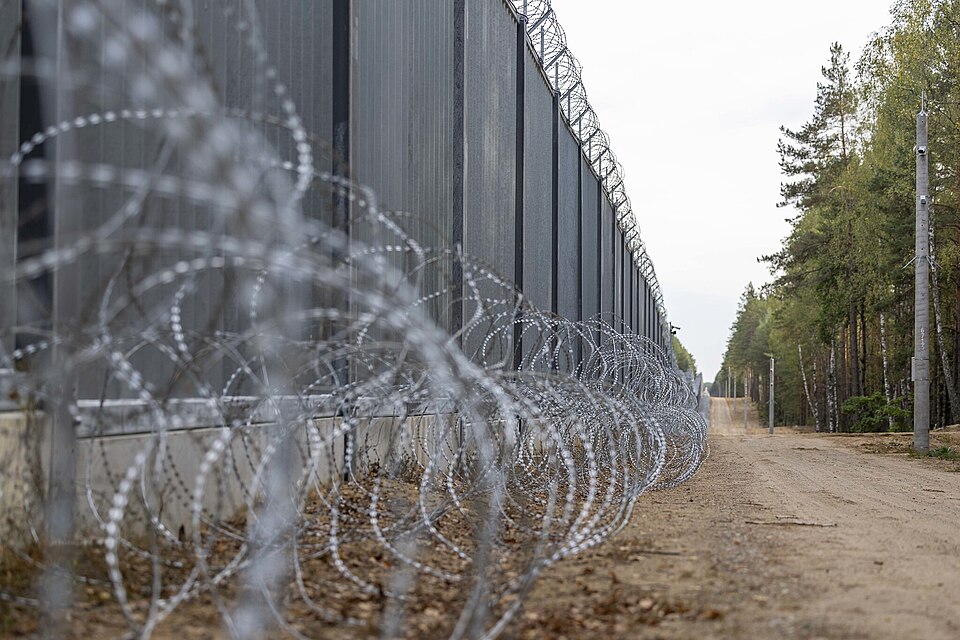
In response, Poland has reinforced the border with fences, troops and emergency laws limiting access for NGOs and journalists. A state of emergency initially restricted reporting from the region, making independent verification of incidents difficult.
Humanitarian organizations say migrants are frequently caught in a cycle of being pushed back and forth between the two countries, often stranded in forests without food, shelter or medical care — particularly during harsh winter conditions.
While Polish authorities frame their actions as necessary to protect the EU’s external border, critics argue that current practices undermine international asylum law and risk normalizing human rights violations. Photo by Ministry of National Defence of Lithuania, Wikimedia commons.