










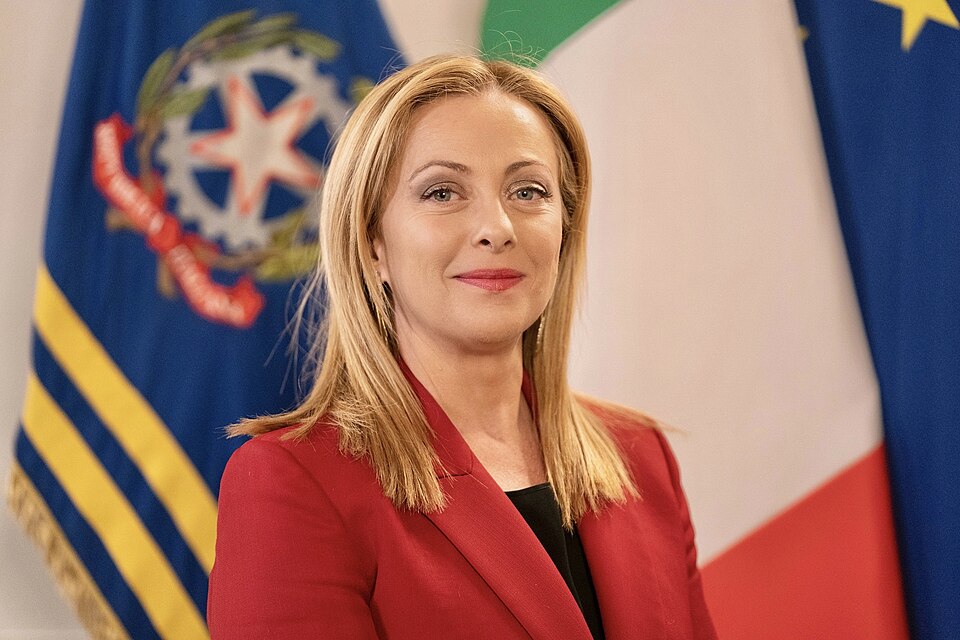
Italian Prime Minister Giorgia Meloni embarked on a discreet but highly strategic visit to the Gulf, arriving in Jeddah on Friday before scheduled stops in Qatar and the United Arab
Emirates. The trip, not announced in advance, underscores mounting European concerns over regional instability and energy security following escalating tensions involving Iran.
Meloni’s visit marks a notable diplomatic moment: she is the first European Union leader to travel to Saudi Arabia since the outbreak of the recent U.S.-Israeli conflict with Iran earlier this year. During her stop in Jeddah, she is expected to meet Crown Prince Mohammed bin Salman, signaling a renewed European engagement with Gulf leadership at a time of heightened geopolitical risk.
Energy security at the forefront
Behind the diplomatic optics lies a pressing economic concern. Italy is grappling with rising fuel prices and supply disruptions linked to instability in the Gulf. Prior to the crisis, roughly 10% of Italy’s natural gas demand was met by Qatari liquefied natural gas, while oil imports from the Middle East accounted for about 12% of total consumption.
That balance is now under strain. Disruptions in shipping routes—particularly around the strategically vital Strait of Hormuz—have led to delays and cancellations in LNG deliveries. At the same time, attacks linked to the regional conflict have reportedly reduced Qatar’s export capacity, compounding uncertainty in global energy markets.
Italian officials say the prime minister’s Gulf tour aims to reassure partners while safeguarding national energy interests. Rome is also encouraging continued investment by major Italian firms such as Eni, which has long-standing operations across the region.
Defense cooperation and regional stability
Security is another key pillar of the visit. Italy has already been supplying defensive equipment to Gulf allies concerned about potential Iranian retaliation. Officials indicate Rome remains open to expanding such cooperation if requested, reflecting a broader European shift toward deeper security engagement in the Gulf.
A broader energy diversification strategy
Meloni’s trip is part of a wider effort to diversify Italy’s energy sources. In recent weeks, she has visited Algeria to secure additional gas supplies and is expected to travel to Azerbaijan soon. Meanwhile, Italy is preparing to receive LNG shipments from the United States, including from the Golden Pass facility, starting in June.
Italy and the Gulf: a deepening relationship
Italy’s engagement with Gulf states is not new, but it has intensified significantly in recent years. Historically, ties were driven primarily by energy imports. Today, the relationship has expanded into a multifaceted partnership involving defense, infrastructure, finance, and technology.
Italian companies are deeply embedded in Gulf economies—particularly in construction, engineering, and energy—while sovereign wealth funds from the Gulf have increased investments in Italian assets, including ports, luxury brands, and strategic industries.
Politically, Rome has positioned itself as a pragmatic interlocutor in the region, maintaining dialogue with both traditional Western allies and Gulf monarchies. Under Meloni, this approach has taken on a more assertive tone, with Italy seeking to elevate its role as a bridge between Europe and the Middle East.
The current crisis has accelerated that trajectory. As energy security and geopolitical stability become increasingly intertwined, Italy’s outreach to Gulf partners reflects a broader European recalibration—one that recognizes the region not only as an energy supplier, but as a critical strategic ally in an increasingly volatile global landscape. Photo by Governo italiano, Wikimedia commons.