





Latest News

AI adoption surges among EU businesses, reaching 20% in 2025

AI adoption surges among EU businesses, reaching 20% in 2025 AI adoption surges among EU businesses, reaching 20% in 2025
  In 2025, one in five European Union enterprises with 10 or more employees reported using artificial intelligence (AI) technologies, marking...
Read More...

Hungary faces EU legal action over media freedom violations

Hungary faces EU legal action over media freedom violations Hungary faces EU legal action over media freedom violations
  The European Commission has launched legal action against Hungary for systematic violations of the European Media Freedom Act (EMFA),...
Read More...

Europeans back stronger, more assertive EU as support for membership hits new high

Europeans back stronger, more assertive EU as support for membership hits new high Europeans back stronger, more assertive EU as support for membership hits new high
A large majority of Europeans believe their countries benefit from being part of the European Union, according to the latest Eurobarometer...
Read More...

MEPs push for EU-wide corporate framework to boost innovation

MEPs push for EU-wide corporate framework to boost innovation MEPs push for EU-wide corporate framework to boost innovation
The European Parliament’s Legal Affairs Committee has backed a set of recommendations calling for a unified EU corporate structure designed...
Read More...

EU hosts 4.3 million Ukrainians under temporary protection in October

EU hosts 4.3 million Ukrainians under temporary protection in October EU hosts 4.3 million Ukrainians under temporary protection in October
  As of 31 October 2025, EU countries were providing temporary protection to 4.3 million non-EU citizens who fled Ukraine, according to...
Read More...

Ukraine could enter EU by 2030, Enlargement Commissioner says

Ukraine could enter EU by 2030, Enlargement Commissioner says Ukraine could enter EU by 2030, Enlargement Commissioner says
  Ukraine could be ready to join the European Union by 2030, according to European Commissioner for Enlargement Marta Kos, who spoke during...
Read More...

EU strikes political deal on ‘Omnibus I’ package to cut red tape for businesses

EU strikes political deal on ‘Omnibus I’ package to cut red tape for businesses EU strikes political deal on ‘Omnibus I’ package to cut red tape for businesses
  The European Commission has hailed a political breakthrough after negotiators from the European Parliament and EU Member States reached...
Read More...

Council of Europe to launch International Claims Commission for Ukraine in The Hague

Council of Europe to launch International Claims Commission for Ukraine in The Hague Council of Europe to launch International Claims Commission for Ukraine in The Hague
  Leaders and senior officials from across Europe and beyond will convene in The Hague on 16 December to unveil a new Council of Europe...
Read More...

First anniversary of Assad’s downfall

First anniversary of Assad’s downfall First anniversary of Assad’s downfall
  First anniversary of Assad’s downfall: joint statement by High Representative for Foreign Affairs and Security Policy Kallas and...
Read More...

Policy monitor shows: Austrian government has implemented 19 percent of Its election promises

Policy monitor shows: Austrian government has implemented 19 percent of Its election promises Policy monitor shows: Austrian government has implemented 19 percent of Its election promises
  On December 2, 2025, the University of Graz presented for the first time a comprehensive evaluation of how the governing parties ÖVP,...
Read More...

Must Read

Most Popular Stories

VIDEO AND audio news:

Features, views, analysis

business

Latest News

AI adoption surges among EU businesses, reaching 20% in 2025

AI adoption surges among EU businesses, reaching 20% in 2025 AI adoption surges among EU businesses, reaching 20% in 2025
  In 2025, one in five European Union enterprises with 10 or more employees reported using artificial intelligence (AI) technologies, marking...
Read More...

Hungary faces EU legal action over media freedom violations

Hungary faces EU legal action over media freedom violations Hungary faces EU legal action over media freedom violations
  The European Commission has launched legal action against Hungary for systematic violations of the European Media Freedom Act (EMFA),...
Read More...

Europeans back stronger, more assertive EU as support for membership hits new high

Europeans back stronger, more assertive EU as support for membership hits new high Europeans back stronger, more assertive EU as support for membership hits new high
A large majority of Europeans believe their countries benefit from being part of the European Union, according to the latest Eurobarometer...
Read More...

MEPs push for EU-wide corporate framework to boost innovation

MEPs push for EU-wide corporate framework to boost innovation MEPs push for EU-wide corporate framework to boost innovation
The European Parliament’s Legal Affairs Committee has backed a set of recommendations calling for a unified EU corporate structure designed...
Read More...

EU hosts 4.3 million Ukrainians under temporary protection in October

EU hosts 4.3 million Ukrainians under temporary protection in October EU hosts 4.3 million Ukrainians under temporary protection in October
  As of 31 October 2025, EU countries were providing temporary protection to 4.3 million non-EU citizens who fled Ukraine, according to...
Read More...

Ukraine could enter EU by 2030, Enlargement Commissioner says

Ukraine could enter EU by 2030, Enlargement Commissioner says Ukraine could enter EU by 2030, Enlargement Commissioner says
  Ukraine could be ready to join the European Union by 2030, according to European Commissioner for Enlargement Marta Kos, who spoke during...
Read More...

EU strikes political deal on ‘Omnibus I’ package to cut red tape for businesses

EU strikes political deal on ‘Omnibus I’ package to cut red tape for businesses EU strikes political deal on ‘Omnibus I’ package to cut red tape for businesses
  The European Commission has hailed a political breakthrough after negotiators from the European Parliament and EU Member States reached...
Read More...

Council of Europe to launch International Claims Commission for Ukraine in The Hague

Council of Europe to launch International Claims Commission for Ukraine in The Hague Council of Europe to launch International Claims Commission for Ukraine in The Hague
  Leaders and senior officials from across Europe and beyond will convene in The Hague on 16 December to unveil a new Council of Europe...
Read More...

First anniversary of Assad’s downfall

First anniversary of Assad’s downfall First anniversary of Assad’s downfall
  First anniversary of Assad’s downfall: joint statement by High Representative for Foreign Affairs and Security Policy Kallas and...
Read More...

Policy monitor shows: Austrian government has implemented 19 percent of Its election promises

Policy monitor shows: Austrian government has implemented 19 percent of Its election promises Policy monitor shows: Austrian government has implemented 19 percent of Its election promises
  On December 2, 2025, the University of Graz presented for the first time a comprehensive evaluation of how the governing parties ÖVP,...
Read More...

Must Read

Most Popular Stories


A recent survey conducted by the Brussels-based digital industry association Bitkom has revealed that 88% of German voters are concerned about potential election interference

from foreign governments or external actors as they prepare to vote on February 23. Russia and the United States emerged as the top perceived threats, with China also ranking high on the list.

Widespread concern over foreign influence

The poll, which surveyed just over 1,000 eligible voters, found that the vast majority fear attempts to manipulate public opinion through social media and online disinformation campaigns. Russia topped the list of suspected foreign influencers, with 45% of respondents identifying it as a threat, followed closely by the U.S. at 42%, and China at 26%. Additionally, 8% of those surveyed expressed concern over interference from Eastern European actors.

The findings also shed light on how voters shape their political opinions: 82% cited discussions with friends and family, 76% relied on television, and 69% used the internet as an information source.

Amid rising concerns over misinformation, 80% of respondents stated that the next government should prioritize digital policy to combat online disinformation. Furthermore, 71% supported the creation of an independent ministry dedicated to digital governance. Bitkom President Ralf Wintergerst emphasized that such a ministry should be well-funded and equipped with legislative authority to tackle the growing challenge.

Disinformation already circulating online

A third of voters who use the internet for news reported encountering misinformation about the upcoming election. The most pressing concerns among respondents centered on deepfakes—highly realistic yet entirely fabricated images, videos, and audio recordings—and targeted disinformation campaigns. Alarmingly, 56% of those surveyed believed that Germany’s democratic institutions were unprepared to handle these emerging threats.

Wintergerst highlighted that while voter awareness of disinformation is increasing, misinformation still has the potential to significantly impact election outcomes by distorting public opinion and damaging the reputations of candidates and political parties. He warned that disinformation undermines trust in democratic processes but stressed that "an informed society is the best protection against digital manipulation."

Russia, U.S., and China under scrutiny

Russia, long known for its interference in foreign elections through coordinated disinformation campaigns, social media bots, and troll farms, ranked as the highest concern among voters. The Kremlin has frequently sought to exploit divisions within the European Union, often aligning with extremist parties on both ends of the political spectrum.

However, the poll also highlighted growing suspicion of the United States, particularly due to figures like Elon Musk, who owns the social media platform X (formerly Twitter). Musk, a major financial backer of former U.S. President Donald Trump and an outspoken critic of German political leaders, has been accused of amplifying far-right voices in Germany. His recent online interview with Alice Weidel, leader of the far-right Alternative for Germany (AfD) party, has fueled allegations of foreign influence.

Meanwhile, U.S. social media companies have been criticized for failing to curb disinformation, with many shifting responsibility onto users rather than actively moderating false or misleading content. The European Union, which enforces stricter disinformation policies than the U.S. under the Digital Services Act (DSA), faces ongoing challenges in holding these platforms accountable.

China’s influence and domestic threats

China, while not as immediately visible as Russia, is known for engaging in digital espionage and influencing political systems worldwide. Concerns over Chinese infiltration in Germany have grown, particularly due to its connections with the AfD. In one notable case, Maximilian Krah, the AfD’s lead candidate for the European Parliament, was found to have a Chinese spy working in his office.

German intelligence officials have likened Russia’s interference to a sudden storm while describing China’s approach as "global warming"—a slow but pervasive influence that gradually reshapes political landscapes.

Beyond foreign actors, voters expressed concern over the AfD’s aggressive social media strategies, particularly its outreach to younger demographics. In the poll, 66% highlighted the party’s online influence as worrisome, and 87% agreed that society must take a more active role in countering far-right narratives. Similarly, 78% called for increased scrutiny of far-left disinformation.

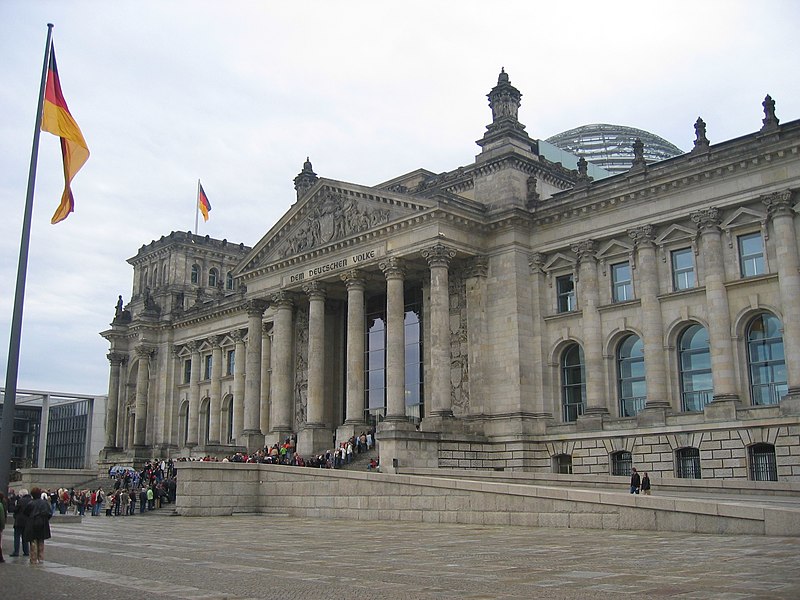
A significant 79% of respondents concluded that populist movements have been the biggest beneficiaries of social media influence, reinforcing the need for stricter regulations and greater public awareness to safeguard Germany’s democratic process. Photo by Luukas, Wikimedia commons.

deneme