










Belgium will not participate in any military conflict led by the United States and Israel against Iran, Prime Minister Bart De Wever confirmed on Monday, signaling a clear stance
from the federal government amid rising geopolitical tensions.
Speaking in response to questions about a potential operation in the strategically vital Strait of Hormuz, De Wever emphasized that Belgium has no intention of becoming directly involved. However, he noted that any formal requests from allies—whether through NATO or bilateral partners such as Saudi Arabia or the United Arab Emirates—would be considered collectively within the government.
Balancing alliances and national policy
While ruling out immediate military participation, De Wever left the door open for diplomatic discussions should allied nations seek support.His comments reflect Belgium’s cautious approach to escalating tensions in the Middle East, prioritizing consultation over automatic alignment.
PM pushes back on Russia controversy
The prime minister also addressed mounting criticism over his recent remarks Russia, firmly rejecting suggestions that he would shift Belgium’s support away from Ukraine. De Wever insisted that any normalization of relations with Russia would depend entirely on a peace agreement acceptable to both the European Union and Ukraine.
The backlash followed comments in which he argued that Europe must simultaneously strengthen its military defenses and consider restoring relations with Russia in the long term. His remarks sparked political debate domestically and drew scrutiny internationally.
Responding to critics, De Wever dismissed claims that he was showing sympathy toward Russian President Vladimir Putin. “This is being blown out of proportion,” he said, arguing that engaging in negotiations is a practical necessity rather than a political concession.
Call for realistic peace strategy
According to De Wever, diplomatic talks with Russia are already ongoing, yet the European Union lacks direct representation despite bearing significant economic and political costs. He argued that negotiations are essential to achieving a durable resolution to the war in Ukraine.
He stressed, however, that any peace deal must not come at the expense of Ukraine’s sovereignty. Instead, it should be accompanied by stronger European defense capabilities and reinforced security along the eastern flank.
“A lasting agreement must be fair to both Ukraine and the European Union,” De Wever said, adding that normalization of relations with Russia should only follow such an outcome. “After every war, the goal is ultimately to move forward—it cannot be to remain enemies forever.”
A firm but measured position
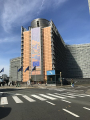
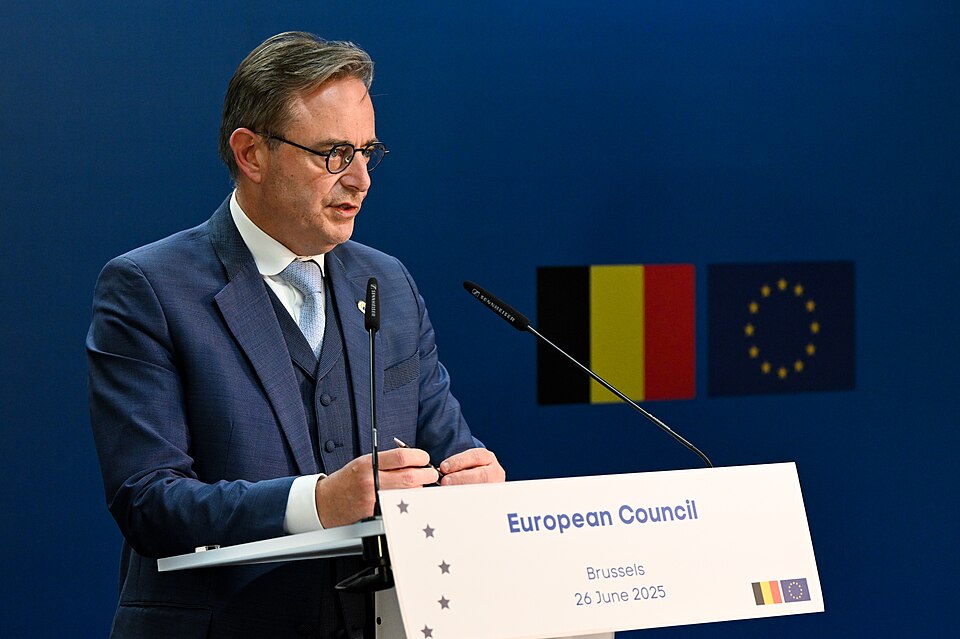
De Wever’s statements highlight Belgium’s attempt to strike a careful balance: avoiding direct involvement in new conflicts while advocating for pragmatic diplomacy in ongoing ones. His message underscores a broader European dilemma—how to maintain unity and security while navigating complex global tensions. Photo by © European Union, 1998 – 2026, Wikimedia commons.