








Just days before the Venice Biennale is set to open, the event has been shaken by an unexpected development: its entire jury has resigned. The decision comes after growing
controversy surrounding the inclusion of Russia and Israel, and broader concerns about how the festival handles artists representing countries accused of serious human rights violations.
In a statement shared through eFlux, the five-member jury, led by Brazilian curator Solange Farkas, explained that their resignation was tied to a position they had recently taken. They had decided not to award prizes to artists representing countries whose leaders are currently under investigation by the International Criminal Court (ICC).
The stance was first made public on 23 April in a “statement of intention” ahead of this year’s Biennale, titled *In Minor Keys*. In it, the jurors acknowledged the complicated relationship between art and national representation, while emphasizing their commitment to human rights.
They wrote that they would not consider entries from countries whose leaders face charges of crimes against humanity. At the same time, they expressed support for artistic director Koyo Kouoh, echoing her call to move away from what she described as “the spectacle of horror” and instead focus on spaces where human dignity is preserved.
Although no countries were mentioned directly, the statement was widely interpreted as referring to Russia and Israel. Both nations have been under scrutiny, with ICC arrest warrants issued for Russian president Vladimir Putin over the war in Ukraine, and for Israeli prime minister Benjamin Netanyahu and former defence minister Yoav Gallant in connection with the conflict in Gaza.
The jury’s resignation follows weeks of mounting tension over Russia’s planned return to the Biennale—its first since the invasion of Ukraine. Earlier in the month, the European Commission warned that the festival could lose up to €2 million in funding if it did not reconsider Russia’s participation.
According to reports, officials were concerned that allowing a Russian delegation could undermine EU sanctions or appear to legitimize state-backed involvement in the cultural event.
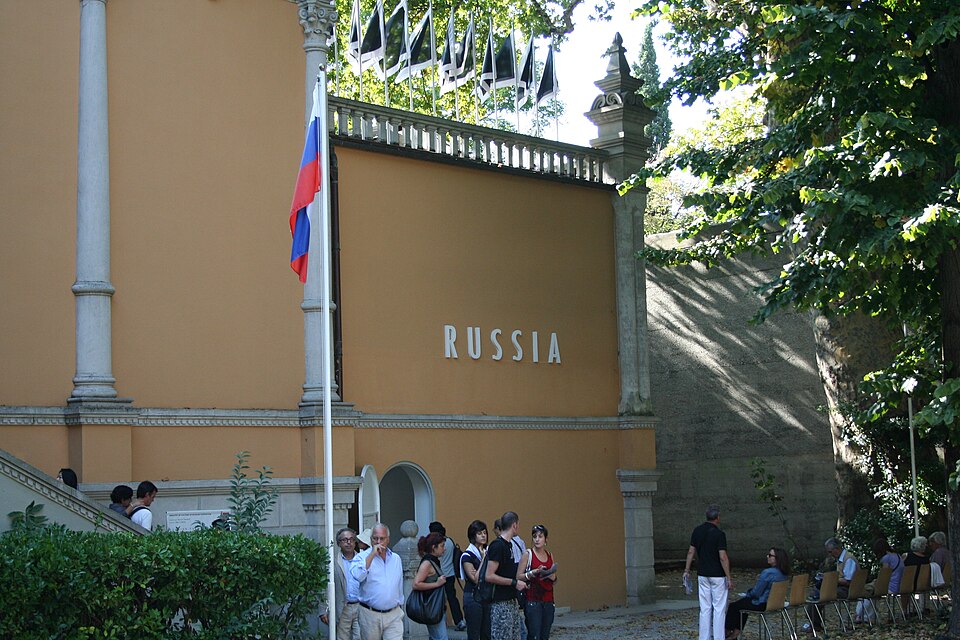
In response to the pressure, the Biennale Foundation announced that the Russian pavilion would remain closed to the public during the exhibition, opening only briefly during press preview days in early May. Festival president Pietrangelo Buttafuoco had previously defended a more inclusive approach, arguing that art should rise above political conflict.
The issue has also stirred debate within Italy. Culture minister Alexander Giuli said he would boycott the opening ceremony and called for the resignation of a Biennale board member over the decision to readmit Russia.
Opposition to Russia’s participation had already been voiced at the European level. Last month, 22 culture ministers from across Europe urged organizers to exclude Russia entirely, arguing that there is no place for state representation tied to ongoing conflict on a major cultural stage.
The Venice Biennale will run from 9 May through 22 November, now opening under a cloud of political tension and without the jury originally appointed to judge its artists. Photo by Cyril S, Wikimedia commons.