












Rail travel across the European Union reached new heights in 2024, with passengers making 8.7 billion train journeys and covering a combined 444.5 billion passenger-
kilometres, according to the latest EU transport data.
Germany and France remained the dominant markets for rail passenger transport, accounting for more than half of the bloc’s total performance. Germany recorded 109.1 billion passenger-kilometres, narrowly ahead of France with 107.3 billion. Italy ranked third with 55.9 billion passenger-kilometres.
At the other end of the scale, six EU countries registered fewer than 1 billion passenger-kilometres over the year. Lithuania and Estonia each recorded 0.4 billion passenger-kilometres, while Luxembourg posted 0.6 billion. Latvia and Greece both reached 0.7 billion, followed by Slovenia with 0.9 billion.
When measured per capita, however, Luxembourg emerged as Europe’s most rail-dependent nation. The country recorded 46.2 rail journeys per resident, ahead of Austria with 35.6 and Denmark with 35.2.
The lowest rail usage rates per person were found in Greece, where the average stood at just 1.4 journeys per capita. Lithuania followed with 1.8, while Bulgaria recorded 3.3.
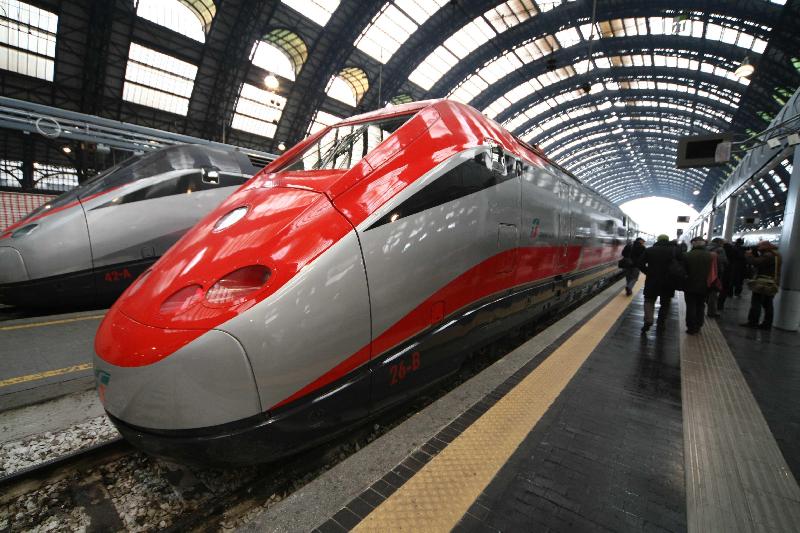
The figures underline the uneven development of rail transport across the EU, with major economies continuing to dominate total passenger volumes while smaller and wealthier countries show stronger rail usage relative to population size. Photo by StuporesMundi at Italian Wikipedia.