











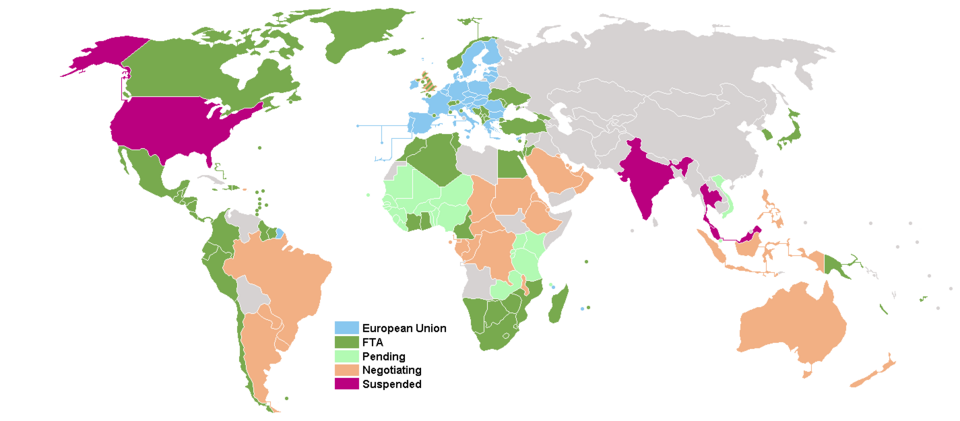
The European Union's trade preference programme for developing countries continued to boost exports, support economic growth and encourage reforms on human rights
and environmental standards between 2023 and 2025, according to a new report published by the European Commission and the EU's foreign policy chief.
The report examines the implementation of the EU's Generalised Scheme of Preferences (GSP), which allows eligible developing countries to export goods to the bloc with reduced or zero import duties. The scheme, the EU's main trade instrument for supporting developing economies, is also designed to promote labour rights, environmental protection and good governance.
In 2024, the EU imported almost €60bn worth of goods under the programme. Beneficiary countries received preferential tariff treatment worth an estimated €5bn, while European importers and consumers also benefited from lower costs.
The largest share of those savings – more than €3bn – went to the world's least-developed countries through the Everything But Arms (EBA) initiative, which provides duty-free and quota-free access to the EU market.
Bangladesh, India and Pakistan remained the biggest users of the scheme, with clothing accounting for 59% of all imports benefiting from GSP preferences.
The Commission said the programme continued to provide stability for developing countries despite growing geopolitical uncertainty and remained an important incentive for reforms beyond trade.
According to the report, many countries receiving enhanced GSP+ benefits strengthened human rights legislation, improved labour protections and reinforced environmental and biodiversity policies during the reporting period. Several countries also made progress in tackling corruption and improving drug-control measures.
However, the report also highlighted persistent shortcomings. Concerns remain over judicial independence, access to justice and accountability for human rights abuses in some countries. Labour rights enforcement also remains inconsistent, with labour inspectorates often lacking sufficient resources.
Alongside the main report, the Commission published country assessments covering the eight current GSP+ beneficiaries — Bolivia, Cabo Verde, Kyrgyzstan, Mongolia, Pakistan, the Philippines, Sri Lanka and Uzbekistan — as well as Bangladesh, Cambodia and Myanmar, which are subject to enhanced monitoring under the EBA scheme.
The Commission said the economic outlook for most beneficiary countries continues to improve, with several expected to graduate from the UN's least-developed country category in the coming years. It said the GSP would continue to support those countries during the transition.
The report is the final assessment under the current GSP regulation before a new framework takes effect. The revised GSP rules, adopted in June 2026, will apply from 1 January 2027, introducing stronger sustainability and transparency requirements while maintaining regular monitoring of participating countries. Photo by Datastat, Wikimedia commons.