
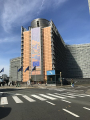









Belgium has secured a place among the world’s 20 safest countries in 2025, according to the latest Global Peace Index (GPI), as reported by ‘The Brussels Times’.
Compiled by the Institute for Economics and Peace (IEP), the Global Peace Index is widely recognised as the leading international benchmark for measuring peacefulness. The index evaluates 99.7 per cent of the global population, drawing on 23 qualitative and quantitative indicators from authoritative international sources to assess levels of peace, their economic impact, and the societal conditions that sustain them.
Peacefulness is measured across three core areas: societal safety and security, the extent of ongoing domestic and international conflict, and levels of militarisation.
In the 2025 edition, Belgium ranked 16th worldwide, achieving an overall score of 1.492 out of 5, with lower scores indicating higher levels of peace. The country performed particularly strongly on indicators such as low homicide and incarceration rates, as well as a relatively low intensity of internal conflict.
Belgium’s relations with neighbouring countries received the highest possible rating, scoring 1 out of 5, while overall safety and security was also rated favourably at 1.6. However, the country scored less well on access to small arms and light weapons, where it received a score of 3.
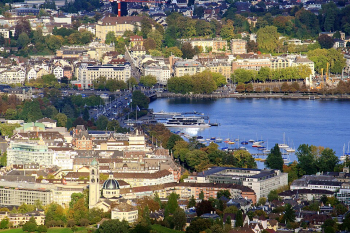
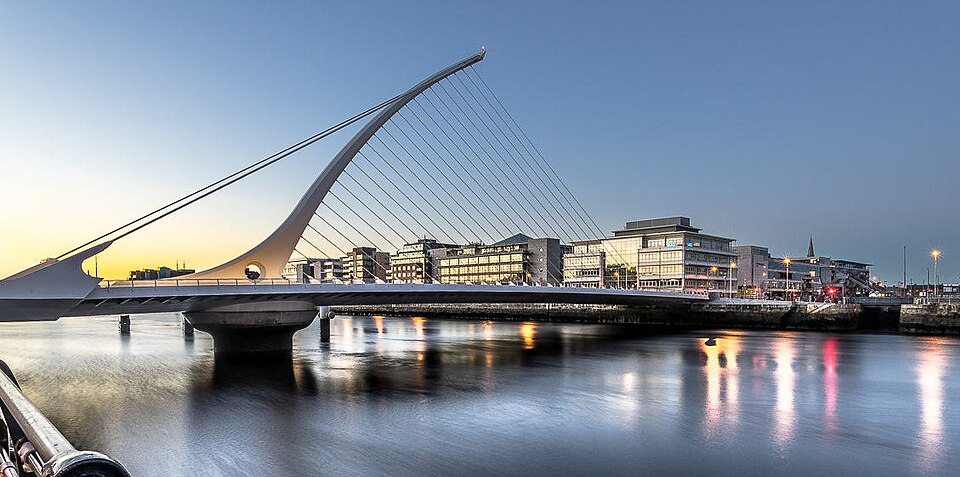
At the top of the index, Iceland retained its position as the world’s most peaceful country, followed by Ireland, New Zealand, Austria and Switzerland. Europe continued to dominate the upper tier of the rankings, accounting for 14 of the top 20 countries.
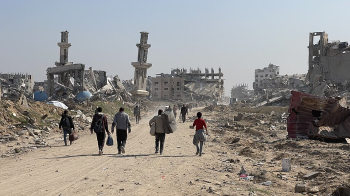
Despite Belgium’s strong performance, the 2025 Global Peace Index paints a stark picture globally. The report highlights a continued decline in worldwide peacefulness, with several indicators that historically precede major conflicts now at their highest levels since the Second World War. Rising conflict-related deaths, intensifying geopolitical tensions and the growing assertiveness of middle powers are contributing to what the authors describe as a period of “Great Fragmentation.” Photo by Giuseppe Milo, Wikimedia commons.