












British High Commissioner to Solomon Islands, Paul Turner, has called for a stronger diversity of voices in the country’s political leadership, warning that democracy is weakened
when women remain largely excluded from decision-making.
Speaking at a high-level panel organised by the Westminster Foundation for Democracy (WFD), Turner said the Solomon Islands continues to lag far behind global standards for women’s political representation. Since independence in 1978, only eight women have ever been elected to the national parliament — one of the lowest records in the world.
“Across the globe, democracies are stronger when leadership reflects the people it serves,” Turner said. “For Solomon Islands, that means far more women must be elected at both national and provincial levels.”
Barriers to women entering politics
The panel brought together senior political leaders and electoral experts to discuss the financial and cultural obstacles facing women candidates. Participants included Minister for Women, Youth, Children and Family Affairs, Hon. Kathy Nori MP; Leader of the Opposition, Hon. Matthew Wale MP; Chief Electoral Officer Jasper Highwood Anisi; and academic and former candidate Dr Alice Pollard.
Drawing on recent research by WFD, Turner highlighted how campaign financing remains one of the biggest hurdles. Election campaigns require significant funding, yet many women lack access to personal income, land ownership, or financial assets.
He called for targeted financial support for women candidates, greater transparency in campaign financing, and fairer allocation of resources to ensure women can compete on equal footing with men.
Cultural expectations and personal struggles
Minister Nori shared her own experiences of contesting elections, describing the deep-rooted social expectations that women should prioritise family roles over leadership.
“In many communities, women are still expected to be supporters, not leaders,” she said. “Changing this mindset is essential, but the struggle discourages many capable women from even trying.”
Dr Pollard offered a personal account of standing as a candidate and the emotional toll of repeated electoral defeats, underscoring how resilience is often tested more harshly for women in politics.
Role of parties and communities
Opposition Leader Matthew Wale emphasised the importance of cultural and community networks, encouraging women to use local kastom systems to build support and recognition. He also urged women to join political parties, noting that parties can provide valuable experience, structure, and resources.
However, Wale acknowledged ongoing challenges, including resistance to party politics and concerns around reserved quotas for women candidates. Many women, he said, prefer to stand as independents, which can leave them without institutional backing.
Why representation matters
Despite differing perspectives, the panel agreed that increasing the number of women in parliament would have tangible benefits. Greater female representation, they said, would bring stronger attention to health, education, family welfare, and long-term community stability.
Reflecting on his diplomatic experience in Northern Ireland and the Balkans, Turner drew parallels with post-conflict societies where women played a crucial role in peacebuilding.
“In places like Sarajevo and Belfast, it was often locally organised women’s groups who bridged divided communities and laid the groundwork for lasting peace,” he said.
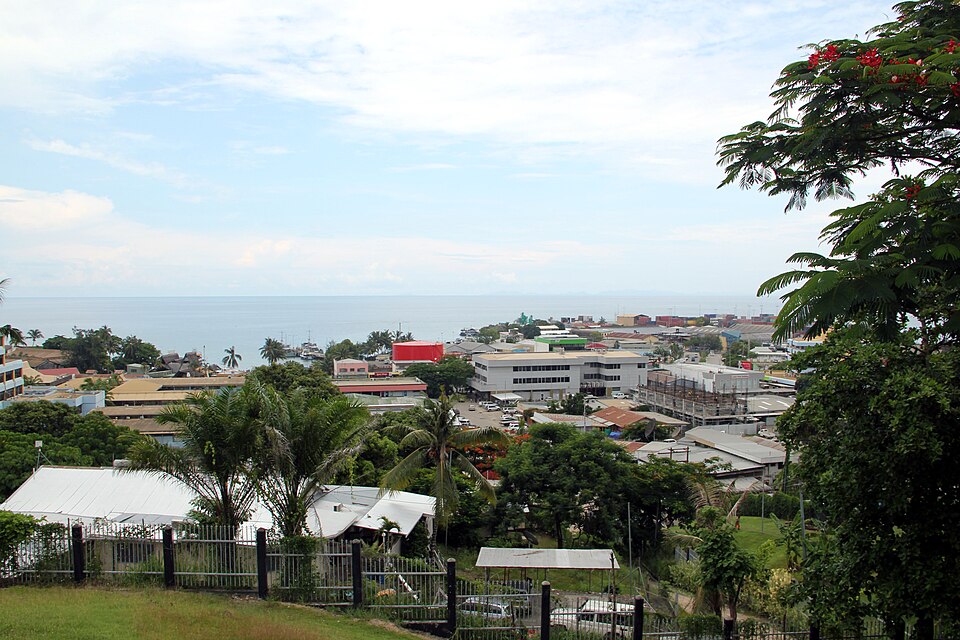
Turner concluded by stressing that empowering women in Solomon Islands politics is not just about fairness, but about building a more inclusive, resilient, and effective democracy for the future. Photo by Kahunapule Michael Johnson from Pukalani, Hawaii, United States of America, Wikimedia commons.